Sleep apnea treatment in Charlotte, NC.
Custom oral appliance therapy and CPAP alternatives from a board-certified dental sleep medicine diplomate. Home sleep testing in your own bed, read by a licensed sleep physician.

- 3×board-certified
DABCP · DABCDSM · DABDSM. The only triple board-certified provider in Charlotte.
- 27+years
in practice, focused on TMJ, orofacial pain, and dental sleep medicine.
- In-house3D CBCT
and home sleep testing. No outside imaging referral needed.
- Blakeneysouth Charlotte
6235 Blakeney Park Drive, Suite 101, Charlotte, NC. 704.220.1930
Signs your airway may be the problem.
Sleep apnea is often hidden in plain sight. Many people learn they have it only after a partner notices, or when they finally connect the daytime symptoms.
- Loud or chronic snoring
- Witnessed pauses in breathing during sleep
- Waking up gasping or choking
- Persistent daytime fatigue, even after a full night's sleep
- Morning headaches
- Difficulty concentrating or mental fog
- Dry mouth or sore throat on waking
- Frequent nighttime urination
- High blood pressure that isn't responding to treatment
- Suspected sleep apnea needs a sleep study to diagnose. We can guide you through that process.
Continuous Open Airway Therapy (COAT)
A custom-fit oral device holds the airway open while you sleep. No mask, no hose, no pressurized air. Every plan we build comes back to that one idea, using your own anatomy instead of forcing the airway open.
COAT does not replace a sleep study or a referral to a sleep physician. The two work together.
How we treat sleep apnea.
We use these treatment options alone or together, based on what your airway, bite, and lifestyle actually need.
- 01
Custom oral appliances
A precisely fit appliance that gently advances the lower jaw during sleep, holding the airway open. Designed for patients who can't tolerate CPAP or want a portable alternative.
- 02
Appliance with enhanced airflow
A specialized appliance that addresses bite, joint position, and airway support together. Used for patients with combined TMJ and airway concerns.
- 03
CPAP coordination
We can combine CPAP with oral therapy at lower pressure.
- 04
Home sleep testing
Home sleep testing available through provider partnership. Sleep apnea is diagnosed with a home sleep study, and we coordinate testing through a partnership with a licensed sleep physician. We don't diagnose independently.
- 05
Airway-focused diagnostic workup
3D CBCT imaging lets us see the airway in three dimensions and identify anatomical contributors to obstruction.
- 06
Coordination with sleep physicians
We don't replace your sleep physician. We work with them. Dental sleep medicine is a complement to medical sleep care, not a substitute.
Treatment plans are built around what each patient actually needs. Not every option above is right for every person. The consultation and diagnostic visit are where we figure out which ones fit you.
What the diagnostic process involves.
Sleep apnea diagnosis starts with a sleep study (home or in-lab). From there, the right treatment depends on your anatomy and the severity of obstruction.
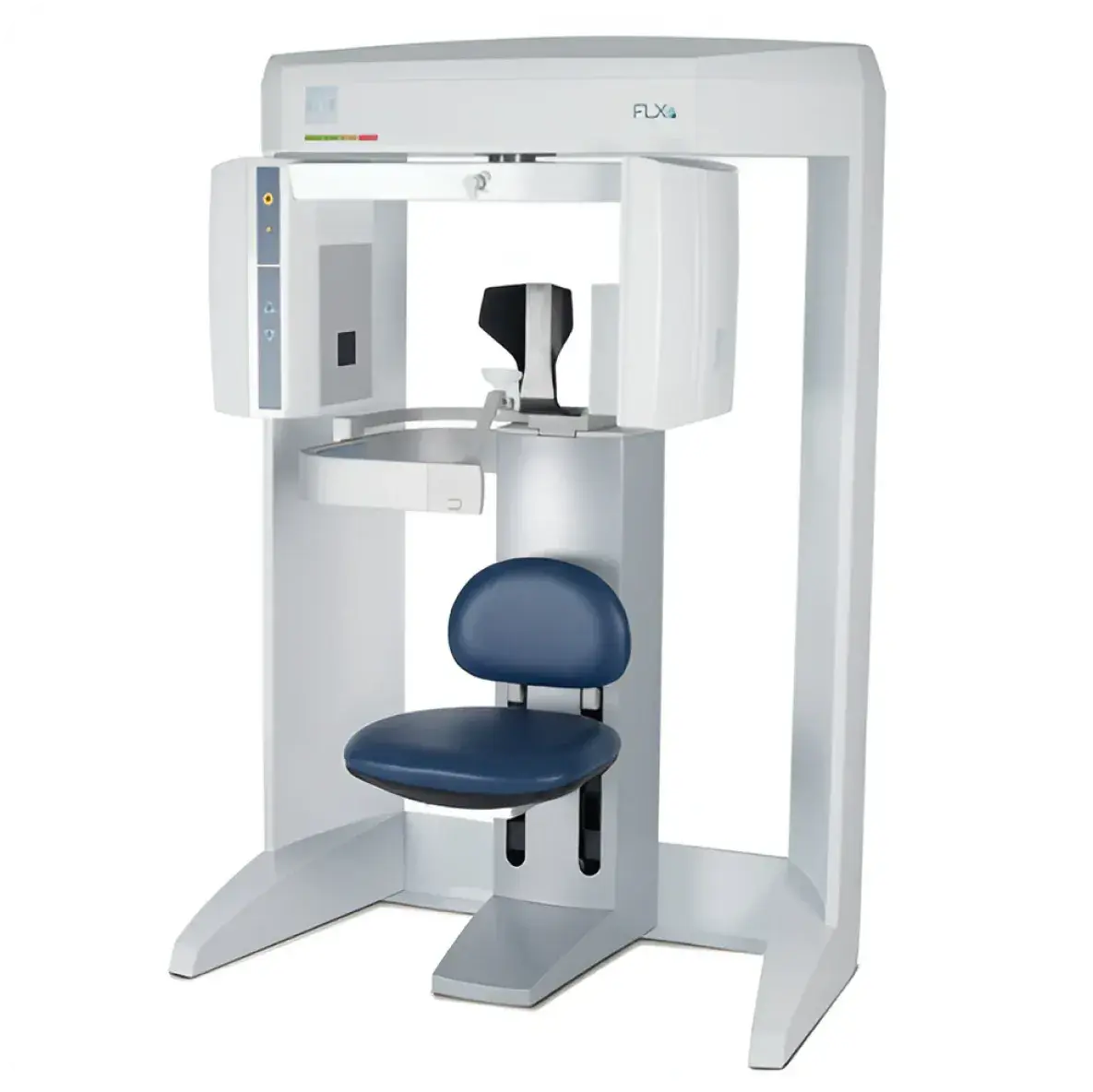
3D CBCT imaging
Cone-beam CT reveals jaw joints, airway, and bone in three dimensions. No outside referral needed.
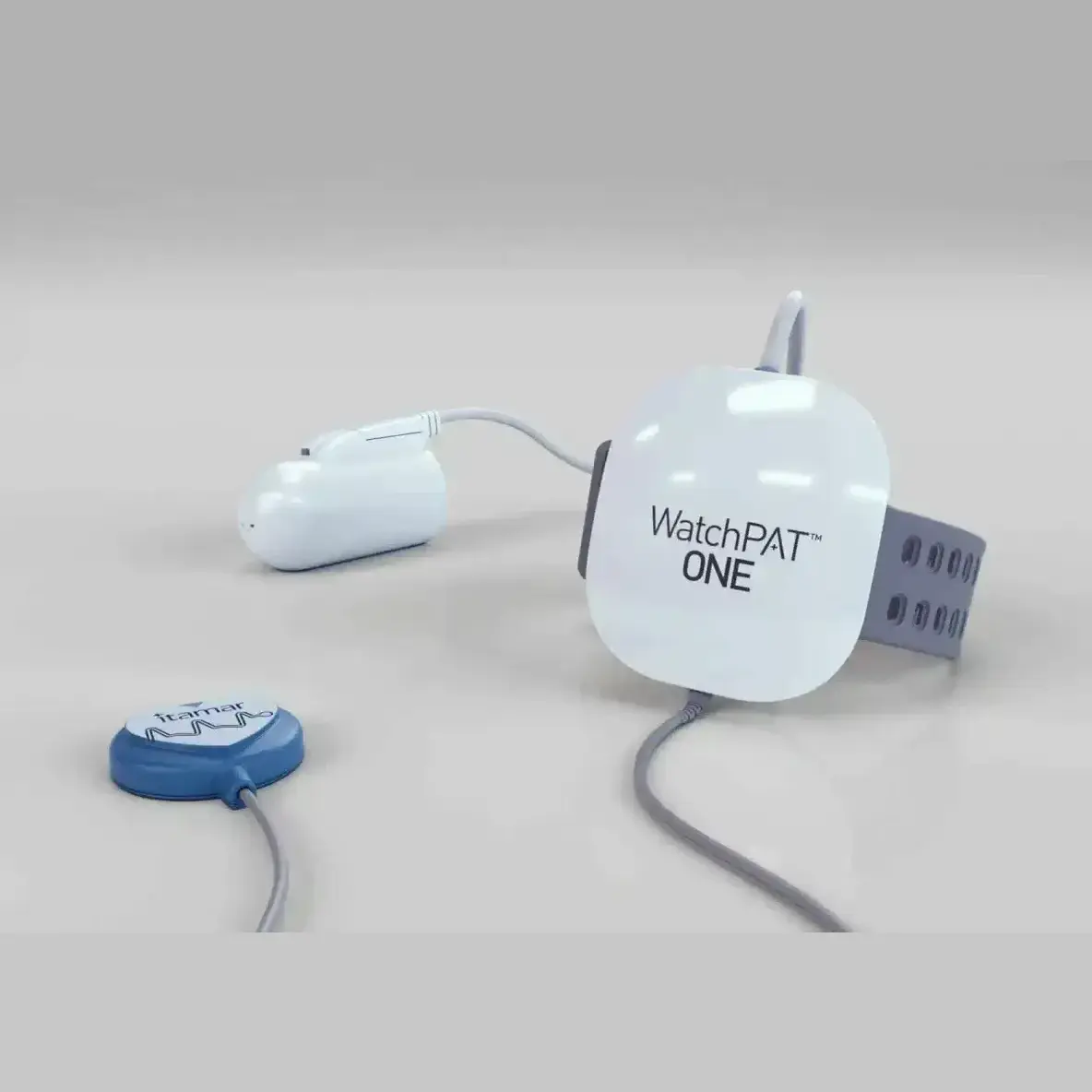
WatchPAT home sleep test
A take-home test that records a full night's sleep in your own bed. It tracks blood oxygen, heart rate, snoring, and body position, then a licensed sleep physician reads the study and makes the diagnosis.
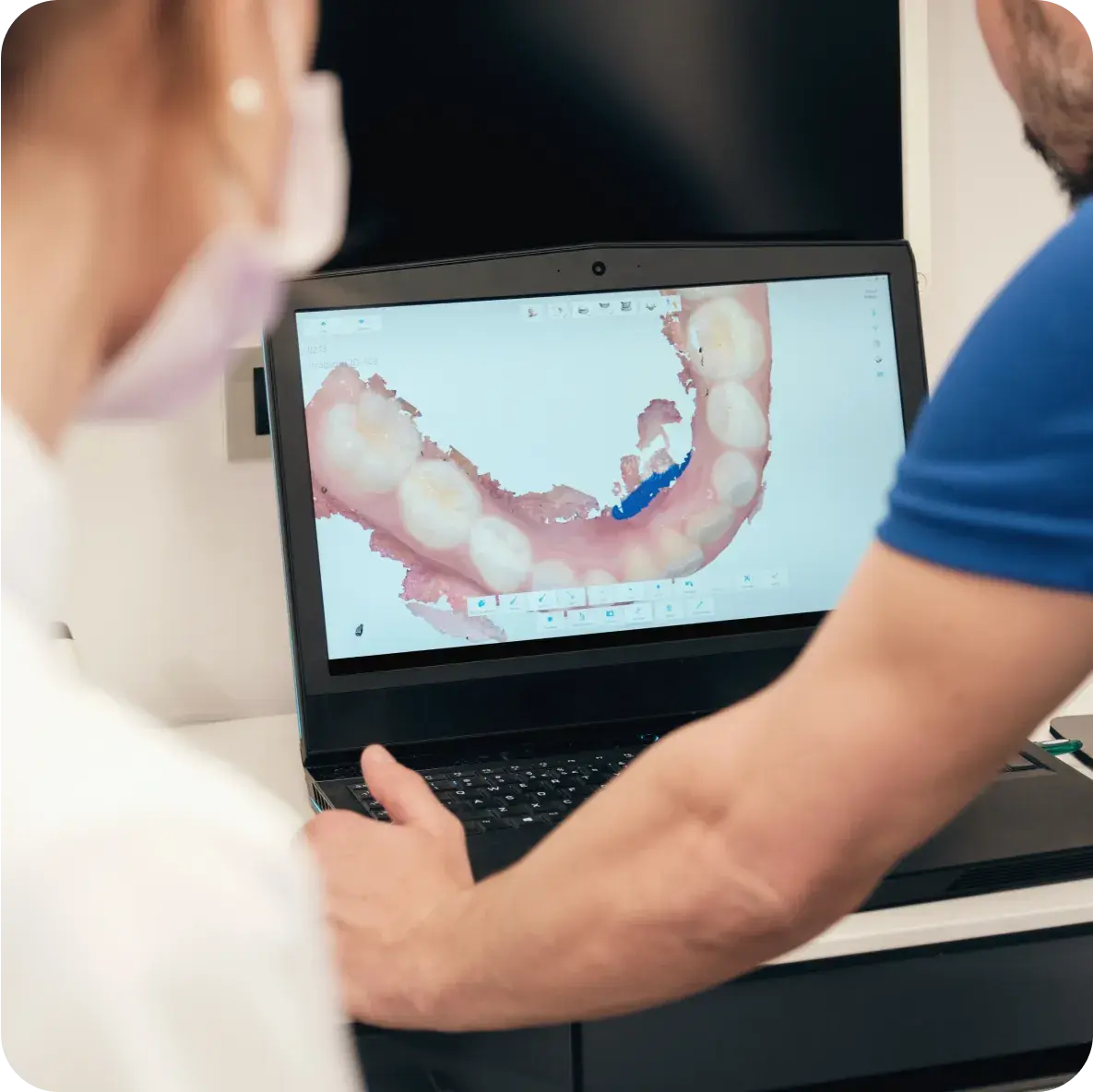
Intraoral 3D scanning
Digital impressions produce precise records for custom oral appliances.
Dr. Larson on sleep apnea.
What is sleep apnea?
How we treat it differently
Getting diagnosed
Common questions
For many patients with mild to moderate obstructive sleep apnea. And for some with severe OSA who can't tolerate CPAP. A custom oral appliance is an established treatment. It is not the right choice for everyone. The decision is made together with your sleep physician based on your sleep study and overall health.
Yes. We don't diagnose sleep apnea. A sleep physician does that with a sleep study (in-lab or home-based). What we do is help treat it once you have a diagnosis, particularly when an oral approach is appropriate.
Medical insurance sometimes covers oral appliance therapy when there is a documented OSA diagnosis. Coverage varies by plan. We can help you understand what to ask your insurer; the practice itself is primarily fee-for-service.
Online options are one-size-fits-most boil-and-bite trays. A custom appliance is built from a 3D scan of your specific teeth and bite, and is adjustable in millimeter increments. The difference shows up in long-term comfort, effectiveness, and protection of the jaw joint.
Patients often report changes in daytime energy and morning headaches within weeks of starting a properly fit oral appliance. Objective results from a follow-up sleep study are typically reviewed several weeks to months in, depending on the protocol.
Ready to find out what's actually going on?
Tell us a little about what you're experiencing. Our team will be in touch to schedule a consultation.