
You've been told that cold laser therapy may calm your jaw pain without needles, medication, or surgery. Then you search for cold laser therapy side effects and find a confusing mix of reassurance and alarming case reports. If your jaw already feels tender, the important question isn't whether a reaction is possible. It's whether what you're feeling after treatment is an expected short-term response, a sign that the dose needs adjusting, or a reason to contact your clinician.
Cold laser therapy, also called low-level laser therapy or photobiomodulation, is generally associated with mild, localized reactions when a qualified clinician uses appropriate settings. Safety reviews have found few serious problems, but the treatment isn't risk-free, especially when the beam is misapplied, protective eyewear is skipped, or important medical factors aren't disclosed. A 2026 systematic review of photobiomodulation found that 13 of 14 trials reported no adverse events, while the remaining trial reported only low-grade effects such as temporary warmth, mild application-site discomfort, and brief tingling.
For someone with temporomandibular joint, or TMJ, pain, the safest approach is practical. Learn what the first session feels like, understand why dose and treatment location matter, and know which symptoms should prompt a phone call.
What a First Cold Laser Session Actually Feels Like
You're seated in the treatment chair while the clinician examines the areas contributing to your jaw symptoms. For facial pain, that may include the masseter, temporalis, and the area just in front of the ear, where the temporomandibular joint sits. The clinician may explain the device settings, provide eye protection, and place a handheld probe against the skin.
The device usually makes a quiet hum. At first, you may feel little or nothing. As the probe rests over a tender muscle, you might notice faint warmth, followed by mild tingling near the joint or along the cheek. A small amount of flushing can appear where the probe contacts your skin. That redness should fade rather than spread or intensify.
A useful way to understand the appointment is to separate expected sensations from warning signs:
- Mild warmth or tingling: Often occurs during treatment and is usually brief.
- Temporary tenderness: A treated jaw muscle may feel similar to a muscle after hands-on work or exercise.
- Brief fatigue: Some patients feel tired after treatment, particularly when several painful areas are addressed.
- Sharp or escalating pain: This isn't something to tolerate. Tell the clinician during the session.
- Blistering, marked burning, or persistent redness: These require prompt assessment rather than casual reassurance.
Treatment timing depends on the device, the area treated, and the clinician's protocol. Your provider should tell you what to expect immediately afterward and when the next visit should occur. A patient guide to cold laser therapy machines can help you understand why devices and application methods differ, but it can't replace an individualized examination.
Practical rule: If a sensation feels mild and begins to settle, record it. If it becomes stronger, sharp, visible, or persistent, report it.
Most mild effects appear during treatment or in the immediate post-treatment period. Before leaving, ask what symptoms are expected, what you should avoid, and exactly whom to contact if your jaw pain increases later that day.
How Cold Laser Therapy Works in the Body
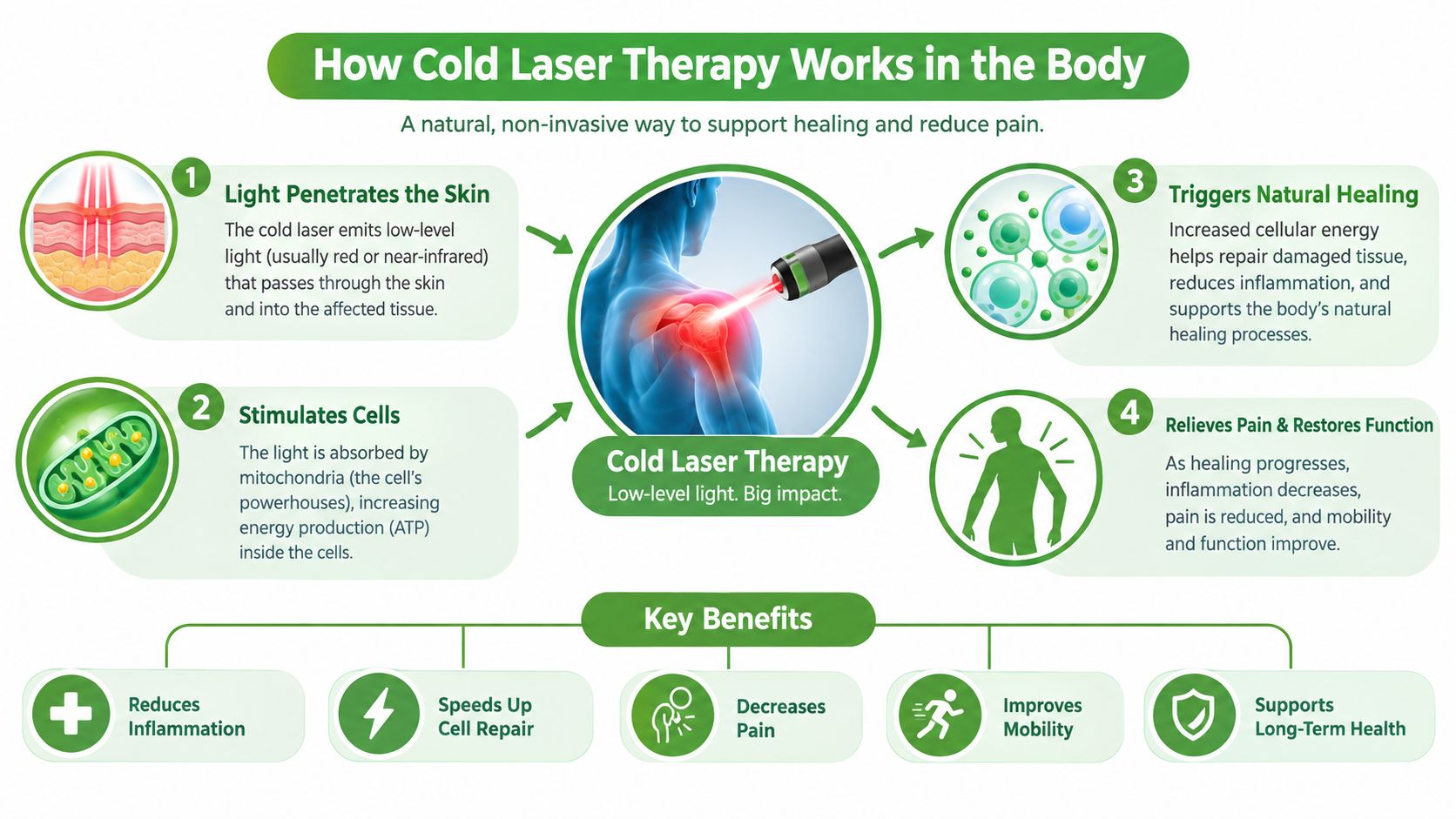
Cold laser therapy uses low-intensity red or near-infrared light. Unlike a surgical laser, it isn't intended to cut tissue. The light passes through the skin and is absorbed by structures inside cells, including mitochondria, which help cells produce usable energy.
Think of the dose like watering a plant. Too little water may not change the plant, while too much can overwhelm it. Light therapy follows the same basic principle. The clinician has to match the energy dose, treatment time, wavelength, probe position, and target depth to the tissue being treated.
For TMJ and facial pain, the clinician may select a wavelength suited to the depth of the joint or muscle. The device may be applied directly to the skin over the masseter, temporalis, or preauricular region, with settings adjusted for the treatment objective. The goal is to deliver light consistently without concentrating excessive energy in one small area.
Why light can create sensations
Photobiomodulation is used to influence cellular energy production, inflammatory signaling, and local circulation. Those changes help explain why some patients notice warmth, tingling, or mild soreness after treatment. They also explain why the same therapy can feel different when applied to a superficial facial muscle versus a deeper joint.
The central safety lesson is that more energy isn't automatically better. Excessive fluence, poor targeting, prolonged contact, or an unsuitable protocol can increase the chance of tissue irritation. A 2021 review describes reported complications including burns, infections, changes in skin color, eye injuries, scarring, prolonged redness, acne, milia, and contact dermatitis, with risk linked to tissue-level injury from excessive energy, poor targeting, or inadequate eye protection. The review of low-level laser therapy complications supports a clinician's focus on calibration rather than treating every device as interchangeable.
The Most Common Side Effects Patients Report
The most common reactions are usually local and temporary. Patients may notice warmth, tingling, mild redness, or tenderness where the probe was applied. A jaw muscle that was already tight can feel more noticeable after treatment, much like a sore muscle after manual therapy.
Published safety evidence doesn't support describing the treatment as completely free of side effects. A 2020 review of low-level laser therapy safety reported adverse effects in 29 patients, or 29.3%, in the reviewed dataset. The specific events included eczema in 4.0%, pruritus, meaning itching, in 3.0%, and acne in 1.0%. The same review reported that no severe adverse events disrupted treatment and that most effects resolved within 2 weeks. The cited safety review also emphasizes that the documented reactions were generally limited rather than dangerous.
These figures shouldn't be treated as a personal prediction for a TMJ session. The included studies used different conditions, body sites, devices, and protocols, so the frequency for facial treatment can't be inferred precisely. They do show why a clinician should ask about skin sensitivity and inspect the treatment area.
Common cold laser therapy side effects at a glance
| Side Effect | Typical Frequency | Severity | Usual Duration |
|---|---|---|---|
| Warmth at the application site | Occasional | Mild | Brief |
| Tingling or altered sensation | Occasional | Mild | Brief to short-lived |
| Temporary redness or flushing | Occasional | Mild | Usually short-lived |
| Local tenderness or soreness | Reported in some patients | Mild to moderate | Short-lived |
| Headache | Reported in some treatment studies | Usually mild | Short-lived |
| Itching, eczema, or acne | Uncommon in safety data | Mild | Often temporary |
| Temporary increase in jaw discomfort | Uncommon but possible | Variable | Requires dose review if it persists |
A temporary headache or pain flare can occur when sensitive, inflamed, or nerve-rich tissue is treated. The appropriate response isn't to push through automatically. Clinicians may reduce the dose, change probe placement, lengthen the interval between appointments, or reassess whether the jaw joint or muscle is the correct target.
Rare but Serious Complications and What Causes Them
Serious complications aren't the routine experience reported in controlled trials, but they have been documented. The important distinction is that many severe events involve misapplication, poor control of the beam, or failure to account for patient-specific risks.
A burn may develop when the probe remains over one spot too long, when the energy is excessive, or when the device settings don't match the tissue. A darker skin phototype, tattoo, or another light-absorbing feature may alter how energy behaves at the surface. Dyspigmentation, meaning a darker or lighter patch of skin, can follow tissue irritation and may be more consequential on the face than on a covered body area.
Eye safety deserves special attention. A treatment beam should never be directed toward the eyes, and protective eyewear should be used according to the device and clinic protocol. A flash, afterimage, new visual disturbance, or eye pain after treatment isn't an expected nuisance. It warrants immediate contact with the treating office and urgent medical guidance if symptoms are severe or worsening.
Conditions that change the risk calculation
Tell your clinician about:
- Photosensitizing medications: Some drugs can make skin more reactive to light.
- Active malignancy near the treatment area: Treatment over cancerous tissue requires specific medical judgment and is commonly avoided.
- Recent radiation or damaged skin: Previously treated tissue may respond differently.
- Tattoos or pigmented lesions: These can absorb light differently from surrounding skin.
- Pregnancy: The clinician should review whether treatment is appropriate for the proposed site.
- Unusual facial nerve sensitivity: A conservative protocol may be appropriate when a small pain flare could significantly affect eating, speaking, or sleep.
The 2021 complication review lists burns, ophthalmic injuries, dyspigmentation, infections, scarring, and prolonged erythema among reported problems. Those reports don't mean a serious injury is likely during a properly supervised session. They do show why a clinician should control the wavelength, dose, contact, movement, and eye protection rather than relying on the label “cold.”
The following video provides another visual explanation of treatment response and management considerations.
Side Effect Timeline and How Clinicians Manage Them
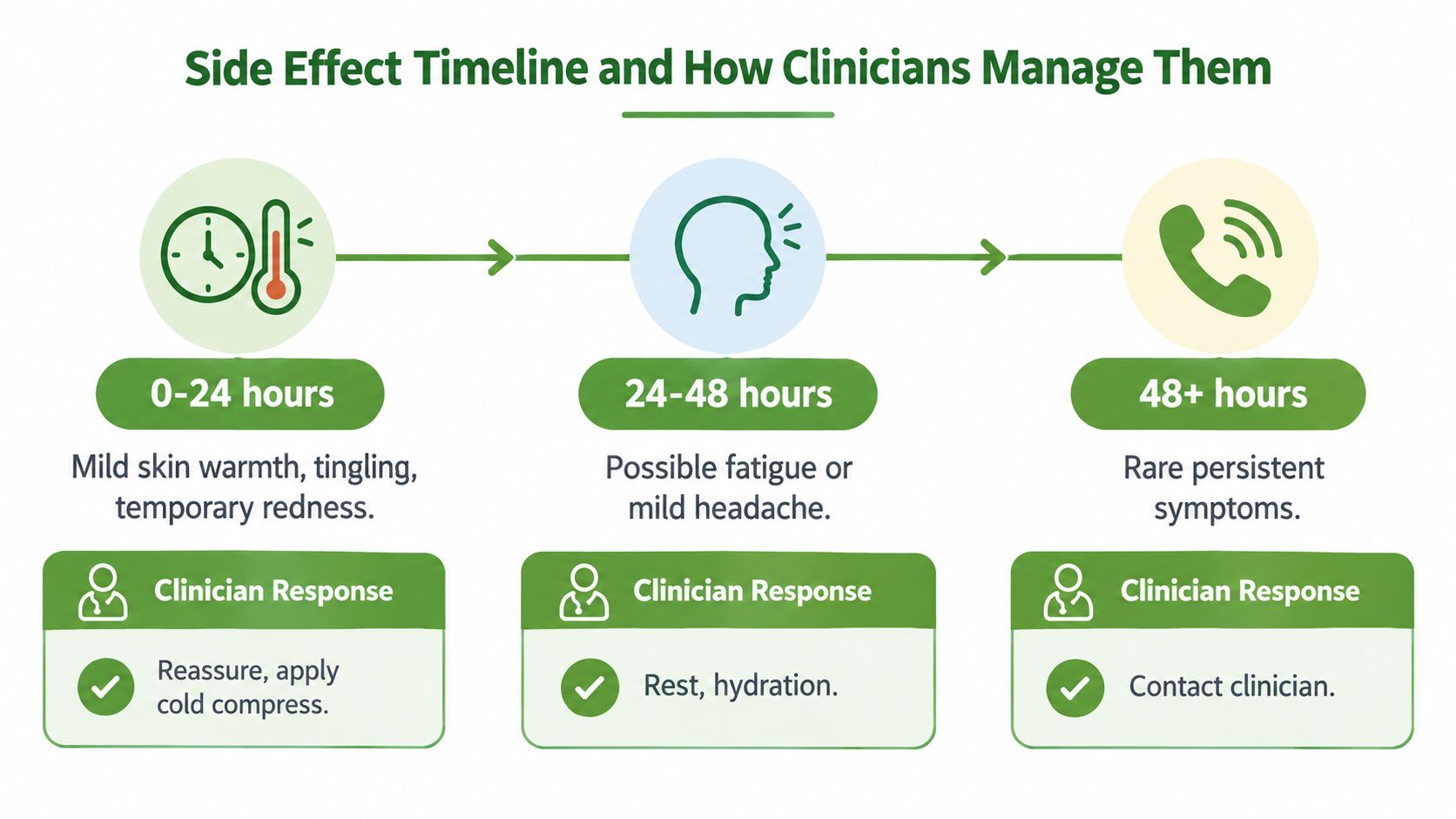
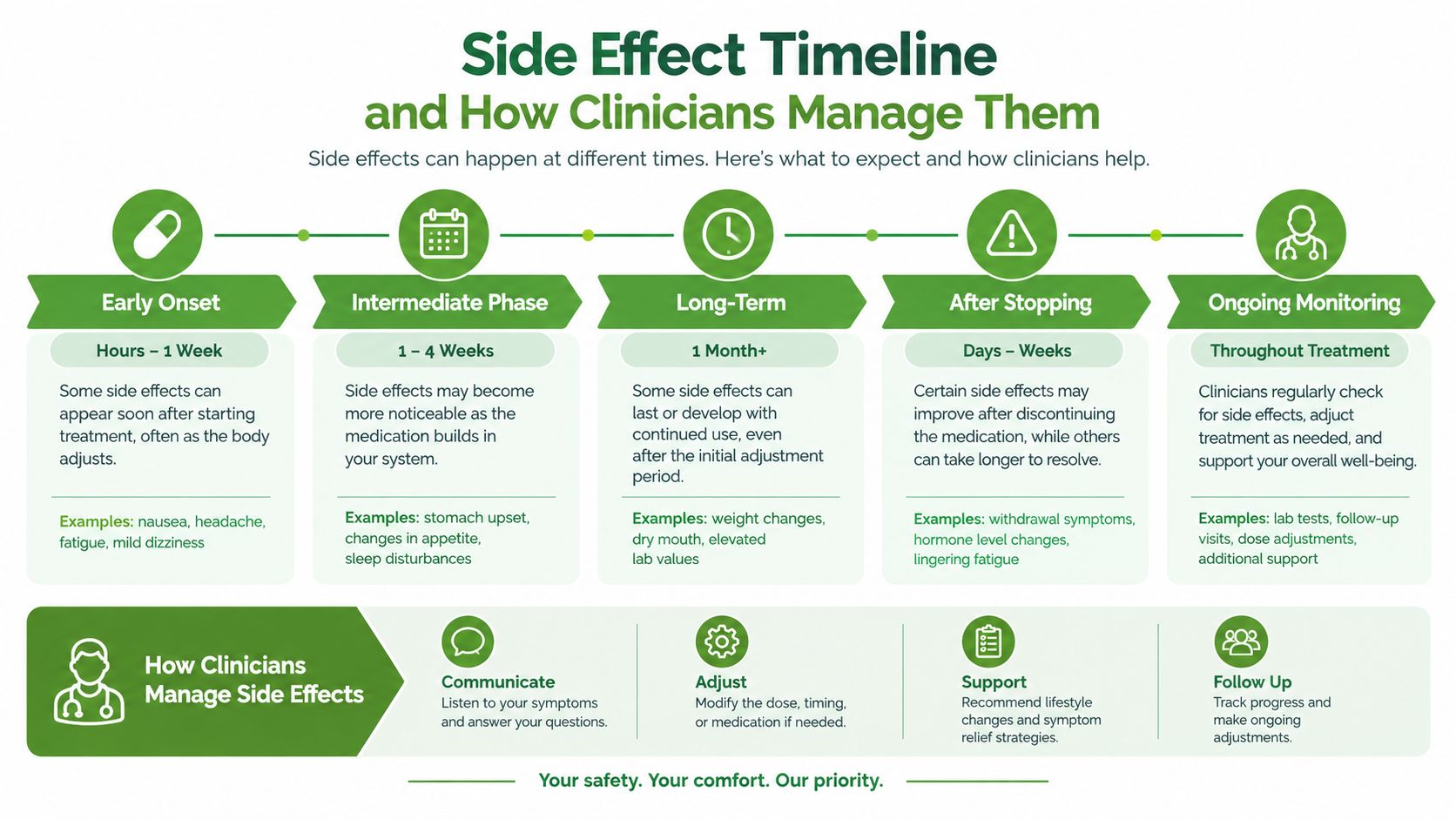
A mild reaction usually follows a recognizable pattern. Warmth, tingling, or slight redness may appear during treatment or shortly afterward. Tenderness can become more noticeable later, particularly when the clinician has treated a tight masseter or temporalis muscle.
Symptoms that remain mild should generally be observed and documented. A cool compress may soothe temporary redness or warmth. If the skin feels irritated, ask the treating clinician before applying a product such as aloe, especially if the skin is broken, blistered, or unusually sensitive. Don't apply a household heating device over a recently treated area unless your provider specifically recommends it.
A simple reaction log
Between visits, write down:
- The treatment time and treated locations. Note whether the probe was used over the joint, masseter, temporalis, or another site.
- The first symptom. Record whether warmth, itching, soreness, headache, or increased jaw pain appeared during treatment or later.
- The direction of change. “Improving” and “worsening” are more useful than a vague statement that the area feels different.
- Visible findings. Record redness, swelling, peeling, blistering, or a change in skin color.
- Functional impact. Note whether chewing, speaking, opening the mouth, sleeping, or seeing has changed.
When a patient reports increased pain, the clinician may reduce the energy delivered, modify probe contact, extend the interval between sessions, or choose a different wavelength. Persistent or worsening symptoms should trigger a protocol review, not automatic continuation.
Eye protection remains part of every properly managed session. Patients interested in broader developments in noninvasive care can also review pain management technology advances, while keeping in mind that general technology information doesn't replace treatment-specific advice.
How Cold Laser Compares to Other TMJ and Pain Treatments
Side effects make more sense when you compare them with the alternatives. Cold laser therapy generally creates a local exposure without an incision or injected drug, so its main concerns involve the treated skin, underlying tissue, dosing, and eye protection.
NSAIDs can help pain and inflammation, but repeated or prolonged use can create gastrointestinal, kidney, and cardiovascular concerns. Corticosteroid injections may calm inflammation more directly, yet repeated injections can affect local soft tissue and may produce systemic effects. Opioids introduce a different risk profile, including sedation, constipation, and dependence.
Surgical procedures carry more structural risk because they involve instruments, anesthesia, or access to the joint. Arthrocentesis and open-joint procedures may be appropriate in selected cases, but possible complications include infection, nerve injury, and anesthesia-related problems. The right comparison isn't the number of reported reactions. It's the severity, reversibility, and cumulative burden of each option.
| Treatment | Common Side Effects | Serious Risks | Reversibility |
|---|---|---|---|
| Cold laser therapy | Local warmth, tingling, redness, tenderness | Burns, eye injury, scarring, or pigment changes from improper use | Mild effects are usually reversible |
| NSAIDs | Stomach irritation and other medication-related effects | Gastrointestinal, renal, or cardiovascular complications | Often improves after stopping, but medical review may be needed |
| Corticosteroid injection | Injection-site soreness and temporary tissue irritation | Infection, tissue atrophy, tendon or cartilage concerns with repeated use, systemic effects | Some effects resolve, while structural injury may not |
| Opioids | Sedation and constipation | Dependence, overdose, and impaired functioning | Risk can persist with continued exposure |
| Arthrocentesis or open-joint surgery | Post-procedure pain and swelling | Infection, nerve injury, and anesthesia risks | Recovery varies, and structural complications may be lasting |
Device selection also matters, but a consumer device recommendation isn't a substitute for TMJ diagnosis or supervised dosing. A resource discussing PRP For HairLoss device recommendations may help readers understand how low-level laser products differ, but facial treatment still requires attention to wavelength, energy, treatment site, and contraindications.
If you're unsure whether light therapy is appropriate for your diagnosis, review the evidence and your treatment plan with a qualified provider. Does cold laser therapy work is a useful starting point for discussing expected benefit, but no modality should delay evaluation of locking, trauma, neurological symptoms, or progressive swelling.
When to Call Your Clinician About a Reaction
Mild warmth, slight tingling, modest fatigue, or temporary tenderness usually doesn't require an urgent call if the symptoms are settling. A reaction becomes more concerning when it intensifies, changes the skin, affects vision, or interferes with ordinary jaw function.
Use the time since treatment as a guide:
- During the session: Report sharp pain, a strong burning sensation, or discomfort that makes you want the probe removed. The clinician can stop and inspect the area immediately.
- Within the same day: Contact the office about blistering, marked swelling, rapidly increasing redness, severe headache, or a clear pain flare that doesn't resemble your usual TMJ symptoms.
- After the first day: Call if redness is spreading, the skin is peeling, pain is escalating, or a new change in skin color is developing.
- At any time: Treat a flash, afterimage, eye pain, or vision change as a same-day concern. Don't schedule another exposure until the clinician has reviewed it.
Lower the threshold for contacting the office
Tell the clinician before treatment if you're pregnant, immunosuppressed, taking photosensitizing medication, recently received radiation near the treatment area, or have active malignancy near the proposed site. Recent steroid use and a history of unusual skin reactions also deserve discussion. Darker skin tones aren't a reason to avoid care, but the clinician should consider pigment changes when selecting and monitoring the protocol.
Keep a record of the device area, symptom onset, visible changes, and whether the reaction is improving. The cold laser therapy contraindications guide can help you prepare questions before an appointment, but your treating clinician must make the final decision for your medical history.
The safest message is specific: describe what happened, where it happened, when it started, and whether it's improving. If you have severe visual symptoms, extensive blistering, breathing difficulty, or rapidly worsening swelling, seek urgent medical care rather than waiting for a routine reply.
The Bottom Line on Cold Laser Therapy Safety
Cold laser therapy has a generally favorable safety profile when a qualified clinician uses an appropriate wavelength, dose, treatment site, and eye protection. The strongest available summary is reassuring without claiming zero risk. In the 2026 systematic review, 13 of 14 photobiomodulation trials reported no adverse events, and the remaining trial reported only transient warmth, mild application-site discomfort, and temporary tingling. No included studies reported serious adverse events or treatment-related dropouts. The review's findings support the view that minor, reversible effects are more typical than major toxicity.
That doesn't mean every device or protocol deserves the same confidence. A separate review of oncologic safety reported only mild, temporary redness in four patients across included skin-rejuvenation trials, with no other adverse events reported. At the same time, independent complication reviews document burns, eye injuries, pigment changes, scarring, and other problems when energy is misapplied or safety procedures fail.
For a TMJ patient, risk reduction starts before the probe touches your face. Give the clinician your complete medication list, pregnancy status, cancer history, recent radiation history, skin sensitivity, and information about tattoos or pigmented areas. Ask what wavelength and dose are being used, why that setting fits your joint or muscle, what eye protection is required, and what symptoms should lead you to call.
Compared with long-term medication, repeated injections, opioids, or invasive procedures, cold laser therapy is often considered a lower-burden option for suitable patients because its expected effects are local and short-lived. Its safety still depends on informed consent, accurate diagnosis, careful dosing, and prompt reporting of unusual reactions. It isn't universally risk-free, and it shouldn't replace treatment for a serious underlying jaw or facial pain condition.
Pain and Sleep Therapy Center evaluates TMJ disorders, facial pain, headaches, and related sleep and breathing concerns before recommending options such as cold laser therapy. Visit Pain and Sleep Therapy Center to learn about individualized assessment and noninvasive care with a qualified clinical team.