You've tried the night guard. Perhaps you've taken gabapentin, received a nerve block, changed your diet, or visited several dentists and physicians. The pain still returns, often after sleep, chewing, talking, or an ordinary touch to the face. That pattern is exhausting, but it also points to a problem with the usual approach: chronic facial pain treatment can't be chosen responsibly until the pain has been classified.
Chronic facial pain isn't one disease. Trigeminal neuralgia, temporomandibular disorder related pain, and persistent idiopathic facial pain can feel similar to a patient, yet they involve different tissues, different warning signs, and different treatments. The evidence supports a diagnosis-led plan, with airway and breathing function assessed when clenching, poor sleep, nasal obstruction, or morning jaw pain may be contributing.
Why Chronic Facial Pain Treatment Needs a Diagnosis First
A 38-year-old woman had spent two years trying night guards, nerve blocks, and gabapentin. None provided lasting relief. A later evaluation asked a more useful question: How do you breathe at night? Her mouth breathing and disrupted sleep changed the clinical picture. The earlier treatments had targeted symptoms without identifying a possible driver.
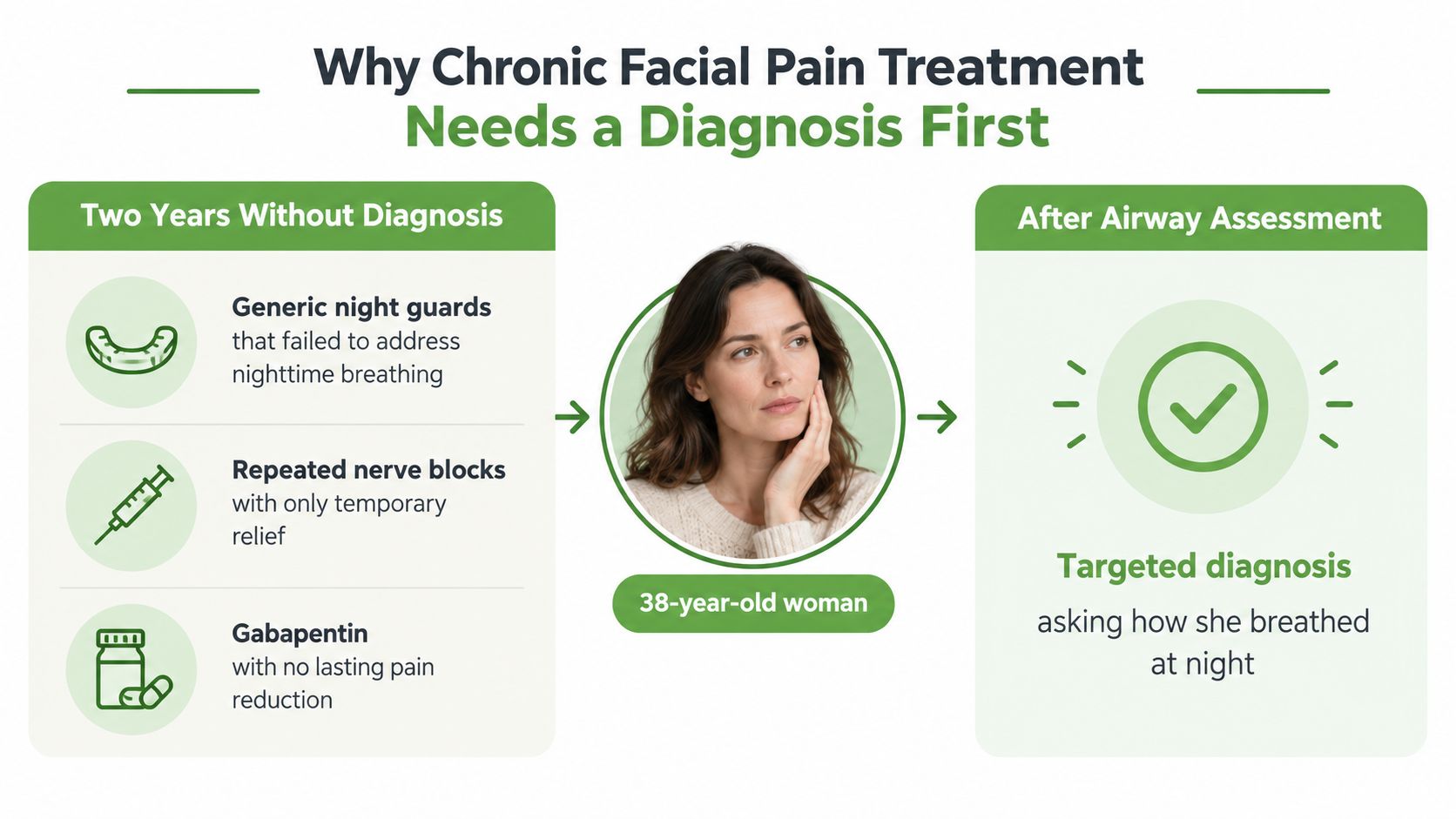
Begin by describing the pain precisely. Chronic facial pain requires different treatment pathways for trigeminal neuralgia, TMD-related pain, and persistent idiopathic facial pain.
Trigeminal neuralgia usually causes sudden electric or stabbing pain in a trigeminal distribution, often affecting the cheek or lower jaw. Touch, tooth brushing, chewing, or airflow may trigger it. Clinical guidance supports carbamazepine and oxcarbazepine as first-line medicines, MRI to investigate structural causes, and surgical referral when medication does not provide adequate control. It is uncommon and occurs more often in people with multiple sclerosis, as described in this neurosurgical review of trigeminal neuralgia.
TMD-related myalgia and arthralgia more often produce a dull ache, muscle tenderness, joint pain, stiffness, clicking, or pain with jaw movement. Assessment should include the jaw, neck, tongue posture, sleep quality, and daytime clenching.
Persistent idiopathic facial pain is commonly constant, burning, or difficult to localize. It does not follow a clear nerve territory and lacks an identifiable dental, joint, or other nociceptive source. A neuropathic-pain framework is appropriate, while irreversible dental or surgical procedures should be avoided without a defensible diagnosis, as discussed in this review of persistent idiopathic facial pain.
A treatment that changes pain without clarifying its source may provide temporary relief while delaying the appropriate referral.
A stabilization splint can reduce loading for a carefully selected TMD patient, but an unsuitable appliance may worsen morning pain or clenching. Neuralgia medication will not correct an overworked masseter, and a muscle injection will not resolve vascular compression of the trigeminal nerve. A structured TMJ pain diagnosis should guide the choice among an appliance, injection, medication, or procedure.
How Common Chronic Facial Pain Really Is
Chronic facial pain sits at the intersection of neurology, dentistry, sleep medicine, and rehabilitation. U.S. population data found orofacial pain symptoms in 4.8% of adults in 2017 to 2018, while another analysis found 26% overall prevalence of orofacial pain, with higher rates in women than men, as summarized in the NCBI clinical review of orofacial pain.
Among people visiting a general dentist, past-year orofacial pain reached 16.1%, including 9.1% dentoalveolar pain and 6.6% musculoligamentous pain, according to the same review. Global reviews also show that the burden spans several overlapping categories, including myofascial pain, TMJ pain, dentoalveolar pain, and cranial-nerve-related pain.
Chronic Facial Pain Subtype Prevalence at a Glance
| Subtype | Estimated prevalence | Typical age of onset | Gender skew |
|---|---|---|---|
| Myofascial orofacial pain | 20.6% | Variable | Varies by population |
| Myofascial pain plus TMJ pain | 12.0% | Variable | Varies by population |
| TMJ pain alone | 9.5% | Variable | Varies by population |
| Dentoalveolar-related orofacial pain | 27.5% | Variable | Varies by population |
| Cranial-nerve-related orofacial pain | 8.0% | Variable | Varies by syndrome |
| Trigeminal neuralgia | About 0.3% lifetime prevalence | Variable | More common with multiple sclerosis |
These figures describe different populations and definitions, so they shouldn't be added together as though they represent separate, non-overlapping groups. They do show why a facial pain clinic sees many more muscle, joint, and dental-region complaints than classical trigeminal neuralgia.
The practical implication is straightforward. A broad label such as “facial pain” doesn't tell a clinician whether to examine the joint, map a nerve distribution, evaluate muscle loading, review medication history, or investigate sleep and breathing. Diagnostic specificity is the first treatment decision, because the wrong pathway can expose a patient to repeated procedures without addressing the source.
Conservative and Rehabilitative Treatment Options
Conservative care works best when it's active, specific, and tied to a diagnosis. The objective isn't to immobilize the jaw indefinitely. It's to reduce excessive loading, restore controlled movement, improve nasal breathing and oral posture, and give irritated tissues time to settle.
| Option | What it actually does | Best-fit subtype | Typical response timeline |
|---|---|---|---|
| Jaw rest and habit reversal | Reduces clenching, gum chewing, wide opening, and sustained muscle loading | TMD-related myalgia and arthralgia | Gradual change with consistent practice |
| Heat, ice, and temporary diet modification | Calms flare-ups and limits painful mechanical demand | Acute TMD flares | Short-term comfort |
| Cervical and jaw physical therapy | Improves mobility, coordination, tissue tolerance, and graded loading | Myofascial pain and movement-related TMD | Progressive improvement during rehabilitation |
| Orofacial myofunctional therapy | Retrains tongue posture, lip seal, swallowing, and breathing habits | TMD with oral posture or airway contributors | Requires repeated home practice |
| Diagnostic stabilization appliance | Temporarily changes jaw loading and provides clinical information | Selected TMD cases | Reassess rather than use indefinitely |
| Airway and sleep screening | Identifies nasal obstruction, mouth breathing, and overnight respiratory problems | Morning pain, clenching, poor sleep, mixed presentations | Guides the next treatment decision |
Start with function, not a permanent appliance
During a flare, softer foods, smaller bites, moist heat, and reduced jaw excursions can help. These measures don't prove the diagnosis, and they shouldn't become the entire treatment plan. A physical therapist may combine manual therapy with cervical mobility, jaw coordination drills, trigger-point work, and graded loading rather than telling the patient to avoid movement.
Orofacial myofunctional therapy adds a different layer. The clinician evaluates whether the tongue rests low, whether the lips remain apart, whether swallowing recruits excessive facial muscles, and whether nasal obstruction forces mouth breathing. These patterns can maintain jaw tension, particularly during sleep.
A focused program of physical therapy and TMJ exercises should be adjusted to the patient's movement pattern, irritability, and functional goals.
Use appliances as tests, not automatic lifetime treatment
Occlusal appliances have a role, but the role is narrower than many patients are told. A stabilization splint may help selected TMD patients by changing contact and reducing tooth wear, but it shouldn't be prescribed as a generic answer to every facial pain complaint. An anterior repositioning device may be useful in selected disc-displacement cases, while an ill-fitting or poorly indicated flat-plane guard can worsen morning soreness, especially in a patient who clenches while struggling to breathe.
Airway assessment can include nasal examination, functional breathing review, sleep history, and, when clinically appropriate, imaging or home sleep testing. The goal isn't to label every facial pain patient with a sleep disorder. It's to avoid missing an upstream contributor that makes nighttime muscle treatment fail.
Regenerative Injections and Cold Laser Therapy
Regenerative and light-based treatments can be reasonable adjuncts, but they're not substitutes for classification. In a patient with mechanically irritated joint tissues, ligamentous laxity, or persistent myofascial pain, these tools may support a broader rehabilitation plan. In classical trigeminal neuralgia, they generally don't address the neurological mechanism.
| Modality | Mechanism | Evidence for facial pain | Typical course | Best candidate |
|---|---|---|---|---|
| Platelet-rich fibrin | Uses a fibrin matrix containing blood-derived signaling factors that may support tissue repair | Developing and limited for TMJ applications | Often delivered in a series with reassessment | Selected intra-articular or connective-tissue presentations |
| Dextrose prolotherapy | Aims to stimulate a controlled local healing response in lax connective tissue | Limited and patient-selection dependent | Commonly spaced over several visits | Stable patients with suspected ligamentous laxity |
| Cold laser or photobiomodulation | Uses low-level light to influence cellular activity and inflammatory signaling | Limited and variable across protocols | Repeated sessions with functional reassessment | Myofascial or inflammatory pain without a competing diagnosis |
What these treatments can and can't do
Platelet-rich fibrin, or PRF, is intended to provide a scaffold and local biological signals. It may be considered when the clinical picture suggests an intra-articular or connective-tissue problem, but it won't correct a severe bite instability, untreated infection, or unrecognized neuropathic disorder.
Prolotherapy takes a different approach. Dextrose is used to create a controlled local stimulus that may help selected lax tissues. The trade-off is that the injection itself can temporarily increase soreness, and a clinician must be confident that the target tissue and diagnosis make sense.
Cold laser therapy is less invasive, but “non-invasive” doesn't mean universally effective. Treatment parameters, tissue depth, diagnosis, and the surrounding rehabilitation program influence the result. The 2023 TMD evidence base is especially important here, because a large network meta-analysis found stronger support for coping and movement-focused treatments than for several passive or commonly used interventions, as reported in the BMJ network meta-analysis and guideline evidence.
A reasonable plan sets expectations in advance. Regenerative injections or cold laser may involve three to six sessions spaced weeks apart, with reassessment around eight to twelve weeks, but those figures describe a typical clinical course rather than a guarantee. Candidates should have no active infection, a stable enough occlusion for rehabilitation, and a working diagnosis of myofascial or intra-articular pain.
Patients considering PRF should understand how it differs from PRP and discuss preparation, target tissue, and alternatives using this PRF versus PRP injection comparison.
Medications Used for Neuropathic Facial Pain
A patient with brief, electric shock-like attacks needs a different medication plan from someone with constant facial burning or jaw-muscle pain. Carbamazepine and oxcarbazepine are first-line drug treatments for classic trigeminal neuralgia. MRI and neurological assessment help determine whether the pattern fits classic neuralgia, a structural cause, or another neurological disorder, as discussed in the trigeminal neuralgia evidence review.
Persistent idiopathic facial pain follows another pharmacological pathway. Tricyclic antidepressants, including amitriptyline and nortriptyline, are commonly considered first-line options. SNRIs such as duloxetine or venlafaxine may suit patients who cannot tolerate tricyclics, while gabapentin or pregabalin may be considered when relief remains inadequate, consistent with the PIFP treatment review.
| Medication class | Common use | Response estimate | Main side effects | Key caution |
|---|---|---|---|---|
| Carbamazepine or oxcarbazepine | Classic trigeminal neuralgia | Individual response varies | Drowsiness, dizziness, drug-specific adverse effects | Requires clinician monitoring and interaction review |
| Gabapentin or pregabalin | Neuropathic facial pain | Individual response varies | Sedation, dizziness, swelling, weight changes | Titrate carefully and review other sedating medicines |
| Amitriptyline or nortriptyline | Persistent idiopathic facial pain | Individual response varies | Dry mouth, constipation, drowsiness | Consider medical history and interaction risk |
| Duloxetine or venlafaxine | Neuropathic pain when tricyclics aren't suitable | Individual response varies | Nausea, sleep changes, other class effects | Review psychiatric and medical history |
| NSAIDs or muscle relaxants | Short-term TMD flares | Useful only for selected acute presentations | Gastrointestinal or sedating effects | Don't use them to treat a neuralgia mechanism |
Specialist prescribing references include amitriptyline 10 to 150 mg, duloxetine 60 mg, gabapentin 1200 to 2400 mg, and pregabalin 150 to 300 mg. These ranges are not instructions for self-treatment. Age, kidney function, other medicines, mood, sleep, and fall risk all affect drug selection and titration.
Medication may reduce pain enough for rehabilitation to begin. It should support, not replace, assessment of jaw loading, airway obstruction, sleep disruption, and neurological warning signs. Opioids require particular caution in persistent idiopathic facial pain, as do irreversible dental or surgical procedures chosen without a clear diagnosis. When medication fails despite appropriate trials, the next step is diagnostic review and, when indicated, specialist referral.
When Surgery Becomes the Right Referral
Surgery is appropriate only when the diagnosis, target, and expected trade-offs are clear. Arthrocentesis, arthroplasty, joint replacement, neurectomy, and microvascular decompression address different problems, with different risks. Persistent pain alone is not an indication.
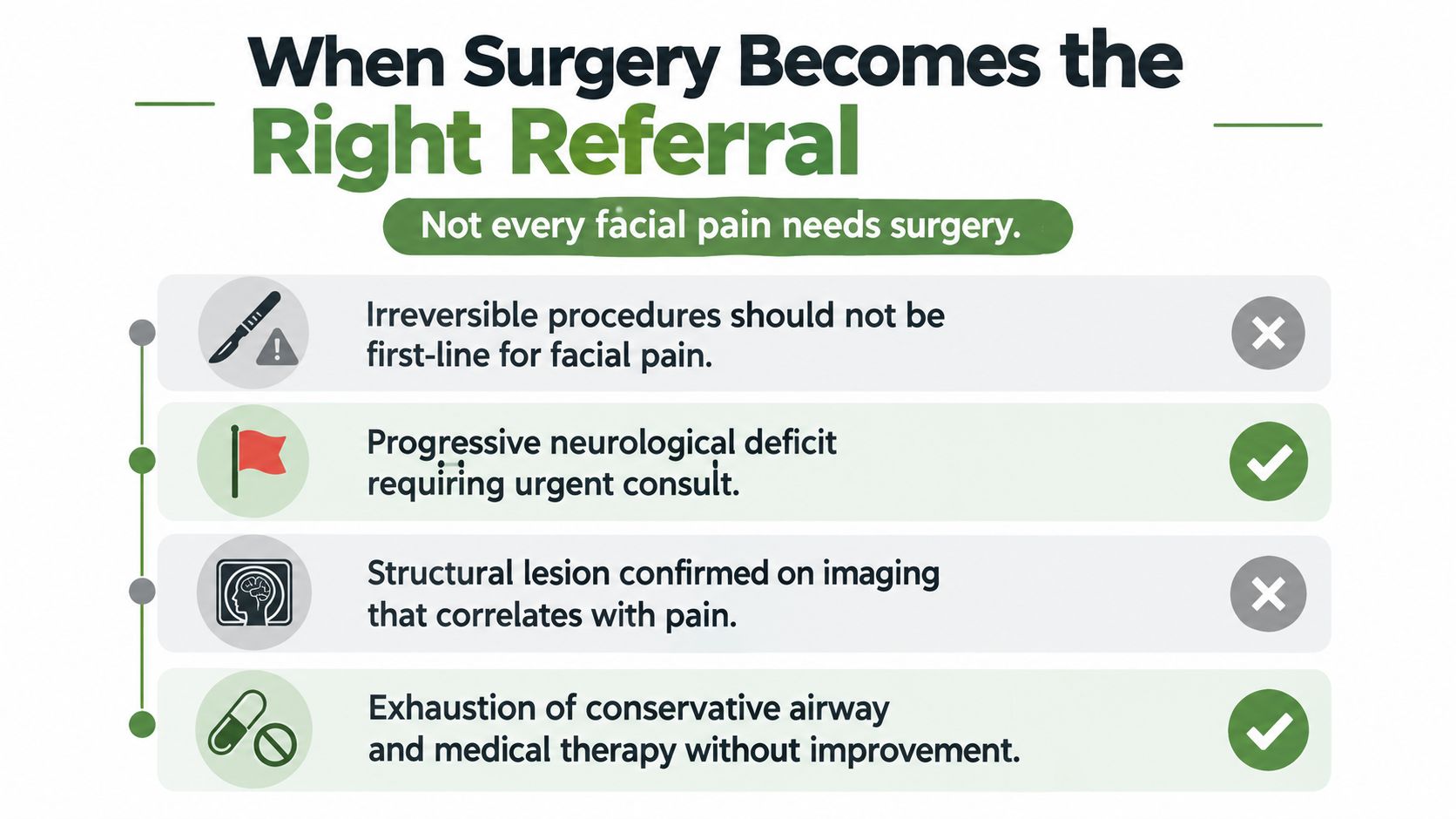
Referral to an oral and maxillofacial surgeon or neurosurgeon is more reasonable when the clinical findings align:
- Confirmed trigeminal neuralgia remains uncontrolled after appropriate medication trials and neurological assessment.
- Imaging shows a structural joint problem that matches mechanical symptoms, such as locking or marked degeneration.
- Intra-articular disease persists despite a suitable course of conservative rehabilitation.
- MRI or other imaging identifies a suspected tumor or vascular compression that could explain the pain.
- Progressive neurological deficits appear, requiring prompt medical assessment rather than routine appliance care.
For carefully selected trigeminal neuralgia patients, microvascular decompression has a substantial history of pain relief. Reported neurosurgical outcomes are favorable, but they come from defined diagnostic groups and should not be applied to persistent idiopathic facial pain, muscle-related TMD, or nonspecific facial symptoms. The operation also carries procedural risks, so the decision depends on neurological findings, imaging, medication response, general health, and the patient's tolerance for those risks.
That distinction matters in an airway-focused clinic. Breathing and sleep factors may add jaw loading or amplify symptoms, but they do not explain every electric, triggerable nerve pain pattern or every structural lesion. Match the referral to the driver rather than treating facial pain as one condition.
Before consenting, obtain an independent opinion from a clinician who is not financially or professionally tied to the proposed operation, especially when the diagnosis remains uncertain.
The Airway-Focused Root Cause Approach
An airway-focused approach doesn't claim that every facial pain problem begins in the airway. It asks whether breathing, tongue posture, swallowing, nasal obstruction, or sleep disruption is adding load to an already vulnerable jaw and facial system.
Four clinical decisions shape the sequence
First, assess function. Review nasal patency, habitual breathing, lip seal, tongue resting position, swallowing mechanics, snoring, witnessed breathing changes, dry mouth, morning headaches, and morning jaw soreness. Imaging and home sleep testing may be appropriate when the history suggests an airway or sleep-related breathing problem.
Second, map the pain. Electric, brief, triggerable pain in a nerve distribution demands neurological consideration. Movement-related joint pain and muscle tenderness point toward TMD subtypes. Constant, poorly localized burning pain without a clear tissue source requires a neuropathic-pain framework and restraint around irreversible procedures.
Third, sequence treatment. For TMD-related pain, reduce harmful loading, retrain breathing and oral posture, restore jaw and neck movement, and use an appliance only when its purpose is clear. Add regenerative tools when the diagnosis and tissue target support them. For neuropathic pain, involve neurology or pain medicine and use rehabilitation to preserve function rather than pretending exercises can replace medication.
Fourth, measure function. Pain intensity matters, but so do sleep continuity, chewing, speaking, yawning, mouth opening, morning stiffness, medication burden, and work capacity. A 2026 umbrella review found that evidence for newer options such as repetitive transcranial magnetic stimulation, pulsed radiofrequency, and botulinum toxin differs across pain, sleep, and broader quality-of-life outcomes, with indirect and methodologically limited evidence, as summarized in this 2026 review of chronic facial pain interventions.
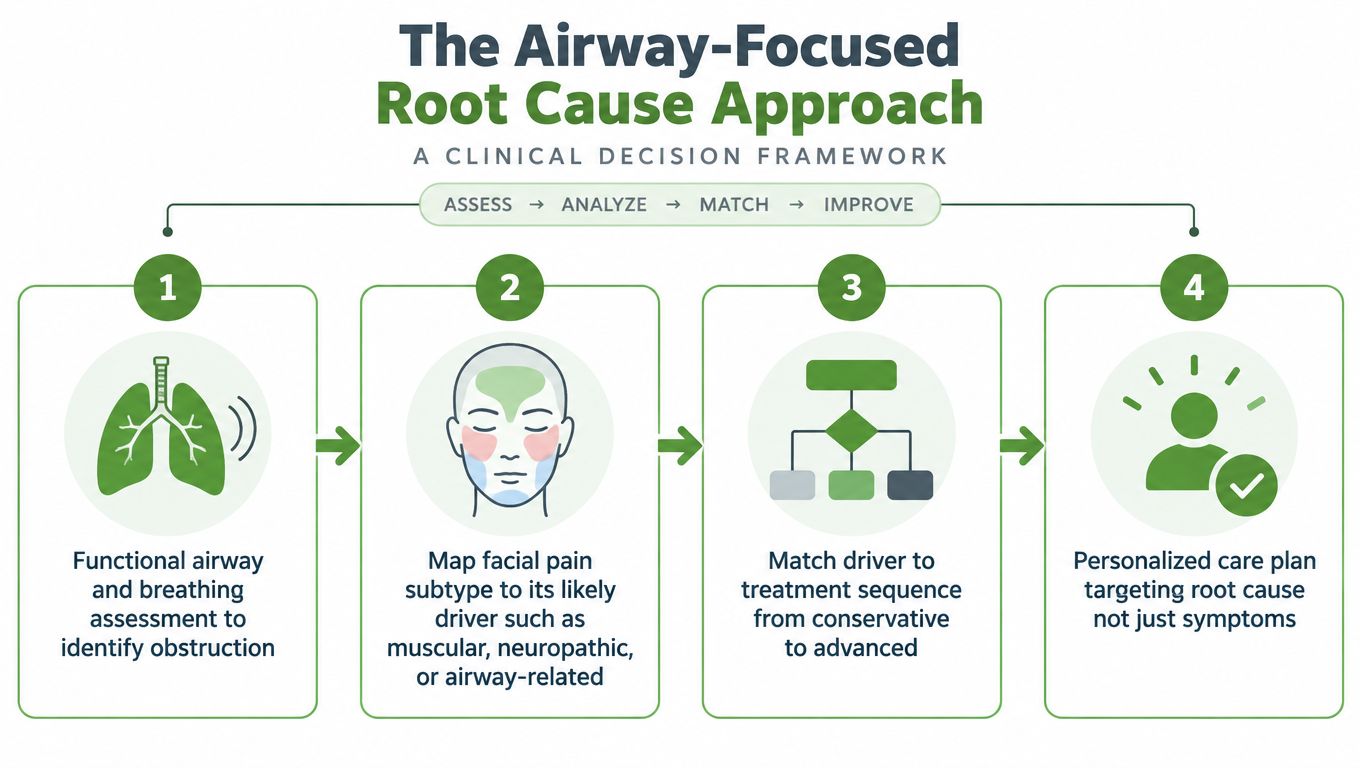
At four, eight, and twelve weeks, the care team should ask what changed and what didn't. This approach doesn't replace neurology, ENT, dentistry, or pain specialists. It organizes those referrals around a working diagnosis and keeps the plan focused on restoring function rather than chasing a lower pain score alone.
The short video below offers a visual introduction to the clinical framework:
Common Questions About Chronic Facial Pain Treatment
How long should improvement take?
Conservative care can produce early changes when the pain is driven by jaw loading, muscle guarding, or poor movement habits, but tissue tolerance and motor control develop gradually. Neuropathic conditions often require medication selection and careful titration before the full benefit becomes clear. If pain, sleep, chewing, or speaking isn't improving at planned checkpoints, the diagnosis and sequence need to be reconsidered rather than extended.
Who is a good candidate for regenerative injections or cold laser?
The strongest fit is a patient with a reasonably stable diagnosis of myofascial or intra-articular pain, no active infection, and a rehabilitation plan already in place. These options are poor substitutes for neurological treatment in trigeminal neuralgia, and they're unlikely to help when the main issue is an untreated airway problem, uncontrolled clenching, or an irreversible dental intervention that has changed the bite.
What happens during an airway-focused evaluation?
Expect a detailed pain history, examination of jaw movement and muscle tenderness, review of tongue posture and swallowing, and questions about nasal breathing and sleep. The clinician may recommend imaging, a home sleep test, or referral to an ENT, neurologist, dentist, or sleep specialist when the findings support it. Bring prior scans, medication names and doses, records of nerve blocks or injections, splint history, dental procedures, sleep symptoms, and a brief symptom diary.
What should I track at home?
Record when pain occurs, what triggers it, how long it lasts, and whether it changes with chewing, speaking, posture, sleep, or medication. Include practical measures such as morning jaw stiffness, ability to eat, nighttime awakenings, and daytime fatigue. A successful first 90 days should show clearer diagnosis, better function, and a documented reason to continue, modify, or escalate care.
Pain and Sleep Therapy Center evaluates TMJ disorders, facial pain, and sleep-related breathing concerns using airway screening, functional assessment, rehabilitation, and selected regenerative therapies. Visit Pain and Sleep Therapy Center to request an evaluation built around the underlying pain pattern rather than another symptom-only treatment.