Conservative, non-surgical treatment improves symptoms in 50% to 90% of patients with jaw clicking and pain, so it's usually the right place to start. The aim isn't to silence every jaw sound, but to reduce pain, restore comfortable movement, and address the habits or loading patterns keeping the joint irritated.
You may be noticing the problem first thing in the morning, when your jaw feels stiff and clicks near the ear as you open. Or perhaps the sound appears during a meal, followed by an ache in the cheek, temple, or joint. That combination deserves more attention than painless popping alone, but it doesn't automatically mean you need an injection or surgery. A staged plan can often settle the flare and show whether specialist care is necessary.
Recognizing When Jaw Clicking Signals Real Pain
A patient may describe the pattern this way: the click has been present for months, but it used to be harmless. Then sleep becomes less restful, daytime clenching increases, and chewing starts to produce a tender spot in front of the ear. The sound hasn't necessarily changed. The important change is that pain and reduced tolerance have joined it.
A painless click, with normal opening and comfortable chewing, is often monitored rather than aggressively treated. Clicking with pain is different. It can reflect irritation in the temporomandibular joint, overworked chewing muscles, or a movement pattern that repeatedly loads sensitive tissue. The noise alone can't tell you which one is present.
Use function as your decision guide
Ask yourself four practical questions:
- Does it hurt? Note whether pain appears at rest, while chewing, or after waking.
- Does the jaw move freely? Catching, hesitation, deviation, or restricted opening matters more than volume.
- Has eating changed? Avoiding chewy foods or smaller bites suggests reduced load tolerance.
- Are related symptoms present? Temple discomfort, facial tension, headaches, neck tightness, or morning jaw fatigue can point to a broader clenching pattern.
The condition belongs to the wider group of temporomandibular disorders, which affect about 5% to 12% of the population. U.S. guidance notes that these disorders are about twice as common in women as in men, particularly among people ages 35 to 44. The American Academy of Family Physicians' review of temporomandibular disorders also reports that conservative treatment improves symptoms in 50% to 90% of patients, supporting non-surgical care as the usual first-line approach.
Practical rule: A click that doesn't hurt and doesn't limit function often needs observation. A click paired with pain, locking, or loss of function needs a more deliberate assessment.
If your symptoms are mild, begin with load reduction rather than repeatedly testing or forcing the joint to pop. If you want to understand the distinction between ordinary jaw sounds and symptoms that warrant evaluation, this guide to TMJ clicking and popping offers a useful starting point.
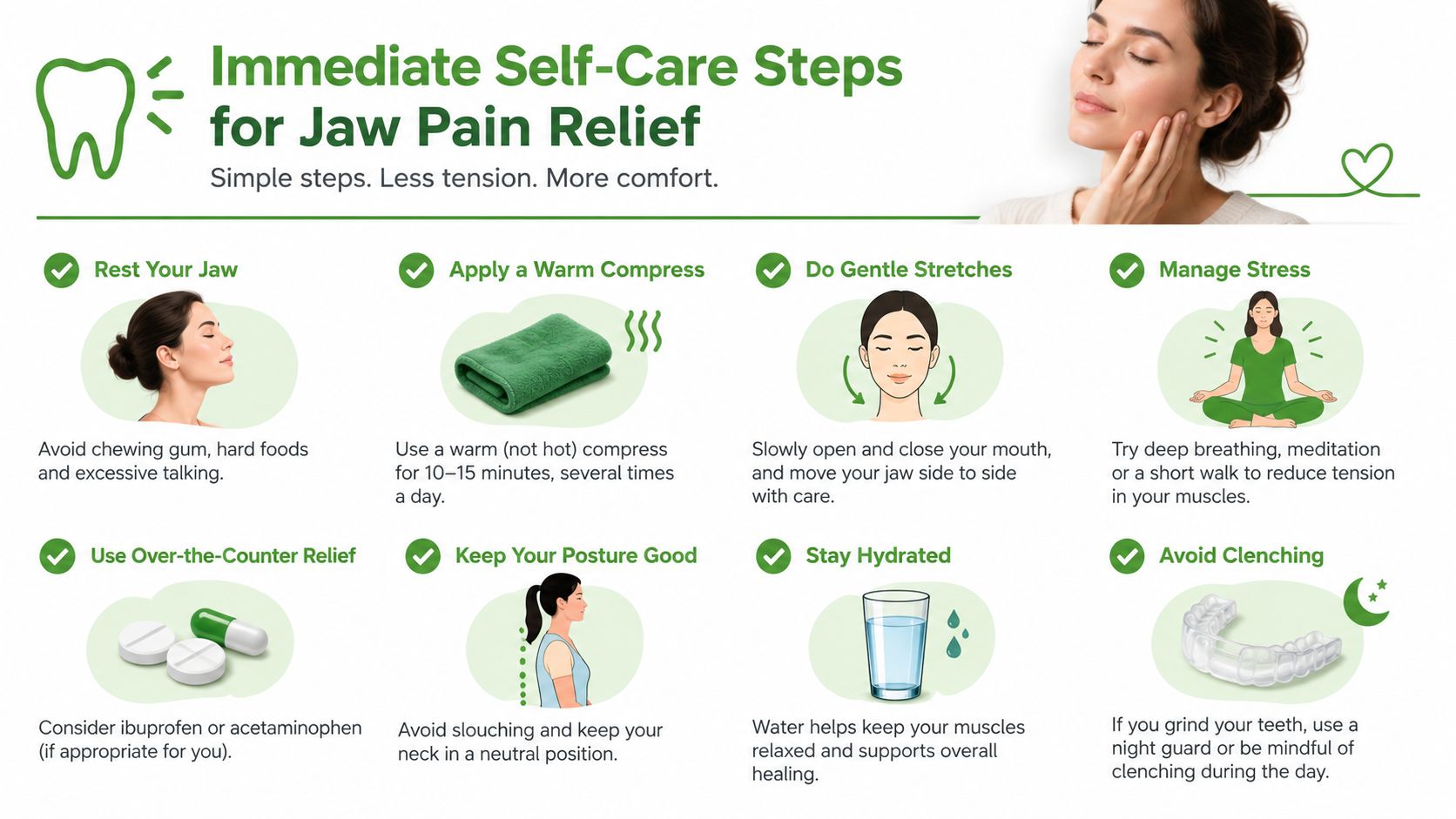
Immediate Self-Care Steps for Jaw Pain Relief
The first phase of jaw clicking pain treatment is deliberately simple. Reduce the work demanded of the joint, calm irritated muscles, and stop the behaviors that keep provoking symptoms.
Start with a temporary soft-food diet. Choose eggs, yogurt, oatmeal, soup, rice, smoothies, tender fish, and soft pasta. Put chewy bread, steak, gum, hard sweets, tough snack foods, and very large sandwiches aside while chewing is painful. Take smaller bites and cut food rather than opening unusually wide.
Calm the flare without freezing the jaw
Use temperature based on the symptom pattern:
- Heat for tightness. A comfortably warm pack can help when the cheeks, temples, or jaw muscles feel tense and achy.
- Cold for irritation. A cool pack may be more comfortable after a painful chewing episode or when the joint feels acutely irritated.
- Protect the skin. Keep a cloth between the pack and your face, and stop if the skin becomes numb or uncomfortable.
- Keep sessions comfortable. The goal is symptom relief, not intense temperature or prolonged exposure.
If you can safely take them, NSAIDs may help during an acute pain flare. Check the label and speak with a clinician or pharmacist if you have a history of stomach ulcers, kidney disease, blood-thinning medication use, medication allergies, or other reasons these drugs may be unsuitable.
Remove the repeated triggers
Keep your teeth slightly apart when you're not eating. Rest the tongue gently against the palate, let the lips meet without squeezing, and notice whether you brace your jaw during computer work, driving, exercise, or concentration. Stop gum chewing, nail biting, pen chewing, and deliberate wide opening while the joint is sensitive.
Don't keep the jaw immobile for longer than necessary. Once pain is controlled, comfortable movement should return gradually. Prolonged restriction can encourage stiffness and make normal function feel threatening.
For a visual demonstration of general jaw-care strategies, you can also use the following video:
The National Institute of Dental and Craniofacial Research guidance on TMD supports this staged approach, including softer foods, reducing clenching and gum chewing, temperature therapy, and appropriate pain relief before adding exercises, therapy, or a selected appliance. Avoid two common mistakes: restricting the jaw indefinitely and pursuing irreversible treatment before conservative options have had a fair trial.
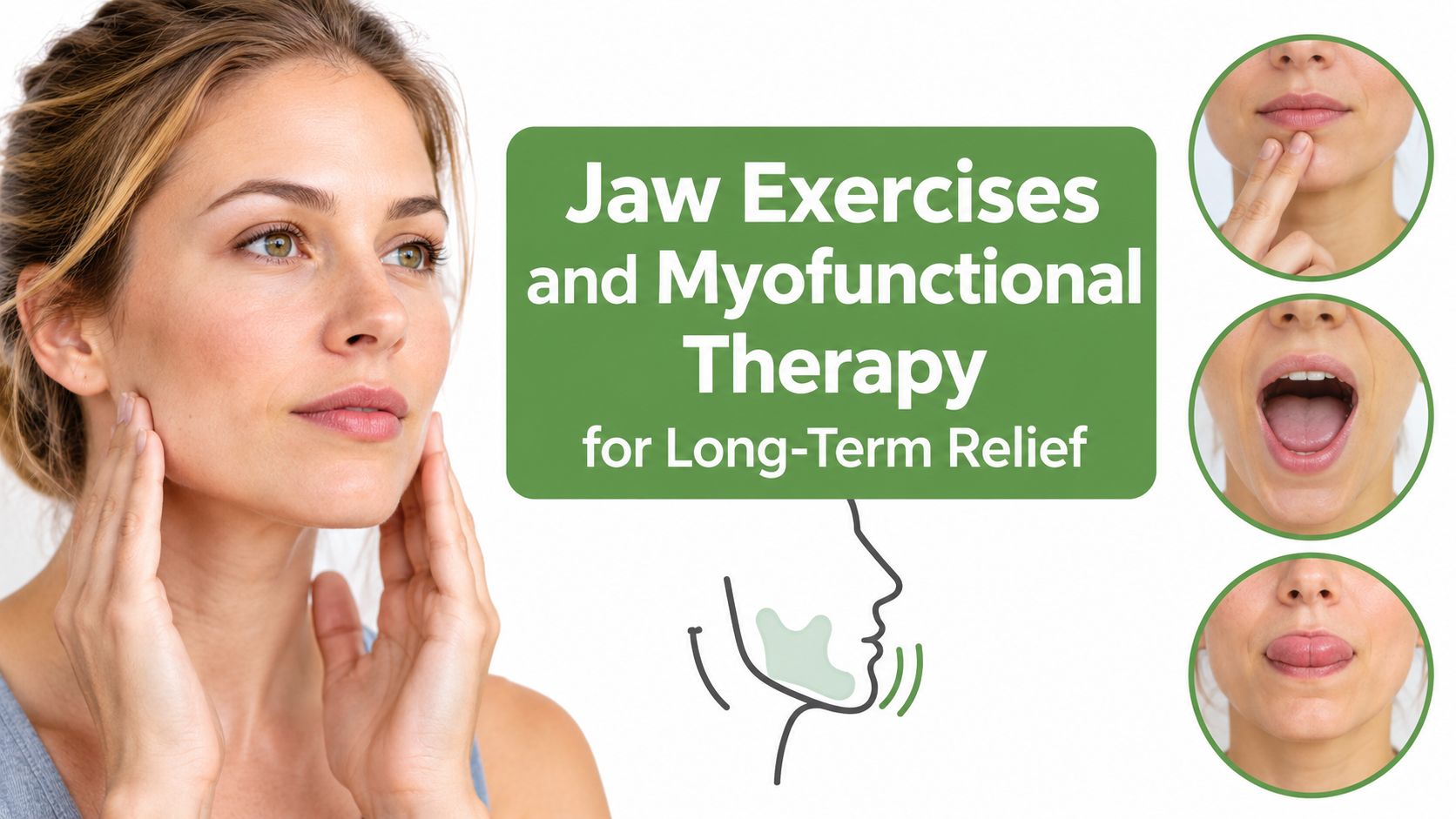
Jaw Exercises and Myofunctional Therapy for Long-Term Relief
Once the acute soreness has settled, the jaw needs controlled movement, not fear-based avoidance. Gentle exercises can improve coordination and help you regain comfortable opening without repeatedly loading the joint.
Begin in front of a mirror. Keep the tongue lightly resting on the palate, place one finger over the chin, and open slowly while watching for a major shift or deviation. Stop before pain increases. The motion should feel smooth and controlled, not like a stretch you have to force.
Build control before intensity
A practical routine may include:
- Controlled opening: Open and close slowly with the tongue resting up, keeping the movement as centered as possible.
- Relaxed jaw resets: Several times during the day, check that the teeth aren't touching when you're not chewing.
- Gentle nasal breathing: Breathe through the nose where possible, especially during rest and low-intensity activity.
- Swallowing practice: Keep the tongue broad and relaxed against the palate rather than pushing the jaw forward or tightening the lips.
- Short movement breaks: Use a few calm repetitions after long periods of talking, screen work, or concentration.
Myofunctional therapy addresses more than the click. It looks at oral resting posture, nasal breathing, swallowing coordination, and muscle recruitment. A person who breathes through the mouth, braces the lips, or holds the jaw rigidly may keep the chewing muscles active for much of the day. Correcting those patterns can reduce unnecessary tension, but therapy should be individualized, particularly when nasal obstruction, sleep-related breathing concerns, or significant pain is present.
The exercises should leave you feeling more coordinated, not flared. If opening becomes more painful, the joint starts locking, or symptoms remain unchanged despite consistent practice, stop escalating the routine and arrange an assessment.
What the evidence suggests
Clicking is common in disc displacement with reduction. A randomized clinical study reported clicking in 85.7% of participants, while another trial found that clicking disappeared in 17% to 30% of cases after supervised exercise, home exercise, or splint-based care, as reported in the 2023 BMJ clinical practice guideline. Those findings support a measured rehabilitation strategy, but they don't promise that every joint sound will disappear.
The meaningful target is comfortable function. If you can eat, speak, yawn, and open without pain or restriction, a remaining click may not require further intervention.
Understanding Appliance Options and When They Help
A mouthpiece can be useful, but the label “night guard” doesn't tell you what it's designed to do. Some appliances mainly protect teeth from grinding. Others are fitted as part of a broader plan to reduce joint loading or alter muscle activity while symptoms settle.
A stabilization splint is generally selected and adjusted for a specific jaw presentation. A general over-the-counter guard may be more accessible, but it can fit poorly, feel bulky, or fail to address the reason your joint hurts. An appliance also won't correct daytime clenching, posture, swallowing mechanics, or the way you load the jaw while lifting or concentrating.
Compare the options
| Appliance Type | Primary Purpose | Typical Wear Schedule | Best For |
|---|---|---|---|
| Stabilization splint | Provide controlled occlusal contact and reduce provocative loading | Prescribed schedule, potentially including extended nighttime use | Persistent symptoms when a clinician determines an appliance is appropriate |
| Hard night guard | Protect teeth from grinding-related wear | Usually worn during sleep | Patients whose main concern is tooth protection, after professional fit assessment |
| Over-the-counter soft guard | Temporary cushioning or tooth protection | Short-term or trial use only when appropriate | Limited situations where a clinician confirms it won't aggravate symptoms |
The comparison of a TMJ splint and a night guard can help clarify why these devices aren't interchangeable. A splint should be monitored and adjusted if it changes symptoms, bite contact, or morning comfort.
A step-up pathway begins with softer foods and suitable analgesic or anti-inflammatory medication. If symptoms persist, a clinician may consider a stabilization splint for about six months, with surgery generally reserved for cases that fail conservative care, according to technical guidance on disc displacement and TMJ treatment.
A device can reduce nighttime loading, but it can't replace movement retraining or habit change.
Don't wear an appliance indefinitely without review, and don't assume more coverage means more benefit. The right device depends on whether the dominant problem is muscle overactivity, joint irritation, tooth grinding, or a combination of factors.
Minimally Invasive and Regenerative Treatment Options
Some patients continue to experience pain after careful self-care, exercise, and an appropriate appliance trial. That's when a specialist may discuss minimally invasive options, but the conversation should remain evidence-led rather than procedure-led.
Platelet-Rich Fibrin, or PRF, uses components derived from the patient's own blood. Clinics may propose it as an injection-based regenerative treatment intended to support the local healing environment. Prolotherapy uses targeted injections to stimulate a repair response in selected tissues. Cold laser therapy is non-invasive and may be used to support pain and inflammation management.
These approaches can sound attractive because they appear to offer a biological solution rather than temporary symptom suppression. The trade-off is that patient selection, diagnosis, technique, and outcome expectations matter. A procedure can't correct an inaccurate diagnosis or compensate for ongoing clenching and excessive joint loading.
What the evidence supports
A 2023 AAFP review noted that injections such as platelet-rich plasma and dextrose prolotherapy may be considered for TMJ disorders, but the evidence of benefit remains weak, as summarized in this clinical overview of jaw popping and TMJ disorders. That doesn't mean these treatments are never appropriate. It means they should be presented as selected options with uncertainty, not guaranteed fixes.
Before considering PRF or prolotherapy, ask:
- What structure is being treated? Joint, muscle, ligament, or another source?
- What conservative care has been completed? Include habit changes, exercise, and any prescribed appliance.
- What outcome is realistic? Pain reduction and function may matter more than elimination of clicking.
- How will progress be measured? The plan should define what happens if symptoms don't improve.
A clinic such as Pain and Sleep Therapy Center may include PRF, prolotherapy, cold laser therapy, and orthotic-based care among its non-surgical TMJ options. Its approach also includes assessment of oral posture, breathing, and functional habits, which can be relevant when joint symptoms coexist with broader facial or airway concerns. For persistent or spreading symptoms, its information on chronic facial pain treatment describes a broader evaluation pathway.
Regenerative care should complement, not replace, diagnosis and rehabilitation. Surgery or invasive treatment isn't the default response to routine jaw clicking pain.
Knowing When to Seek Specialist Evaluation
Home care is reasonable when pain is mild, movement remains comfortable, and symptoms are gradually settling. Continuing indefinitely without reassessment is not. Persistent pain, restricted motion, or repeated flare-ups can justify imaging or referral so the joint and surrounding tissues receive a closer evaluation.
Seek prompt specialist or medical assessment for:
- Severe locking: The jaw becomes stuck open or closed, or you can't restore normal movement.
- Trauma-related pain: Symptoms begin after a blow, fall, accident, or forceful event.
- Swelling or fever: These signs can indicate a problem requiring medical evaluation rather than routine self-care.
- Neurologic signs: New numbness, weakness, facial changes, or other unusual neurologic symptoms need escalation.
- Progressive loss of function: Eating, speaking, yawning, or opening becomes increasingly difficult.
- Worsening pain: Symptoms intensify despite reducing chewing load and clenching.
When monitoring stops being useful
If consistent self-care isn't producing a clear improvement after a reasonable trial, arrange an evaluation rather than repeatedly changing internet exercises. A specialist may assess opening and closing mechanics, palpate the joint and muscles, review clenching or grinding, examine oral posture and breathing, and decide whether dental or medical collaboration is needed.
Imaging isn't automatically necessary for every click. It becomes more relevant when the clinical findings suggest structural involvement, persistent restriction, significant pain, trauma, or a treatment plan that requires more precise information. The decision should follow the examination, not the sound alone.
A useful consultation should answer three questions: What is likely causing the pain? What is keeping it active? What is the next least-invasive step that fits the findings? That framework protects you from both extremes, dismissing a painful functional problem and rushing into irreversible treatment.
If jaw clicking is painful, locking, limiting your opening, or worsening despite a careful home program, contact a qualified TMJ clinician for an evaluation. Pain and Sleep Therapy Center provides individualized assessment and non-surgical options for TMJ disorders, facial pain, oral-function concerns, and related sleep issues. Visit Pain and Sleep Therapy Center to discuss whether exercises, myofunctional therapy, an orthotic, or a more specialized treatment pathway fits your symptoms.