
The most popular advice about jaw exercises for clenching treats every exercise as helpful and every jaw as if it needs strengthening. That's backwards for many people who clench. Their closing muscles are already overworking, so forceful repetitions, gum chewing as training, or aggressive stretching can add load instead of relief. A safer starting point sorts exercises by purpose, favors coordination and relaxation, and includes a clear stop cue for each movement.
The Daily Jaw Exercise Routine With Steps and Doses
Start by sorting the routine by purpose. These starting doses are practical starting points for a clinician to confirm, not doses drawn from a single trial protocol. A normal session feels calm, stays pain free, and takes under 15 minutes.
| Exercise | Purpose | Starting dose | Stop or modify if |
|---|---|---|---|
| Rest-position check | Reduces resting clench and resets lip and teeth position | 3-5 times daily, hold 30 seconds | Pain or jaw noise increases |
| Small-range controlled opening | Restores a smooth opening pattern | 5-10 slow repetitions, 1-2 sets | Locking, drift to one side, or sharp pain |
| Lateral excursions | Side-to-side mobility without forcing | 5 repetitions each side | Clicking that grows louder or becomes painful |
| Diaphragmatic breathing with jaw release | Lowers resting muscle activity | 5 minutes, once or twice daily | Lightheadedness, stop and sit down |
| Gentle passive stretch | Eases tender jaw muscles | Light, pain-free hold, 2-3 repetitions | Swelling, severe pain, or limited opening |
The Routine in Order
- Sit upright with your back supported and shoulders relaxed. Forward head posture loads the neck and jaw muscles, so posture comes before movement.
- Place your tongue lightly on the palate, lips closed, teeth apart, and hold for 30 seconds. This rest-position check resets resting tone and reminds the jaw that teeth don't need to touch at rest.
- Open slowly within a comfortable range, watch for drift to one side, then close with control. Stop short of sharp pain or catching, because the goal is a smooth pattern, not maximal opening.
- Add gentle side-to-side movements, five each way. Small excursions restore mobility without forcing the joint to its end range.
- Finish with five minutes of slow diaphragmatic breathing while your jaw hangs loosely. Breathing work targets resting muscle activity, which matters more for clenchers than bite force.
- Note next-morning soreness and how much clenching you noticed during the day. That record shows whether the dose fits, and it's useful if you later discuss dental treatments for teeth grinding or other options with a clinician.
Practical rule: Soreness isn't proof of success. A session that leaves you calmer and moving more smoothly is doing its job.
What the Evidence Actually Supports
The evidence base is small, and that's worth stating plainly. A 2023 systematic review of exercise therapy for temporomandibular disorders found only 5 eligible studies involving 145 participants from 3,388 records. Coordination exercises produced a statistically significant improvement in mandibular range of motion, with a standardized mean difference of 0.36 and a 95% confidence interval of 0.03 to 0.69, while stretching, excursion, and resistance exercises showed positive trends that weren't statistically superior to control treatments.
A larger picture is somewhat more encouraging. A systematic review of 16 randomized trials involving 812 participants found exercise therapy produced a moderate reduction in pain, with a standardized mean difference of −0.58 and a 95% CI of −1.01 to −0.12, and improved active mouth opening with an SMD of 0.43. That review supports symptom and function improvement. It doesn't support a promise that exercises will eliminate nighttime grinding.
Use low-load repetitions, stop if pain or locking increases, and reassess after several weeks. If you have locking, acute inflammation, severe pain, or suspected joint damage, don't start with a generic routine. Get the jaw examined first, then have the dose individualized.
Daytime Habits That Shift Awake Clenching
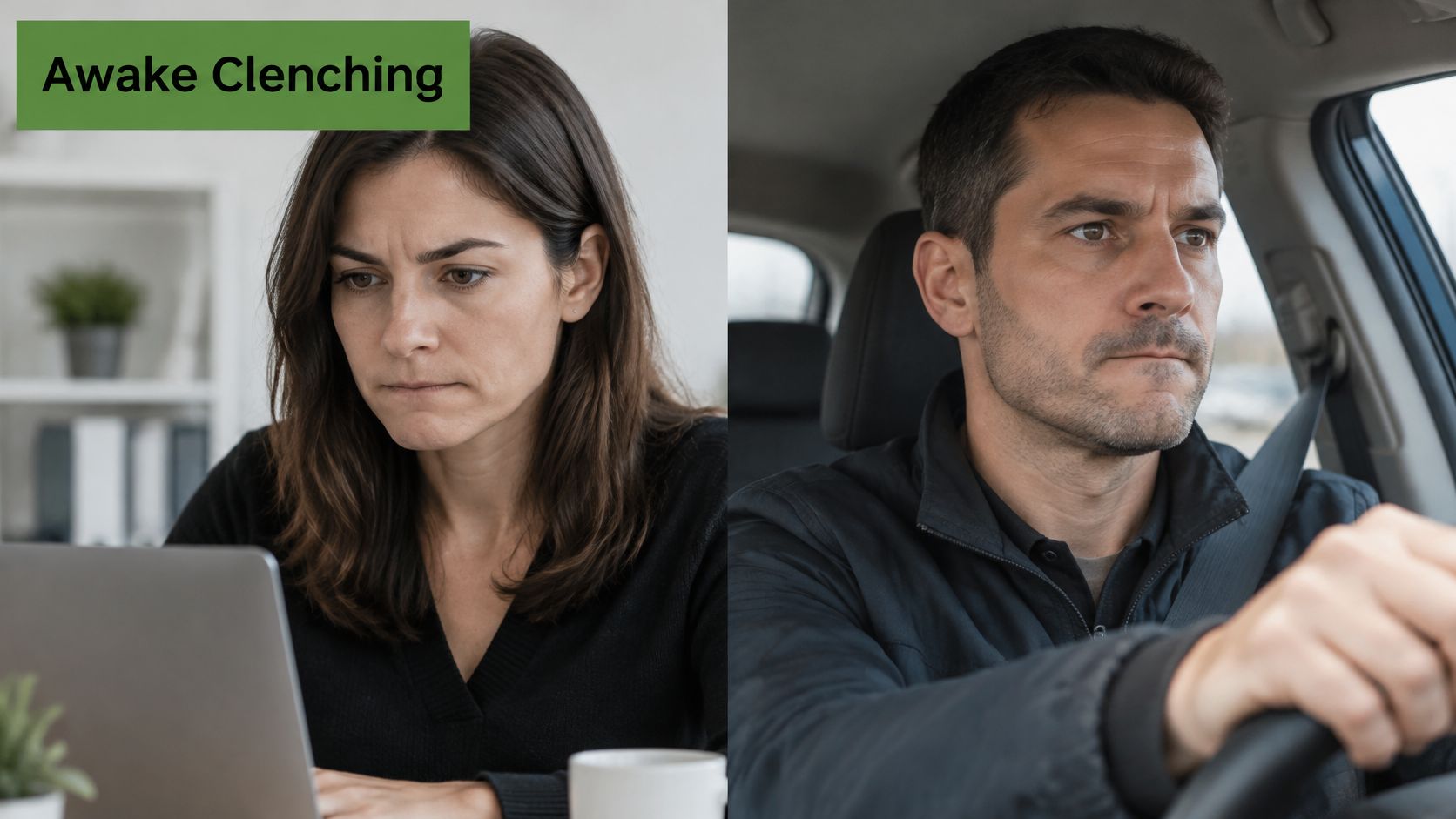
Awake clenching is a daytime habit. It tends to appear during concentration, driving, typing, or stress, and it can run for hours before you notice. Sleep grinding happens when you cannot consciously intervene, so daytime awareness tools do not directly stop it. The useful split is by purpose: some habits detect a clench, some remove load from the jaw, and some reset posture. That distinction matters because a habit you can catch is a habit you can interrupt.
Three Awareness Tools That Fit a Workday
- A discreet prompt: Put a sticky note on your monitor or set a phone reminder every two hours. When it appears, check whether your teeth are touching.
- A phone-buzz check: Use each buzz as a cue for the rest position: tongue lightly on the palate, lips closed, teeth apart.
- A quick body scan: Run attention over your face, neck, and shoulders. Drop your shoulders and balance your head over your spine.
Cut habits that load the jaw between exercises. Gum chewing, nail biting, and chewing on pens or ice keep the closing muscles busy and erase the benefit of a calm routine. If stress is a consistent trigger, the connection between stress and jaw pain is worth addressing directly. Broader teeth grinding guidance for dental patients can help you separate daytime habits from nighttime ones.
Catching a clench early, before it accumulates, does more for daytime bruxism than adding another set of repetitions.
Why Awareness Is Being Tested Against Exercise
Researchers are testing whether sensory awareness does more for awake bruxism than repetitions do. A registered randomized pilot trial in adults with awake bruxism compares somatosensory awareness training with jaw and posture exercise therapy and a wait-list control. Its exercise arm combines jaw mobility, postural alignment, scapular stabilization, and cervical work rather than isolated jaw strengthening. That trial is designed to compare approaches, not to produce a validated exercise prescription.
End each day with three questions. When did I clench today, what was I doing, and did I catch it? You are building detection first. Control usually follows detection.
What Progress Looks Like Over Several Weeks
Judge the routine by trend, not by a single good morning. Pick the same day each week and record four measures, so you're comparing like with like across several weeks.
Four Weekly Measures
- Mouth opening: Measure in millimeters with a clean ruler between the edges of your upper and lower front teeth, opening only to a comfortable point.
- Pain rating: Score pain from 0 to 10 at rest, then again after chewing a normal meal.
- Morning soreness: Count how many mornings that week you woke with jaw soreness or stiffness.
- Headache days: Count days with a headache that started around the temples, jaw, or ears.
Keep a simple daily log alongside the weekly measures. Write the date, exercises completed, pain before and after, and clenching episodes you caught during the day. Five short columns are enough, and a log you keep beats a detailed one you abandon by Thursday.
Improvement means pain, opening, and morning soreness trend the right way together. One good day is noise. Three better weeks are a signal.
Why a Clinician Should See the Log
Supervision appears to matter. A 2023 BMJ systematic review and network meta-analysis of 153 randomized trials involving 8,713 participants found supervised jaw exercise with stretching produced a 43% risk difference for achieving the minimally important improvement in physical functioning compared with placebo or sham, with a 95% confidence interval of 33% to 51%. Those figures concern supervised exercise and physical function, not a guaranteed percentage of pain relief from unsupervised practice.
Bring the log to an appointment rather than judging results alone. It shows dose, response, and pattern in a way memory doesn't. Remember the limit, too. Exercises don't directly measure or reliably suppress sleep-related muscle activity, so persistent nighttime clenching may need separate assessment, such as a custom oral orthotic discussed at evaluation. If the log shows no change or a worsening trend, that's information, not failure. It tells the clinician the plan needs to change.
Where Exercises Fit in TMJ and Sleep Treatment
Jaw exercises are not one category. Some are calming and coordination drills, some strengthen the tongue and facial muscles, and some retrain breathing and oral posture. The purpose decides the dose and the order. A strengthening drill on an overactive jaw adds load to a muscle already stuck in a sprint, which is why a clenching routine needs sorting before it needs more effort.
The video below walks through how a clinician sorts jaw symptoms before assigning home work.
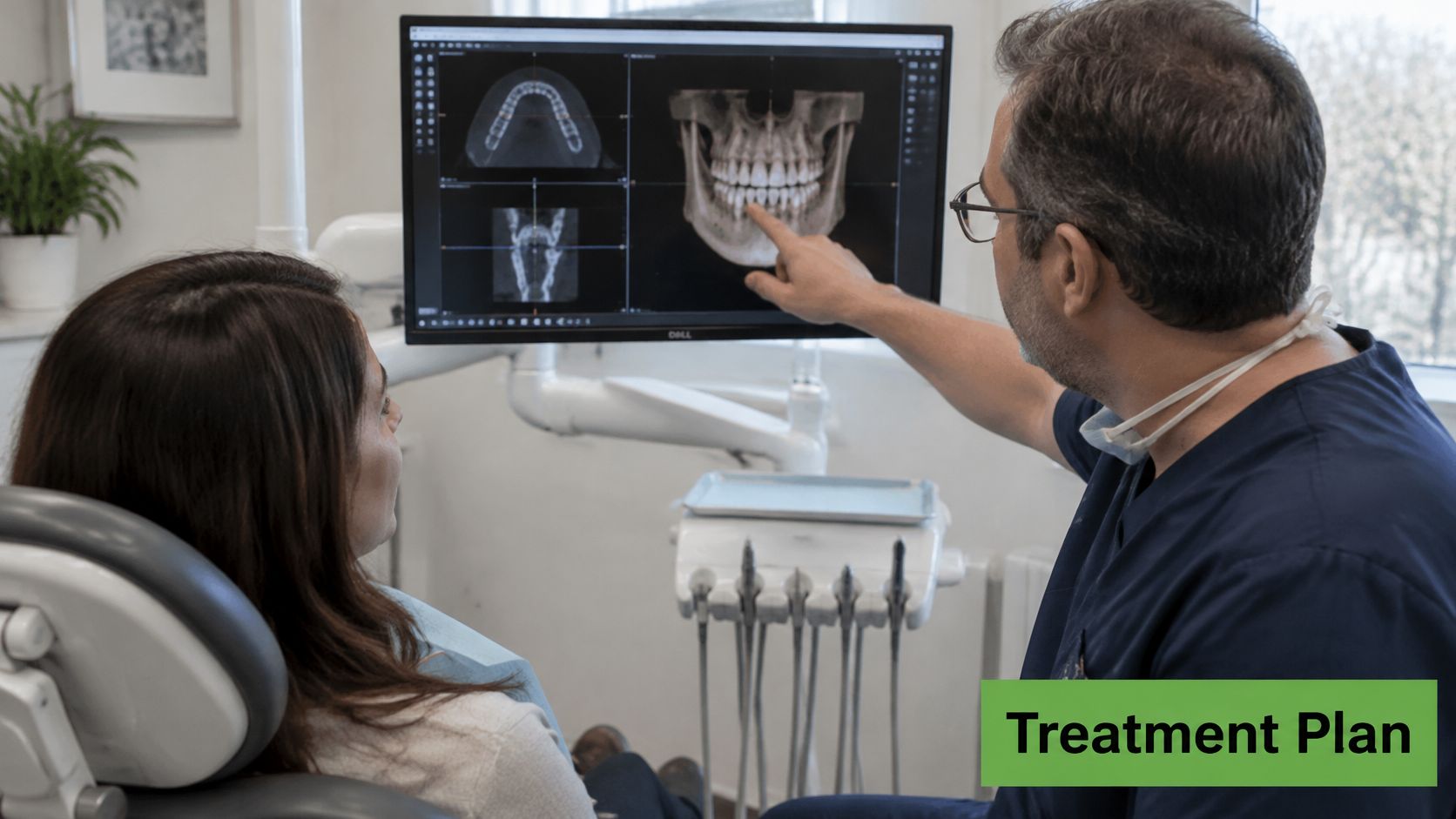
Results vary across studies for a practical reason. A systematic-review protocol on jaw exercise for TMD notes that earlier reviews reported mixed findings, partly because studies combine different TMD diagnoses, describe protocols incompletely, or compare exercise with treatments such as occlusal splints. When pain is severe, clicking is painful, or opening is restricted, that is a signal for clinician-guided care rather than a generic routine. For a Charlotte, NC patient with significant clenching, facial pain, headaches, or restricted opening, the exercise plan should follow an assessment, not replace one.
At Pain and Sleep Therapy Center in Charlotte, NC, therapy is matched to the barrier in front of it, such as tongue posture, habitual mouth breathing, or a sore jaw joint. Orofacial Myofunctional Therapy is a set of targeted exercises for the muscles of the mouth, tongue, and face, and it addresses tongue strength, nasal breathing, and swallowing patterns. For nighttime clenching, the center combines functional therapies with oral appliances, where the appliance gives support at night while myofunctional therapy and breathing retraining address the underlying issues. Guidance on how to stop clenching your jaw at night explains that nighttime side of the plan, and reading about how sleep apnea relates to jaw pain helps explain why sleep is part of the conversation.
Matching the Page to the Problem
For jaw clicking, locking, and bite-related discomfort, the TMJ and TMD symptoms page covers diagnosis and non-surgical treatment. When headaches arrive with clenching, the headaches and migraines page is the relevant starting point. For chronic facial pain that doesn't fit a simple muscle picture, the orofacial pain page explains the wider evaluation.
Other non-surgical options include cold laser therapy and prolotherapy or platelet-rich fibrin for TMJ when indicated. TMJ pain can matter especially in patients wearing oral appliances or clenching through the night, so appliance fit and jaw symptoms are reviewed together. If snoring or sleep apnea signs appear, the center evaluates sleep-breathing concerns as part of the same assessment.
When to Stop Exercises and When to Book an Evaluation
The pitfall that most often makes clenching worse is treating an overworked jaw like a weak one. Forcing maximal opening, chewing gum as strength training, holding the jaw against resistance, or stretching aggressively can aggravate sustained clenching, joint irritability, or an internal derangement. A sore jaw joint behaves like a swollen hinge: pushing it through its full arc makes it stiffer, while small, repeated movements keep it usable. Strength is rarely the missing piece here. The aim is to reduce muscle overactivity and restore controlled movement.
Resistance work has the thinnest support of all. A review of resistance training for TMD identified only three eligible studies involving 108 participants, and rated the evidence very low quality because of small samples, heterogeneity, and moderate risk of bias. Begin with unloaded motor-control drills, small-range opening, controlled excursions, and repeated teeth-apart checks. Add gentle resistance only after a week or two of stable symptoms.
The Stop Rule
NHS guidance on temporomandibular joint problems and jaw exercises instructs patients to keep the teeth apart at rest, avoid clenching, and stop or modify exercises that produce joint noise or increase pain. Turn that into a rule you can apply without guessing.
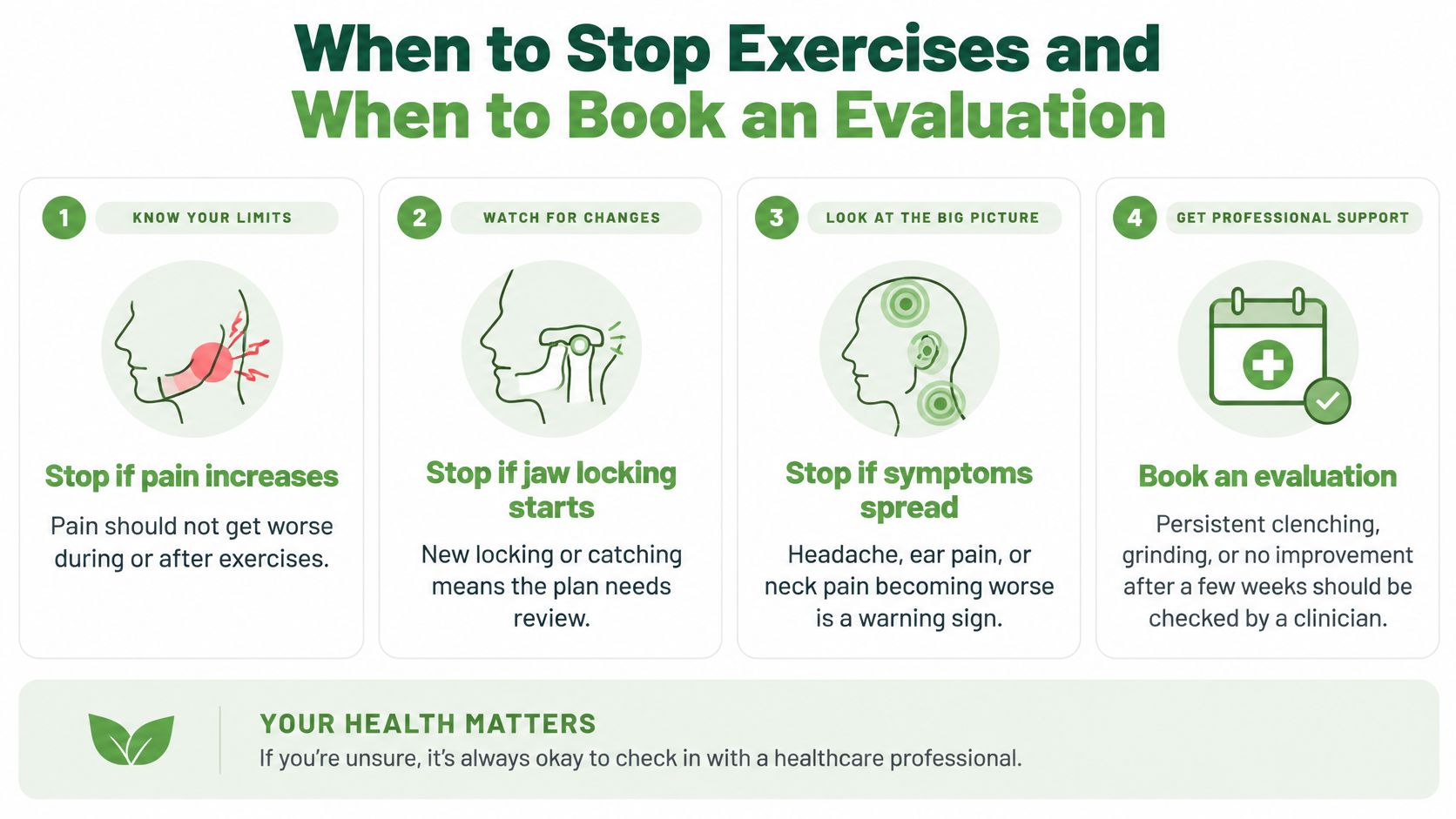
- Stop during the exercise: Pain rises, clicking becomes painful, or the jaw starts catching.
- Stop the next day: You're worse the morning after than you were before the session.
- Stop across the week: Headaches increase, joint sounds escalate, or opening shrinks.
Any one of those signals is enough to pause the routine. Two in the same week means the whole plan needs review, not a harder push.
Red Flags That Need Assessment, Not More Repetitions
Book an evaluation rather than continuing home exercise if you notice any of the following. Persistent locking, open or closed, sits at the top of the list. A marked limit on opening, swelling, numbness or other neurological symptoms, and escalating pain or joint sounds also need examination. Unexplained facial pain patterns deserve a structured facial pain diagnosis rather than a stronger stretching routine.
Decision rule: Start alone only when pain is mild, opening is normal or slightly reduced, there's no locking, swelling, or numbness, and symptoms improve over several weeks.
Book an evaluation if any red flag appears, if pain stays the same or grows after several weeks, or if headaches, ear symptoms, or snoring come with clenching. An unscreened routine isn't appropriate for every clenching pattern, particularly with acute inflammation or a jaw joint that is sore to touch. When in doubt, screen first and exercise second.
What an Evaluation Covers
An evaluation covers your history, a jaw and bite examination, how the teeth meet, questions about sleep, and any existing sleep study. The custom oral appliance process starts with a consultation where the center reviews the patient's sleep study, examines teeth, jaw and airway, and reviews medical history. The center evaluates TMJ pain, jaw dysfunction, headaches, and related sleep or breathing concerns with an emphasis on individualized, non-surgical and root-cause care.
At Pain and Sleep Therapy Center in Charlotte, NC, Dr. Greg D. Larson is triple board-certified, and the team reviews those findings before recommending a plan. The practice's about page describes the interdisciplinary approach behind that work. If clenching, jaw pain, or headaches aren't improving after several careful weeks, schedule an evaluation and bring your exercise log with you.
If jaw exercises have left you sorer instead of steadier, or clenching persists despite several careful weeks, Pain and Sleep Therapy Center in Charlotte, NC evaluates TMJ pain, headaches, and sleep-breathing concerns together and builds a non-surgical, individualized plan. Contact the center to schedule an evaluation and to discuss whether clinician-guided exercise, a custom oral orthotic, or another therapy fits your jaw.