You've been told you have obstructive sleep apnea, tried CPAP, and still find yourself removing the mask before morning. Maybe the leak wakes you, the pressure feels intrusive, or the hose turns every change of position into a small struggle. A sleep apnea retainer, more accurately called a custom oral appliance, can sound like the simple answer. It can be an effective treatment for the right patient, but it isn't a universal replacement for CPAP or a device you should buy without diagnosis and follow-up.
The clinically important questions are more specific: Will the appliance control your breathing events? Can your teeth and jaw tolerate it? Will you still wear it months from now? Those answers depend on your OSA severity, anatomy, dental health, jaw function, and willingness to attend titration and repeat sleep testing.
The Patient Who Couldn't Tolerate CPAP
A 52-year-old man came to the dental sleep medicine clinic after a home sleep test confirmed moderate obstructive sleep apnea. His initial AHI was 22 events per hour, and his Epworth Sleepiness Scale score was 13. His BMI was 31. His sleep physician prescribed CPAP, as is appropriate for many patients with moderate OSA, but the treatment quickly became a nightly negotiation.
The mask leaked when he rolled onto his side. The pressure ramp woke him instead of helping him return to sleep. The tubing felt claustrophobic, especially when he tried to sleep on his stomach or turn toward his partner. Within three months, he had stopped using the machine consistently.
He wasn't refusing treatment. He was refusing a treatment experience that kept interrupting sleep. That distinction matters. CPAP can provide highly reliable airway support when it's worn correctly, but a device left on the nightstand cannot treat breathing events.
Finding an alternative after CPAP frustration
Many patients hear about oral appliances only after months of struggling with CPAP. By then, they may assume a retainer is a lesser option, a cosmetic product, or a generic mouthguard marketed for snoring. A properly prescribed oral appliance is none of those things. It's a medical treatment that changes the position of the lower jaw during sleep.
The 2015 joint guideline from the American Academy of Sleep Medicine and the American Academy of Dental Sleep Medicine established oral appliance therapy as a legitimate pathway for adults with obstructive sleep apnea who can't tolerate CPAP or prefer an alternative. It also emphasized a custom, titratable appliance, provided by a qualified dentist, rather than a non-custom device.
Clinical perspective: An oral appliance isn't a consolation prize. It's a different way to stabilize the airway, with different benefits, limitations, and monitoring requirements.
When I explain the treatment to a patient like this, I start with mechanics. A mandibular advancement appliance doesn't blow pressurized air through a mask. It holds the lower jaw slightly forward while the patient sleeps, which can bring the tongue and related soft tissues forward and create more room behind them. The dentist then adjusts the position gradually, balancing breathing improvement against jaw and dental comfort.
What a Sleep Apnea Retainer Actually Is
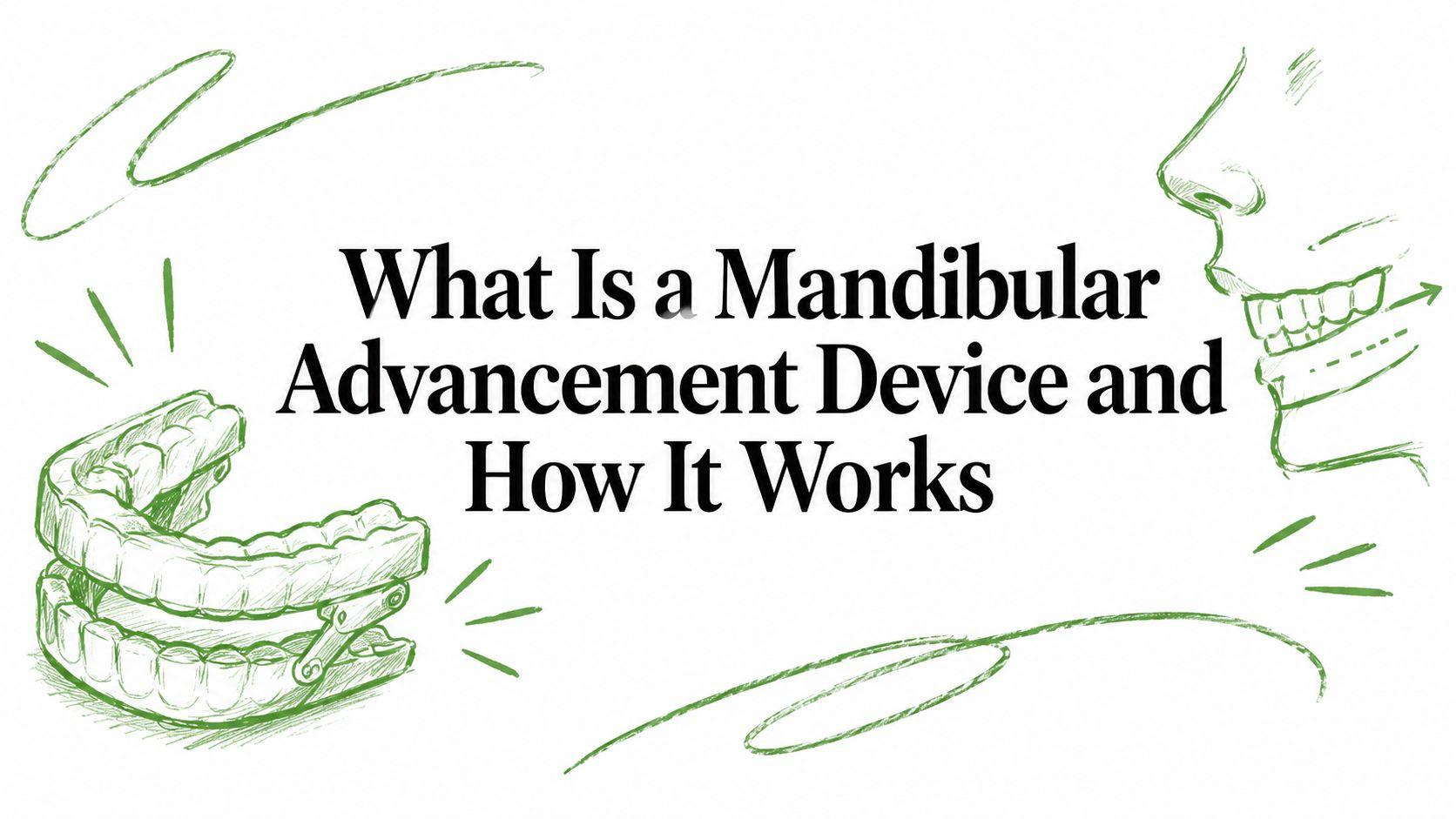
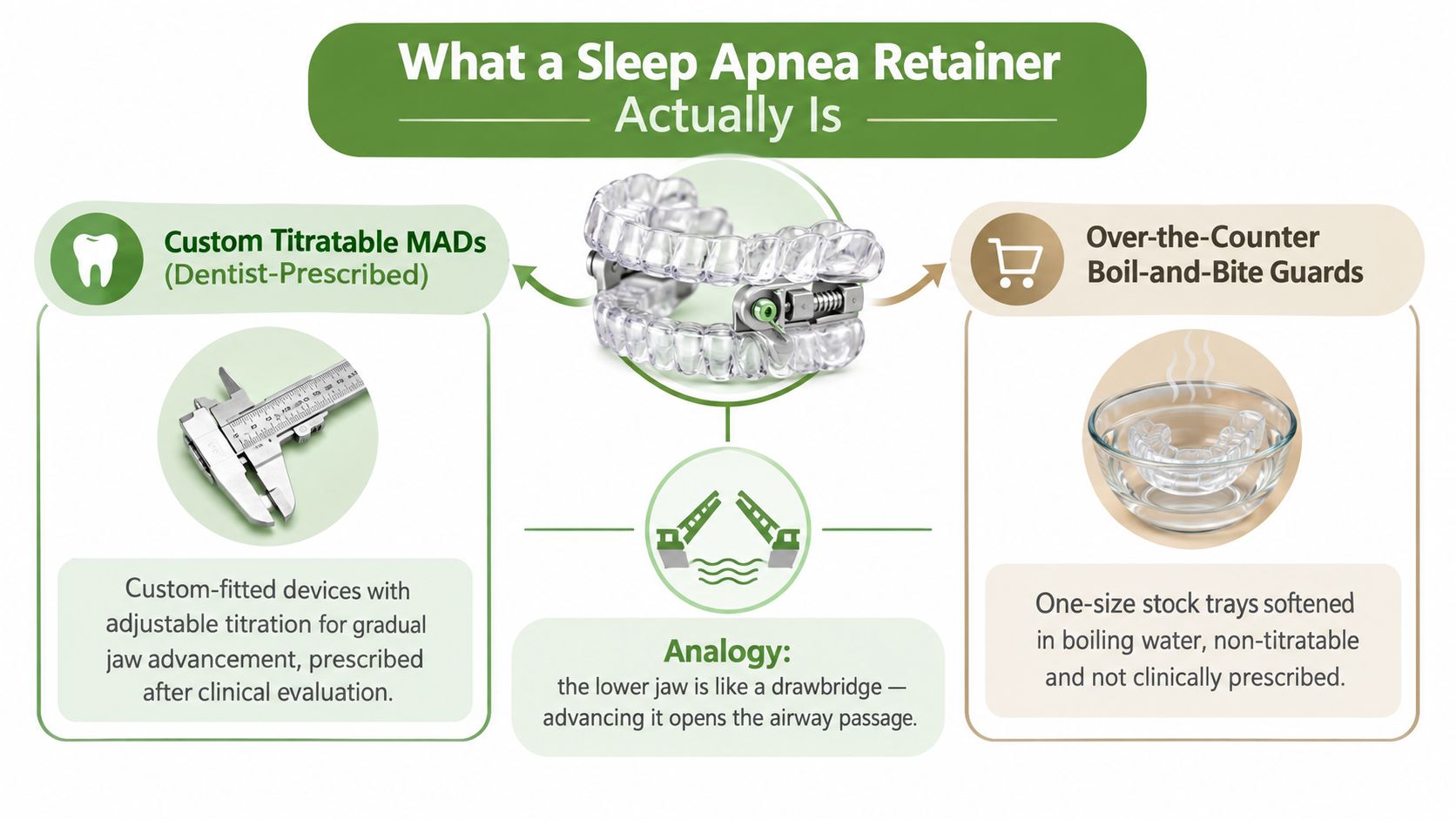
A sleep apnea retainer usually refers to a mandibular advancement device, or MAD. It has separate upper and lower trays that fit over the teeth, joined by a mechanism that holds the mandible in a forward position. Herbst-style arms, dorsal fins, and interlocking straps are common designs.
The lower jaw works somewhat like a drawer. Pull the drawer forward a little, and the structures attached to or influenced by it move away from the back wall. Advancing the mandible can move the tongue base and soft tissues forward, helping widen the space through which air passes. The appliance doesn't cure the underlying tendency for the airway to collapse. It changes the airway's position during sleep.
Custom devices versus generic guards
A custom appliance begins with a dental examination, impressions or digital scans, and a bite registration that records the jaw in a controlled protrusive position. The appliance is manufactured for that patient and includes a way to adjust advancement. Depending on the system, a clinician may advance the jaw in small increments, often 0.5 to 1 millimeter, while monitoring symptoms, bite, and tolerance.
A sports mouthguard protects teeth from impact. A conventional night guard protects teeth from grinding forces. A sleep apnea appliance has a different design goal, retention system, and adjustment pathway. An over-the-counter boil-and-bite guard softens in hot water and molds at home, but it usually lacks the controlled titration and clinical fit needed to confirm airway treatment.
Examples of prescription systems include ResMed Narval, SomnoDent, and Panthera. Product selection should follow the patient's dentition, jaw mobility, retention needs, and clinician's experience, not brand recognition alone. For a useful overview of how restorative dental practices approach these devices, see Prosth & Co.'s restorative dentistry services.
Why the adjustment mechanism matters
The first position isn't always the final position. Too little advancement may leave the airway unstable, while too much can create muscle soreness, joint symptoms, or unnecessary pressure on teeth. A titratable appliance allows the clinician to search for a position that improves breathing without treating the jaw as if it were a fixed hinge with unlimited tolerance.
That's why buying a generic “snoring retainer” and judging oral appliance therapy by the result is misleading. The device may be uncomfortable, may not stay seated, and cannot tell you whether your AHI has improved.
Who Is a Good Candidate for an Oral Appliance
The best candidate usually has mild-to-moderate obstructive sleep apnea, particularly when CPAP causes persistent intolerance or the patient strongly prefers an oral approach. Oral appliances may also suit people whose events are more position-dependent, as well as some patients who snore without severe oxygen impairment.
The decision starts with the sleep diagnosis, not the teeth. A sleep physician should identify the type and severity of breathing disorder, review the sleep study, and determine whether an oral appliance is medically reasonable. The dental examination then answers a different question: can the mouth and jaw safely support the device?
Oral Appliance Candidacy Checklist
| Factor | Good Candidate | Poor Candidate |
|---|---|---|
| OSA pattern | Mild-to-moderate obstructive apnea, positional disease, or CPAP intolerance | Predominantly central sleep apnea or severe untreated OSA |
| Dental support | Stable teeth and healthy supporting tissues | Loose teeth, extensive untreated disease, or no reliable dental anchorage |
| Jaw function | Comfortable opening and forward movement | Restricted movement, active joint inflammation, or significant facial pain |
| Treatment expectations | Willing to titrate gradually and complete follow-up testing | Expects a cure without monitoring or adjustment |
| Overall care plan | Uses oral therapy within physician-guided OSA management | Needs a therapy that can provide more dependable airway pressure |
A patient with severe OSA, substantial oxygen desaturation, or major cardiovascular risk needs careful physician management. Oral appliances can be used in selected severe cases when CPAP fails or isn't appropriate, but they shouldn't delay effective treatment while a retainer is being tested.
Edentulous patients and people with inadequate tooth support may not be able to retain a conventional mandibular advancement device. Uncontrolled bruxism, severe tooth wear, active periodontal disease, and significant TMJ dysfunction also raise the risk of failure or harm.
The practical test: A candidate needs more than a willingness to wear plastic at night. They need a treatable airway pattern, stable dental support, workable jaw movement, and a plan to verify results.
Sleep Apnea Retainer vs CPAP
CPAP remains the more dependable therapy for controlling airway obstruction in many patients. It supplies continuous positive pressure and generally produces larger improvements in AHI and oxygen saturation than oral appliances. The 2015 clinical guideline recognizes this difference while still supporting oral appliances for appropriate adults who prefer them or can't tolerate CPAP.
The problem is that technical efficacy only matters when the treatment is used. A patient who removes CPAP after a few hours, skips it on difficult nights, or abandons it completely may receive less real-world benefit than a patient who wears a less powerful oral appliance consistently.
A peer-reviewed review reported a mean AHI reduction of 56.0% with a mandibular advancement oral appliance and 91% adjusted compliance in the cited study population, as summarized in this review of oral appliance therapy evidence. Those findings don't mean every patient will respond that well. They show why adherence belongs in the treatment decision alongside laboratory efficacy.
Oral Appliance vs CPAP Key Comparison Points
| Factor | Oral Appliance | CPAP |
|---|---|---|
| Airway mechanism | Advances the lower jaw and related soft tissues | Applies pressurized air through a mask |
| Objective respiratory effect | Often meaningful, but variable and generally less than CPAP | Usually more reliable when correctly worn |
| Common burden | Jaw soreness, salivation changes, dental pressure, bite changes | Mask leaks, pressure discomfort, tubing, noise, claustrophobia |
| Portability | Small and convenient for travel | Requires machine, mask, tubing, and power |
| Monitoring | Needs dental checks and objective sleep testing | Needs equipment checks, mask review, and treatment data |
| Best fit | Selected patients who can't tolerate or prefer not to use CPAP | Many patients with severe disease or substantial medical risk |
An appliance may be more useful than CPAP for a particular person because that person keeps it in place. That isn't an argument against CPAP. It's an argument for matching the treatment to behavior and physiology rather than choosing based on a single number.
Patients comparing options may also find this discussion of a custom mouthguard for sleep apnea relief helpful, provided they understand that “mouthguard” is an informal term and doesn't replace a formal diagnosis or follow-up. A broader comparison of sleep apnea oral appliances versus CPAP can help frame the decision with both comfort and respiratory control in mind.
Fitting Titration and Follow-Up Sleep Testing
Responsible oral appliance therapy starts with a confirmed diagnosis and a coordinated referral. The sleep physician's report, whether from polysomnography or a home sleep study, gives the dentist the baseline needed to set treatment goals. A dental examination then evaluates teeth, gums, restorations, bite, jaw movement, and signs of TMJ or muscle disorder.
The clinical pathway
- Referral and records review. The dentist reviews the sleep study and clarifies whether the breathing disorder is obstructive, central, or mixed.
- Dental assessment. The clinician checks retention, periodontal health, tooth mobility, existing restorations, range of motion, and jaw symptoms.
- Digital scan or impressions. The upper and lower arches are recorded, along with a bite registration that captures a tolerable forward position.
- Laboratory fabrication. A custom titratable device is made to the selected design and the patient's anatomy.
- Progressive advancement. The dentist adjusts the appliance in small steps while tracking snoring, awakenings, daytime sleepiness, jaw symptoms, and tooth discomfort.
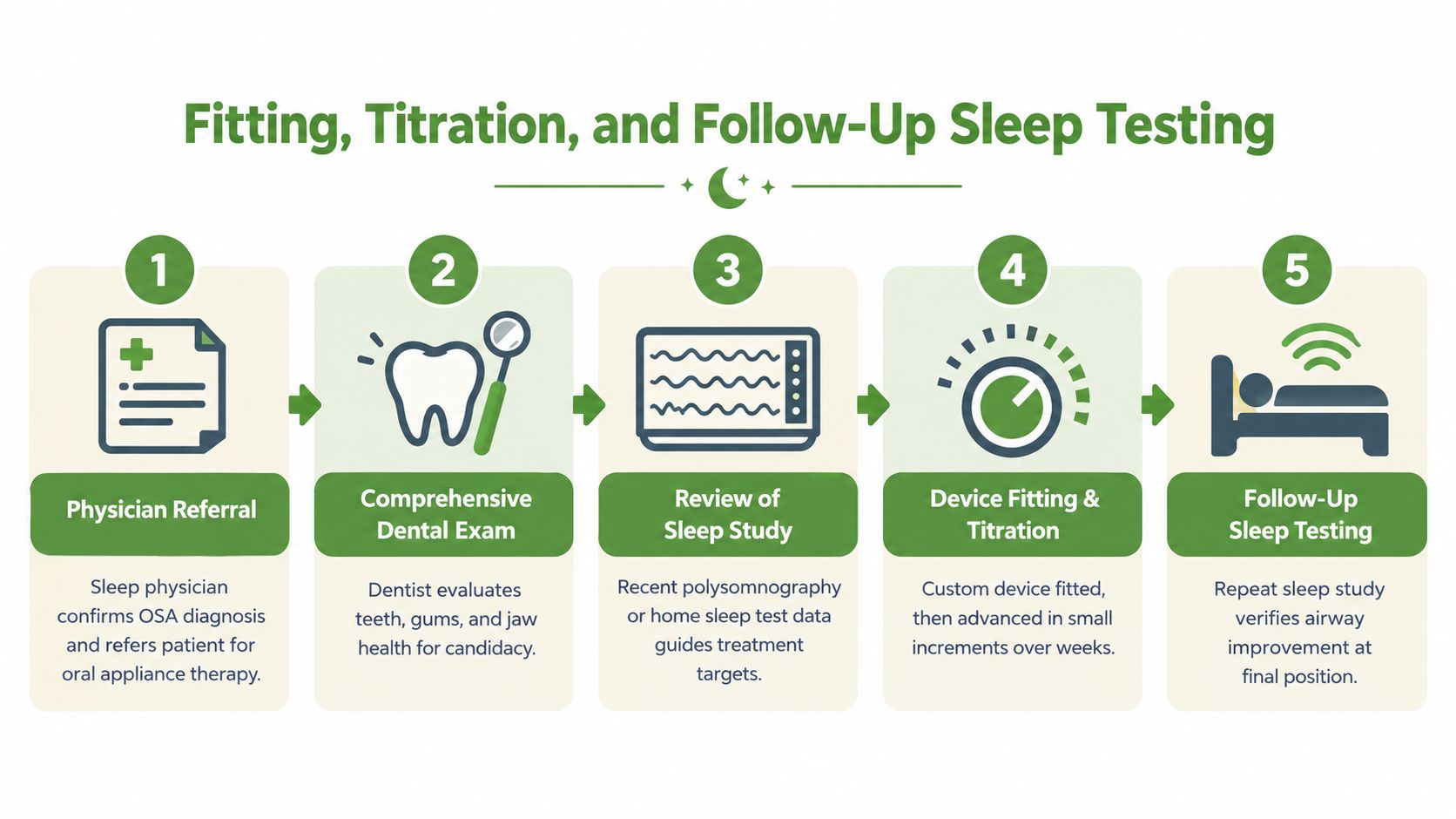
Titration commonly unfolds over 6 to 12 weeks, although the pace should follow symptoms and tolerance rather than a rigid calendar. Advancing too rapidly can provoke soreness and make a patient abandon treatment. Advancing too cautiously can leave residual obstruction unaddressed.
Why symptoms aren't enough
A quieter night and less morning fatigue are encouraging, but they don't prove that the airway is adequately treated. Systematic reviews have found that custom, titratable appliances reduce AHI, arousals, and oxygen desaturation while improving oxygen saturation, yet their effect varies considerably by patient.
Once the appliance reaches a stable position, the patient needs a follow-up sleep study to measure the response. Guidance on home sleep study accuracy can help patients understand what these tests can and can't establish, but the sleep physician should decide which test is appropriate.
A short demonstration can make the fitting process easier to understand:
Annual reassessment is sensible once treatment stabilizes. Teeth move, restorations change, materials fatigue, and jaw symptoms can emerge after a period of comfortable use.
Side Effects Bite Changes and TMJ Considerations
The early adjustment period is usually manageable, but patients should know what normal adaptation feels like and what deserves a call to the clinic. Morning jaw soreness, tooth pressure, hypersalivation, dry mouth, headaches, and muscle fatigue can occur after a new appliance is introduced. These symptoms often lessen with continued use, but persistent or worsening pain isn't something to push through.
Short-term discomfort versus lasting change
The more important long-term issue is the relationship between the appliance and the bite. Reviews describe occlusal changes with prolonged mandibular advancement, including altered tooth contacts and changes in overjet or overbite. A recent meta-analysis found that adjustable devices had less effect on the temporomandibular joint and chewing muscles than nonadjustable devices, while still producing measurable bite changes, as reported in this 2025 evidence summary.
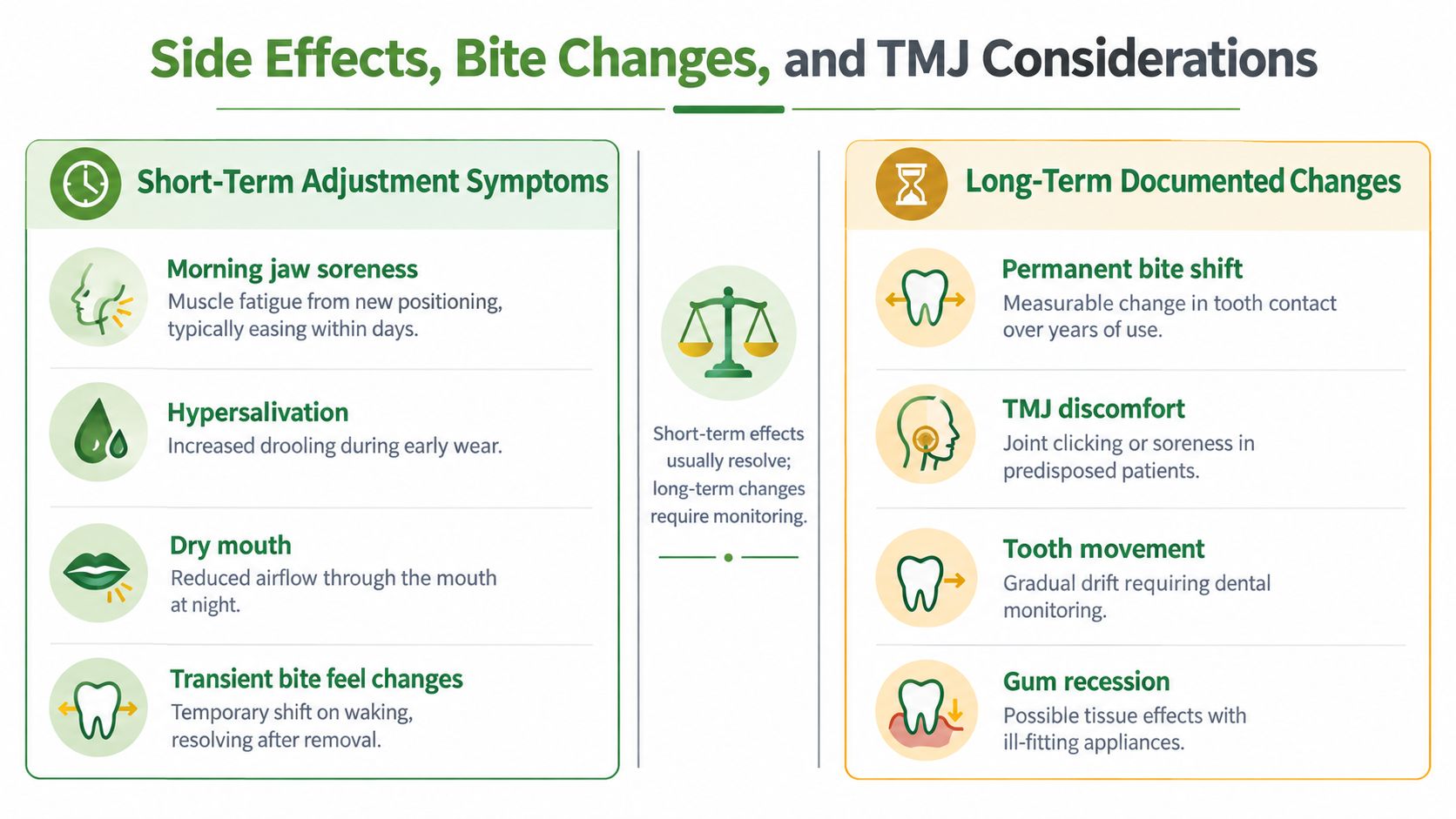
The pattern isn't identical for every patient. Some notice a temporary bite shift when they remove the device in the morning. Others develop more persistent changes in tooth position or contact over time. An in-office 3D-printed titratable device has also been associated with dentoalveolar compensation and incisor position changes, without a direct association with TMJ damage in that study population.
Protecting the jaw and teeth
A baseline bite and TMJ examination gives the clinician something to compare later. Morning bite exercises, an occlusal guide, slower advancement, and periodic measurements can help identify a developing problem before it becomes difficult to reverse.
Patients with active TMJ pain, restricted opening, arthritic changes, or significant muscle tenderness require extra caution. A clinician may decide that the appliance isn't appropriate, or may address the jaw disorder before considering advancement.
Informed consent should include the bite. A device can improve nighttime breathing and still create dental effects that require monitoring. Both facts belong in the decision.
The evidence supports a balanced approach. Adjustable appliances may reduce some mechanical stress compared with nonadjustable designs, but no appliance should be presented as side-effect free. More detail on choosing between a TMJ splint and a night guard is useful when jaw pain and sleep treatment overlap.
Adherence and Long-Term Use
The first weeks can make an oral appliance look easier than it is. Patients often appreciate its portability and absence of a mask, but comfort may change as the jaw is advanced and dental pressure accumulates. The clinically neglected question is whether the patient will still wear it after the initial relief becomes routine.
Recent evidence documents a meaningful decline in adherence after initiation. One 2025 cohort reported 80.0% adherence at one month and 67.3% at six months, with psychological comorbidities associated with poorer adherence, according to the reported cohort data. A 2026 study found adherence below 50% during the first three months and 44.2% at twelve months, reinforcing that early acceptance doesn't guarantee durable use.
What causes the drop-off
Patients stop using appliances for several reasons:
- Symptoms improve: Once snoring and fatigue ease, the device may feel less necessary, even though the underlying airway tendency remains.
- Side effects accumulate: Morning soreness, bite changes, tooth pressure, or jaw clicking can become more noticeable over time.
- The fit changes: Dental movement, restorations, wear, or material fatigue can make a once-comfortable appliance feel wrong.
- Life becomes inconsistent: Travel, illness, stress, and changes in sleep routine can interrupt nightly use.
An unused appliance controls no breathing events. That simple fact makes adherence a treatment outcome, not a convenience detail.
Planning beyond the fitting visit
Some newer appliances can incorporate objective wear monitoring, but usage data alone doesn't prove that the airway is controlled. Periodic home sleep testing or physician-directed reassessment can show whether the treatment effect persists when the device is worn.
Replacement planning also matters. Grinding, material fatigue, changes in the bite, and loss of retention can eventually require repair or a new appliance. Patients should ask how the practice handles these problems before treatment begins, rather than waiting until the device no longer fits.
Resurgent snoring, returning daytime sleepiness, morning headaches, or a partner's report of gasping should trigger reassessment. These symptoms don't identify the cause by themselves, but they're reasons to review appliance fit, sleep position, weight or health changes, and objective breathing data.
The Honest Bottom Line on Sleep Apnea Retainers
A sleep apnea retainer is a serious treatment option for a specific clinical situation. It often makes the most sense for a patient with mild-to-moderate obstructive sleep apnea who can't tolerate CPAP or prefers an alternative, has stable dental support, can move the jaw comfortably, and accepts gradual adjustment and follow-up testing.
It isn't the right answer for everyone. Severe OSA, significant oxygen impairment, complex medical risk, central apnea, unstable teeth, and active TMJ disease can change the balance. Some patients need CPAP, while others may need a broader plan involving positional therapy, weight management, airway evaluation, or specialist care.
Questions to ask before starting
- Who confirmed the diagnosis? You should know whether a sleep physician reviewed the study and identified the type of sleep-disordered breathing.
- Who will provide the appliance? Ask about the dentist's training and experience in dental sleep medicine.
- Is the device custom and titratable? A generic boil-and-bite product isn't equivalent to a professionally fitted mandibular advancement appliance.
- How will success be measured? The plan should include objective follow-up sleep testing after titration.
- How will bite changes be tracked? Ask whether the practice records baseline contacts, jaw symptoms, and dental changes.
- What happens if it doesn't work? You deserve a clear plan for further titration, replacement, alternative treatment, or renewed CPAP support.
- What costs are included? Request a transparent fee structure covering examination, fabrication, adjustments, testing coordination, and possible repairs.
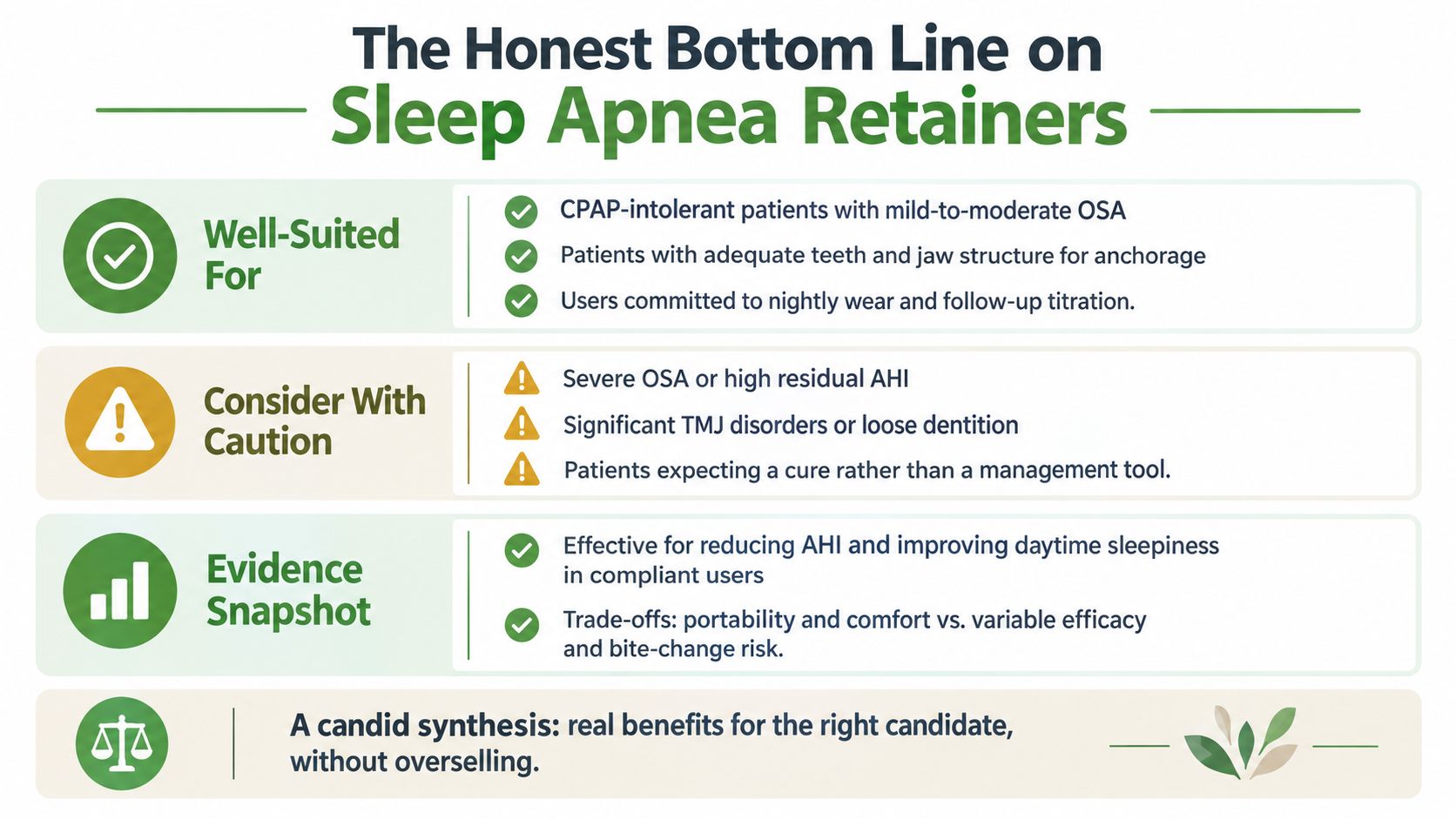
The evidence shows a real trade-off. Custom oral appliances can reduce apnea burden and may be easier for some patients to wear, but CPAP generally performs better on objective respiratory measures. Oral appliances also carry dental and jaw risks that require active surveillance. The best choice is the therapy that addresses your physiology and that you can use consistently, with a clinician checking whether it continues to work.
If you're considering oral appliance therapy, Pain and Sleep Therapy Center evaluates sleep-related breathing, dental sleep medicine needs, and TMJ factors as part of individualized care. Visit Pain and Sleep Therapy Center to discuss whether a custom appliance, follow-up sleep testing, or another treatment pathway fits your situation.