You're tired of waking with a dry mouth, your partner is tired of the snoring, and another night with a CPAP mask feels less like treatment than a negotiation. Maybe you've tried nasal strips, over-the-counter mouthpieces, or sleeping on your side. Perhaps surgery has been mentioned, even though you'd prefer a non-surgical option. In Charlotte, effective sleep medicine solutions should begin with understanding why your airway narrows and which treatment you can use consistently.
Why Sleep Medicine Solutions in Charlotte Are Evolving
A Charlotte patient may arrive after months of trying to solve loud snoring alone. An over-the-counter product offered little relief. A sleep study led to a CPAP prescription, but the mask leaked, the pressure felt uncomfortable, or dryness made sleep harder. Surgery sounded too invasive, leaving the patient stuck between a treatment they couldn't tolerate and an option they didn't want.
That situation is common in practice, and it doesn't mean the patient has failed. It often means the treatment plan stopped at the prescription instead of asking a more useful question: What approach fits this person's airway, jaw, breathing pattern, health history, and daily life?
Moving beyond a single device
CPAP remains an important treatment, especially when obstructive sleep apnea is more severe. But sleep care can also include a custom mandibular advancement appliance, positional strategies, nasal airway support, breathing retraining, or a combination of methods. The correct choice depends on objective testing and clinical assessment, not on whether a patient snores loudly or dislikes a mask.
A thorough evaluation considers several connected systems:
- Airway structure: The clinician assesses how the nose, throat, tongue, and jaw affect airflow during sleep.
- Jaw function: Jaw position and temporomandibular joint symptoms can influence whether an oral appliance is appropriate.
- Breathing habits: Oral breathing, poor nasal airflow, and inefficient breathing patterns may require targeted therapy.
- Daily factors: Sleep position, medication use, weight changes, alcohol, and inconsistent routines can affect symptoms and treatment response.
Practical rule: A treatment that works only when it stays in a drawer isn't a complete solution.
Charlotte patients can review the relationship between snoring, airway obstruction, and treatment options through this guide to stop snoring and sleep apnea. The important distinction is that root-cause care doesn't mean ignoring proven therapies. It means matching therapy to the diagnosis, then checking whether the chosen treatment controls breathing events.
Pain and Sleep Therapy Center is one Charlotte option that combines sleep-related breathing evaluation with dental sleep medicine, orofacial myofunctional therapy, Buteyko breathing, neurology, and airway-focused assessment. That kind of collaboration can be useful when symptoms involve more than a mask, especially when snoring, fatigue, jaw tension, headaches, and mouth breathing appear together.
The Scope of Sleep-Disordered Breathing
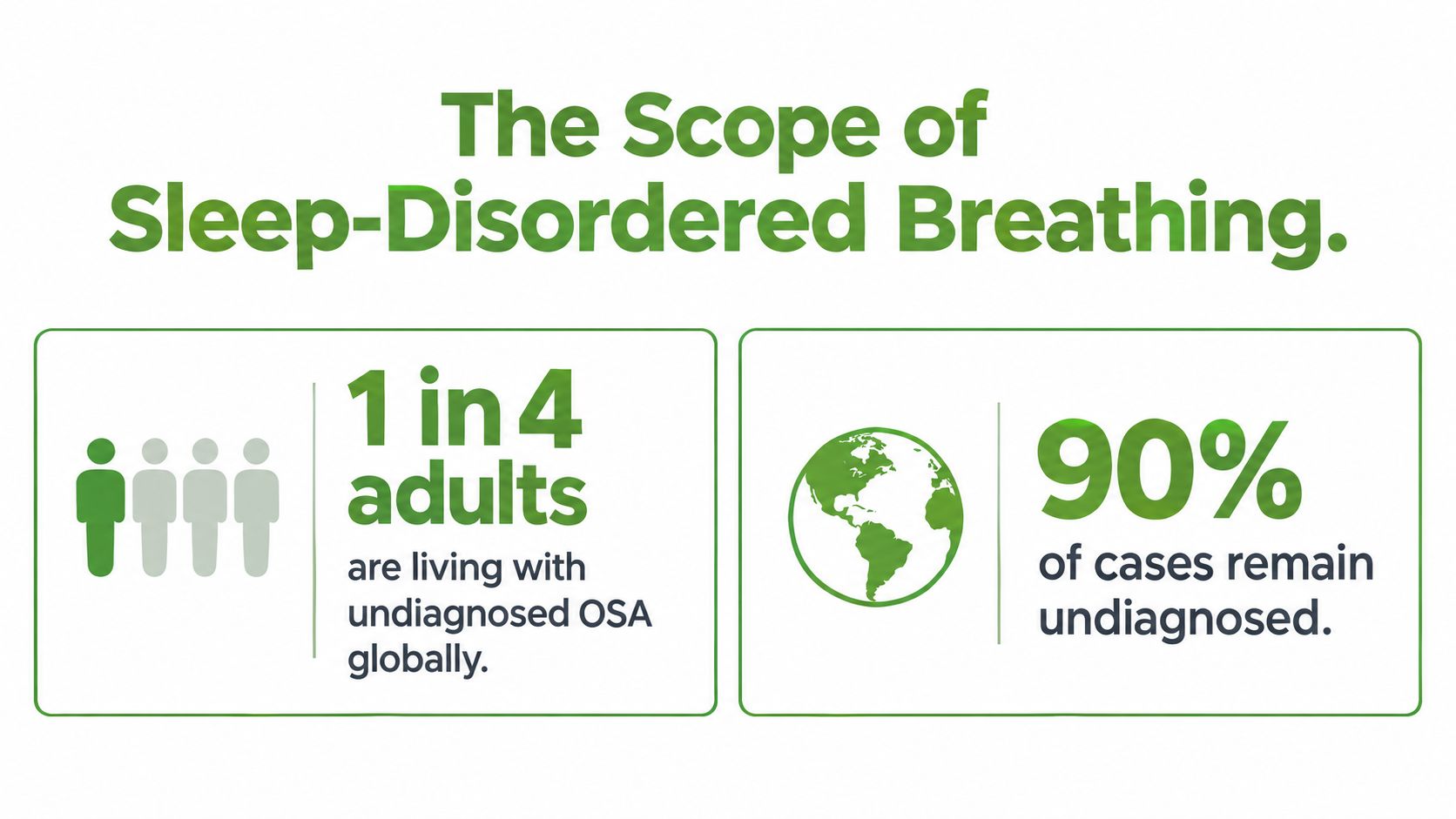
Obstructive sleep apnea isn't a minor variation of snoring. A 2019 analysis published in The Lancet Respiratory Medicine estimated that 936 million adults aged 30 to 69 worldwide had mild-to-severe OSA, while approximately 425 million had moderate-to-severe OSA (The Lancet Respiratory Medicine analysis).
Those figures describe a worldwide medical problem, not a condition limited to one region, age group, or economic setting. The same analysis found substantial geographic variation in modeled prevalence, reinforcing why clinicians shouldn't assume that one symptom pattern or one treatment plan applies to everyone.
Why symptoms deserve proper testing
Snoring can be a warning sign, but it doesn't establish OSA. Breathing pauses, gasping, morning headaches, fragmented sleep, and daytime fatigue provide stronger reasons to seek a formal evaluation. A home sleep study or facility-based polysomnogram can measure breathing events and oxygen changes that a partner may notice only intermittently.
The distinction matters because treatment decisions depend on severity and physiology. A person with primary snoring doesn't need the same plan as someone with repeated airway obstruction and oxygen desaturation. Likewise, a patient with mild disease may have different reasonable options from someone with severe disease.
People who want a plain-language overview can explore find sleep disordered breathing solutions before discussing symptoms with a clinician. Education is useful, but it doesn't replace testing.
The case for individualized care
Large disease estimates explain why screening matters, but they don't tell a Charlotte patient which treatment will work. That decision requires a closer look at sleep-test results, airway anatomy, nasal breathing, jaw comfort, lifestyle, and the patient's ability to use therapy night after night.
A good evaluation also leaves room for reassessment. If symptoms continue after treatment begins, the next step may involve checking the device, repeating testing, adjusting settings, treating nasal obstruction, or investigating another cause of fatigue. The goal is controlled breathing and restorative sleep, not mere possession of a prescription.
Comparing CPAP and Oral Appliance Therapy
Patients often hear “oral appliance” and picture a generic mouthguard. A medically selected appliance is different. It's a custom, titratable mandibular advancement device designed to protrude and stabilize the lower jaw, helping maintain upper-airway space during sleep.
The clinical trade-off is straightforward. CPAP generally produces greater reductions in apnea-hypopnea events, arousals, and oxygen desaturation, while an oral appliance may be easier for some patients to wear consistently. The American Academy of Sleep Medicine and American Academy of Dental Sleep Medicine recommend custom, titratable mandibular advancement appliances for adults who can't tolerate CPAP or prefer an alternative (AASM and AADSM practice parameters).
Treatment Comparison
| Feature | CPAP | Oral Appliance |
|---|---|---|
| Primary action | Delivers positive airway pressure through a mask | Advances and stabilizes the lower jaw |
| Physiological effect | Generally stronger reduction of breathing events and oxygen desaturation | Can control OSA for selected patients, but is generally less powerful than CPAP |
| Best fit | Often preferred in severe OSA when it can be used effectively | Considered for patients who can't tolerate CPAP or prefer an alternative |
| Daily experience | Requires mask, tubing, device, and appropriate settings | Worn inside the mouth and adjusted by a qualified dentist |
| Main monitoring need | Mask fit, pressure tolerance, leaks, dryness, and adherence | Dental effects, jaw symptoms, bite changes, fit, and treatment response |
| Confirmation | Download data and, when appropriate, follow-up testing | Follow-up sleep testing is recommended to verify control of respiratory events |
What “better tolerated” really means
An oral appliance isn't automatically safer, simpler, or appropriate for every patient. It can cause jaw discomfort, tooth movement, bite changes, or other dental effects, which is why qualified-dentist oversight matters. Follow-up sleep testing also matters because feeling less tired doesn't prove that airway obstruction has been controlled.
For severe OSA, CPAP remains the preferred option whenever it can be used effectively. An oral appliance may be a fallback or preference-sensitive choice, but it shouldn't be selected only because a patient dislikes the idea of CPAP.
The useful question isn't which treatment wins in theory. It's which medically appropriate treatment controls breathing and can be used consistently.
CPAP users may also need practical equipment care. Gentle supplies such as gentle CPAP wipes for home care can support routine mask cleaning, although cleaning products won't correct an unsuitable mask, excessive pressure, or an inaccurate diagnosis.
Charlotte patients comparing options can review sleep apnea oral appliance vs CPAP and then discuss the results of their own sleep evaluation with a qualified clinician. A custom appliance should be fitted, titrated, and reassessed, not purchased as a one-time substitute for medical care.
Understanding Insurance and Diagnostic Requirements
Insurance rules can feel frustrating when a patient wants an appliance immediately, but the testing requirement serves an important purpose. A device designed for OSA should treat documented airway obstruction, not loud snoring or a preference for avoiding a mask.
CMS states that a Medicare beneficiary must receive an in-person evaluation by the treating practitioner before the sleep test, followed by a Medicare-covered sleep test (CMS coverage requirements). The study must be ordered by the treating practitioner and performed through an accepted facility-based polysomnogram or qualifying home sleep test using an FDA-approved diagnostic device.
What the process usually establishes
- Clinical evaluation: The practitioner reviews symptoms, medical history, examination findings, and possible causes of sleep disruption.
- Objective sleep testing: The test measures respiratory events and provides the data needed to diagnose OSA and determine severity.
- Coverage criteria: For one Medicare pathway involving a custom-fabricated mandibular advancement appliance, CMS requires an AHI or RDI of at least 15 events per hour, with a minimum of 30 events recorded.
- Treatment documentation: The record must connect the appliance to medically diagnosed OSA rather than uncomplicated snoring.
- Follow-up planning: The patient should understand how fitting, adjustments, reassessment, and billing will be handled.
Snoring isn't the same as OSA
CMS specifically distinguishes covered OSA treatment from appliances used only for snoring without a sleep-test-established diagnosis. It also excludes appliances used for TMJ disorders from the relevant OSA durable-medical-equipment benefit. Professional services, fitting, adjustments, and modifications during the first 90 days after delivery are included in the device payment under that benefit, while later adjustments and follow-up visits aren't eligible for coverage through the DME benefit (CMS oral appliance article).
Coverage varies by plan, so patients should ask about deductibles, coinsurance, appliance eligibility, follow-up billing, and expected out-of-pocket costs. A general resource such as how much does infant sleep coaching may help readers distinguish sleep-related service categories, but it doesn't determine coverage for adult OSA treatment.
Before choosing an appliance, ask whether the evaluation was completed, which sleep test was used, whether the result meets the insurer's criteria, and how effectiveness will be verified. Patients can also review home sleep study accuracy to prepare more focused questions about testing.
When CPAP Fails and Exploring Alternative Pathways
A CPAP prescription isn't the end of the conversation when treatment feels impossible. A 2025 U.S. estimate found that more than half of people who start PAP, about 63%, either discontinue it or fail to meet Medicare adherence criteria (2025 PAP adherence estimate). That finding should prompt better troubleshooting, not blame.
Find the point of failure
A patient who removes the mask may be reacting to several different problems. The mask may leak, the pressure may feel wrong, nasal congestion may force mouth breathing, or the diagnosis may not explain all of the patient's symptoms. Some patients need education and behavioral support, while others need a different treatment altogether.
A structured review should examine:
- Mask and interface: Check fit, leaks, pressure points, claustrophobia, and whether the selected interface suits the patient's breathing pattern.
- Settings and data: Review machine data and determine whether respiratory events remain controlled at the prescribed settings.
- Nasal airflow: Address congestion or poor nasal breathing rather than expecting the patient to tolerate a mask while struggling to breathe through the nose.
- Sleep quality: Persistent sleepiness despite apparently adequate treatment can require evaluation for residual sleep disorder or another medical cause.
- Treatment selection: Consider whether a custom oral appliance, positional therapy, combination therapy, or another pathway is clinically appropriate.
Treatment failure is information. It tells us to inspect the mask, settings, diagnosis, airway, and treatment choice before abandoning care.
Options after PAP difficulties
The newer VA/DoD guidance recommends educational, behavioral, and supportive interventions to improve PAP use. Those measures can include hands-on mask coaching, gradual acclimation, troubleshooting, and reinforcement of a realistic nightly routine.
For appropriate patients who remain unsuccessful with PAP, the same guidance says evaluation for hypoglossal nerve stimulation may be considered. That option isn't suitable for everyone and requires careful medical assessment. It also doesn't eliminate the need for objective diagnosis and follow-up.
A custom mandibular advancement appliance may be reasonable for selected adults who can't tolerate CPAP or prefer an alternative, particularly when the clinical picture supports it. CPAP generally remains more effective at reducing respiratory events, so the decision should balance physiological control, side effects, severity, anatomy, and long-term use.
The most productive next step for a Charlotte patient is not to stop treatment without a word. Bring the device, usage concerns, mask details, and symptom timeline to a sleep professional who can identify the specific obstacle and build a safer alternative pathway when necessary.
Recognizing the Signs and When to Seek Care in Charlotte
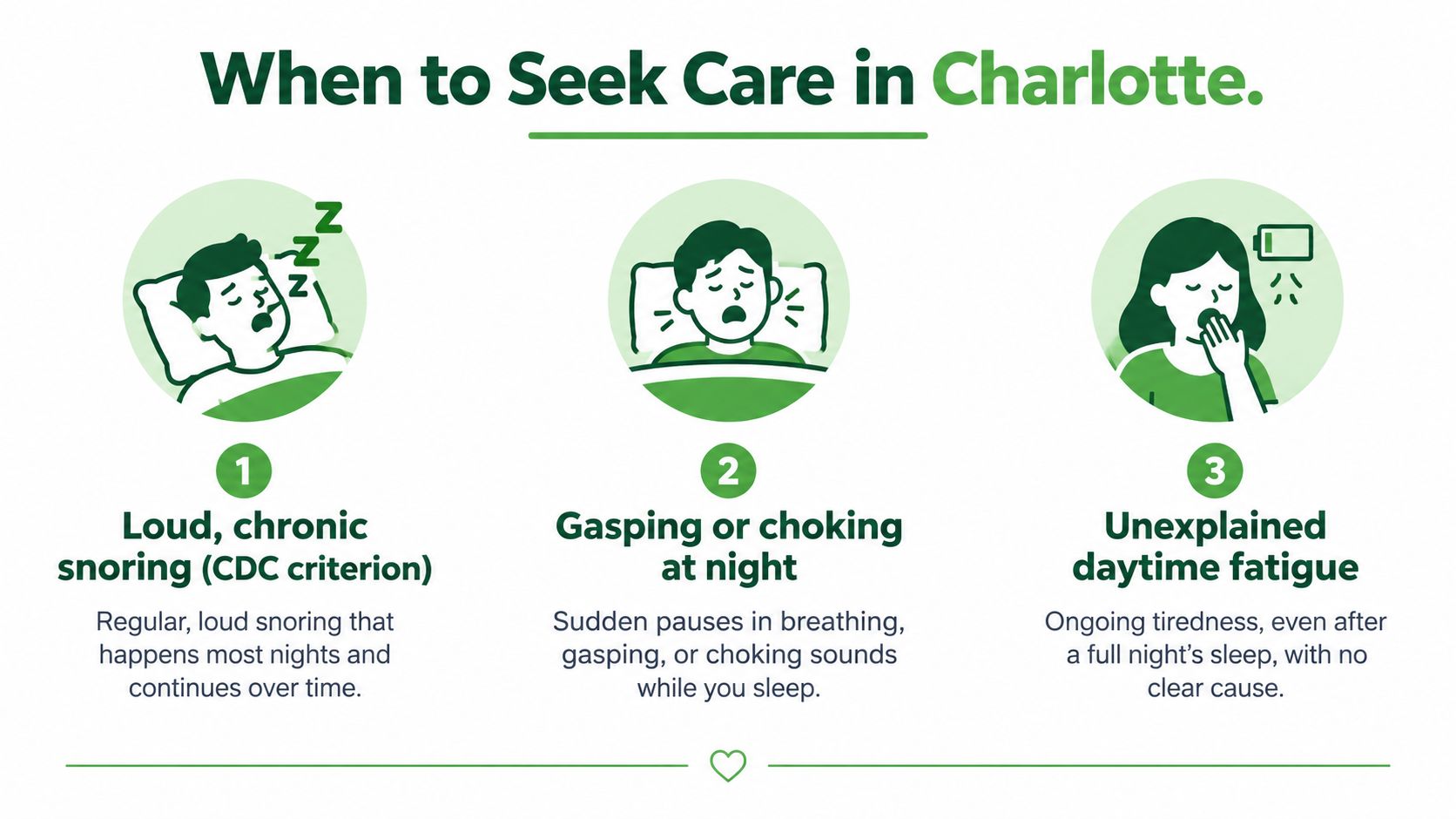
A resident in Ballantyne, South Charlotte, or another Charlotte neighborhood shouldn't wait for a dramatic nighttime event before seeking care. Loud snoring, witnessed breathing pauses, gasping, morning headaches, and unexplained daytime fatigue all deserve attention, especially when they persist or affect work, driving, mood, or relationships.
A CDC analysis found that 41.1% of adults reported loud snoring, while 13.6% reported that someone had observed them stop breathing during sleep (CDC sleep and breathing analysis). The same analysis found that 23.1% unintentionally fell asleep during the day, making daytime sleepiness an important part of the clinical picture.
A practical Charlotte checklist
- Loud, chronic snoring: Snoring alone doesn't diagnose OSA, but persistent loud snoring warrants an evaluation when it disrupts a partner's sleep or appears with fatigue.
- Gasping or choking at night: A partner's report of pauses, choking, or sudden gasping is a strong reason to arrange objective testing.
- Unexplained daytime fatigue: Ongoing tiredness, poor concentration, or unintended sleep episodes may indicate fragmented sleep rather than a simple lack of discipline.
- Mouth breathing or nasal difficulty: Trouble breathing through the nose can affect comfort with CPAP and may point to a need for airway-focused care.
- Jaw pain or headaches: These symptoms can coexist with sleep-related breathing problems and may influence whether an oral appliance is appropriate.
A coordinated Charlotte evaluation may involve sleep medicine, dental sleep medicine, neurology, and orofacial myofunctional therapy. Breathing exercises, nasal airway care, oral posture work, positional strategies, CPAP, and custom mandibular advancement devices each have a role in the right patient. The plan should follow the diagnosis, not the popularity of a particular product.
Pain and Sleep Therapy Center evaluates snoring, suspected OSA, jaw function, nasal breathing, and related fatigue as connected clinical concerns. If symptoms are affecting your nights or days, schedule an evaluation to discuss testing and an individualized non-surgical pathway, then visit Pain and Sleep Therapy Center to learn how the Charlotte team approaches sleep-related breathing care.