Temporomandibular disorders, or TMDs, affect jaw movement and pain as a group of conditions rather than one single problem. They're common in adults, and they can involve tense chewing muscles, the jaw joints, or both.
You may have noticed a click while eating breakfast, a dull ache near your ear, or a headache that appears after a stressful day. Perhaps your jaw feels tight when you wake up, or opening wide for a dental appointment has become uncomfortable. These symptoms can feel alarming, especially when online searches make every sound seem like evidence of permanent damage.
For patients in Charlotte, NC, the more useful question isn't just, “Does my jaw click?” It's whether the jaw is painful, restricted, inflamed, overloaded, or interfering with chewing, speaking, breathing, or sleep. The word dysfunction describes a problem with how the system works, not merely the presence of noise.
Recognizing the Signs of Jaw Pain and Dysfunction
Consider a common Charlotte morning. You wake with pressure around your temples, feel soreness when you chew toast, and notice that your jaw opens slightly to one side. Later, while working, you catch yourself clenching. None of these observations proves a diagnosis, but together they give a clinician important information about how your jaw is behaving.
Temporomandibular disorders are a group of more than 30 conditions involving the jaw joints, chewing muscles, surrounding tissues, and related pain pathways, according to the National Institute of Dental and Craniofacial Research explanation of TMD. Some cases are mainly muscular. Others involve the joint, a disc inside the joint, inflammation, degeneration, trauma, or several factors at once.
Symptoms that deserve attention
People may describe:
- Jaw or facial pain: Discomfort can sit near the joint, cheek, temple, or lower jaw and may increase with chewing.
- Muscle tenderness: The muscles used for chewing can feel tired, tight, or sore after clenching or prolonged use.
- Limited movement: The mouth may not open normally, or the jaw may deviate, catch, or lock.
- Head and neck symptoms: Jaw-related pain can spread toward the temples, face, neck, or head.
- Joint sounds: Clicking, popping, or grating may occur with or without pain.
A click alone doesn't tell you how serious the situation is. A painless sound with normal movement is different from a painful click accompanied by swelling, locking, or difficulty eating. The TMJ pain symptoms guide can help you organize what you're noticing before an appointment.
Why the numbers vary
A 2021 systematic review found that approximately 31.1% of adults and older adults had some form of temporomandibular joint disorder, compared with 11.3% of children and adolescents. The same review identified disc displacement in 19.1% of adults and degenerative joint disease in 9.8%, while the corresponding estimates among younger people were 8.3% and 0.4% (systematic review and meta-analysis).
Those figures include different types of findings, not only painful conditions. In the United States, NIDCR estimates that about 5% of adults have TMD, while emphasizing that results depend on definitions and diagnostic methods (NIDCR TMD overview). That's why a professional evaluation focuses on symptoms and function, not a jaw sound in isolation.
Understanding the Jaw Joint Anatomy and Mechanics
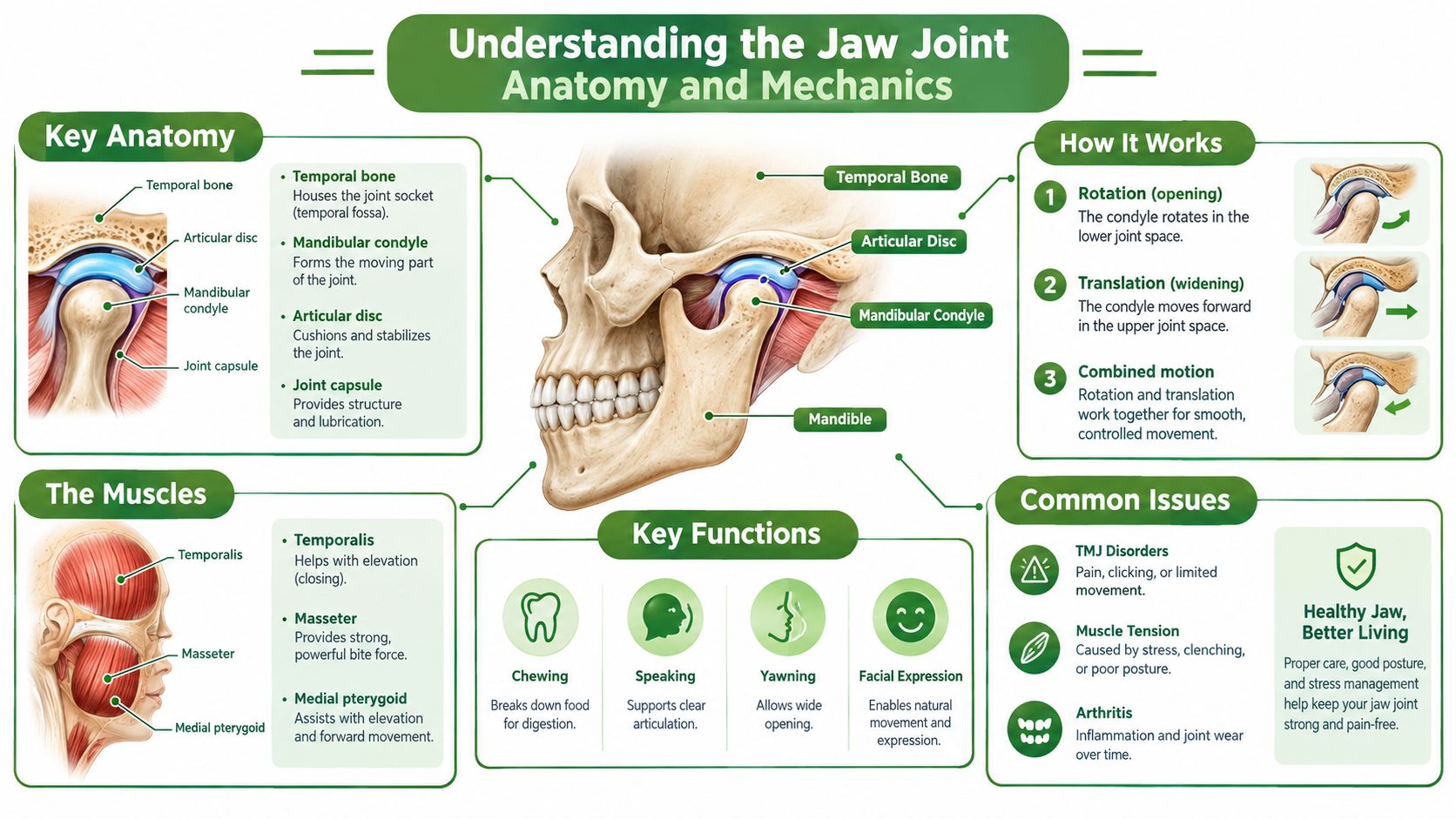
The temporomandibular joint sits just in front of each ear, where the lower jaw connects with the skull. You have one on each side, and they must coordinate while you open, close, chew, speak, yawn, and move the jaw forward or sideways.
A helpful analogy is a drawer sliding in a cabinet. The jaw doesn't rotate like a basic door hinge. It first pivots and then glides forward, with the rounded upper part of the lower jaw moving along the skull. A small cartilage disc helps distribute pressure and coordinate that movement. Ligaments guide the joint, while chewing muscles provide the force and control.
Where dysfunction can begin
Problems may arise inside the joint, within the muscles, or through the way the entire system responds to repeated load. Joint-related examples include disc displacement, degenerative change, inflammation, and injury. Muscle-related overload can develop with clenching, bruxism, prolonged tension, altered jaw use, or stress.
The same movement can feel normal one day and irritating another because pain isn't determined by mechanics alone. NIH-supported OPPERA research helped establish that TMD can involve pain sensitivity, psychological factors, genetics, sleep, and other pain conditions, rather than only a local joint abnormality (NIDCR OPPERA background).
Practical rule: A scan can show structure, but your symptoms and examination show whether that structure is causing a meaningful problem.
Gentle movement, reduced overloading, physical therapy, and habit changes can help selected patients because they address how the joint and muscles are being used. The right plan depends on whether the dominant issue is muscular tension, joint irritation, restricted motion, or a broader pain pattern.
Common Misconceptions About Clicking and Locking
A jaw click is easy to hear, so it often becomes the symptom people fear most. Yet sound and dysfunction aren't interchangeable. A joint can make noise while moving comfortably, and a person can have significant jaw or muscle pain without a dramatic sound.
The more useful distinction is between a noisy but functional joint and a joint or muscle system that causes pain, restriction, or loss of function. Persistent clicking with discomfort, repeated catching, a change in opening, or locking deserves assessment. A painless click with an unrestricted range of motion may not need treatment at all.

What clicking can and can't tell you
Joint sounds may reflect movement of the disc, changes in joint surfaces, or other mechanical events. They don't automatically indicate progressive damage, and they don't identify the correct treatment by themselves. A clinician needs to ask whether the sound is painful, whether the jaw catches, and whether chewing or opening has changed.
Locking is more significant because it limits function. A jaw that occasionally feels tight is not the same as one that repeatedly becomes stuck open or closed. Reduced opening, rapid progression, swelling, or severe pain should prompt timely evaluation rather than forceful stretching or repeated attempts to “pop” the jaw back into place.
Bruxism is one factor, not the whole explanation
Grinding and clenching can overload muscles and joints, particularly during sleep or periods of stress. They aren't the only possible contributors. Posture, sleep quality, injury, inflammation, altered jaw use, pain sensitivity, and coexisting conditions can also shape symptoms.
The guide to TMJ clicking and popping offers a practical way to think about sound in context. A night guard may be appropriate for some patients, but an appliance shouldn't be treated as an automatic answer before the clinician identifies the pattern being treated.
A quiet jaw isn't always a healthy jaw, and a clicking jaw isn't always a damaged jaw. Pain, movement, and function carry more clinical meaning than noise alone.
The Link Between Jaw Pain and Sleep Health
Jaw symptoms often become more noticeable at night or in the morning. A person may clench during sleep, wake with tired chewing muscles, and then spend the day managing temple pressure and fatigue. Another patient may report snoring, mouth breathing, restless sleep, or morning headaches alongside jaw tension.
These patterns don't prove that TMD caused a sleep disorder, or that a jaw treatment will resolve every breathing problem. They do show why jaw health and sleep health can't always be assessed separately. Sleep affects pain sensitivity and muscle recovery, while nighttime clenching or an uncomfortable oral posture can add repeated load to the jaw.
How the airway enters the conversation
The jaw, tongue, lips, and surrounding muscles participate in oral posture and airway function. If a person habitually breathes through the mouth, struggles to maintain nasal breathing, or sleeps with poor oral posture, the muscles around the face and jaw may work differently. Those changes can coexist with snoring or obstructive sleep apnea, but they require a proper sleep assessment rather than assumptions based on jaw position alone.
For someone in Charlotte with jaw discomfort and chronic fatigue, the clinical history should include sleep quality, snoring, witnessed breathing pauses, morning symptoms, and nighttime clenching. A sleep-focused evaluation may be appropriate alongside a TMD examination. Patients looking for broader testing can review how Longevity Medical Institute improves sleep as an example of why sleep diagnostics matter when symptoms extend beyond the jaw.
Headaches and muscle tension
Chewing muscles attach around the face and skull, so sustained tension can contribute to pain felt in the temples, cheeks, or neck. Headaches that worsen with chewing, jaw movement, or prolonged clenching may deserve an orofacial assessment, especially when routine headache explanations haven't resolved the pattern.
NIDCR's national survey analysis found that 4.8% of adults aged 18 to 74 reported jaw or face pain lasting at least one day during the previous three months. The rate was 6.2% among women and 3.2% among men, with variation across age groups (NIDCR jaw pain data). These figures describe symptoms, not a diagnosis, but they reinforce that recurring facial pain is a meaningful health complaint.
Diagnostic Approach for Temporomandibular Disorders
A careful evaluation starts with your story. The clinician needs to know where the pain is located, when it began, what makes it worse, whether chewing changes it, and whether you wake with tension or headaches. They'll also ask about jaw locking, injury, dental procedures, stress, sleep, medications, and other chronic-pain symptoms.
What the examination looks for
A Charlotte TMD specialist may assess:
- Opening and closing: The clinician observes range of motion, symmetry, deviation, and whether the jaw catches.
- Joint response: Gentle loading and movement can help identify whether the familiar pain comes from the joint.
- Muscle response: Palpation of the chewing and related muscles tests for tenderness and reproduction of your usual symptoms.
- Functional limits: The evaluation considers chewing, speaking, yawning, swallowing, and any activities you've stopped because of discomfort.
- Relevant history: Sleep, headaches, clenching, posture, trauma, inflammatory symptoms, and other pain conditions may change the working diagnosis.
Imaging can be useful when the examination raises a specific question about bone, the disc, inflammation, injury, or progression. It shouldn't replace the clinical assessment. A structural finding may be present without causing pain, while pain can involve muscle and nervous-system factors that imaging cannot fully display.
The facial pain diagnosis resource can help you prepare for the questions a clinician may ask. Bring a short symptom record, including the time of day symptoms appear, foods or movements that aggravate them, and whether sleep seems connected.
Red flags deserve prompt attention. Seek timely care for a jaw that remains locked, rapidly worsening limitation, significant swelling, fever, progressive bite change, multiple painful joints, or persistent morning stiffness. These features can point beyond routine muscle tension and may require imaging, medical collaboration, or rheumatology referral.
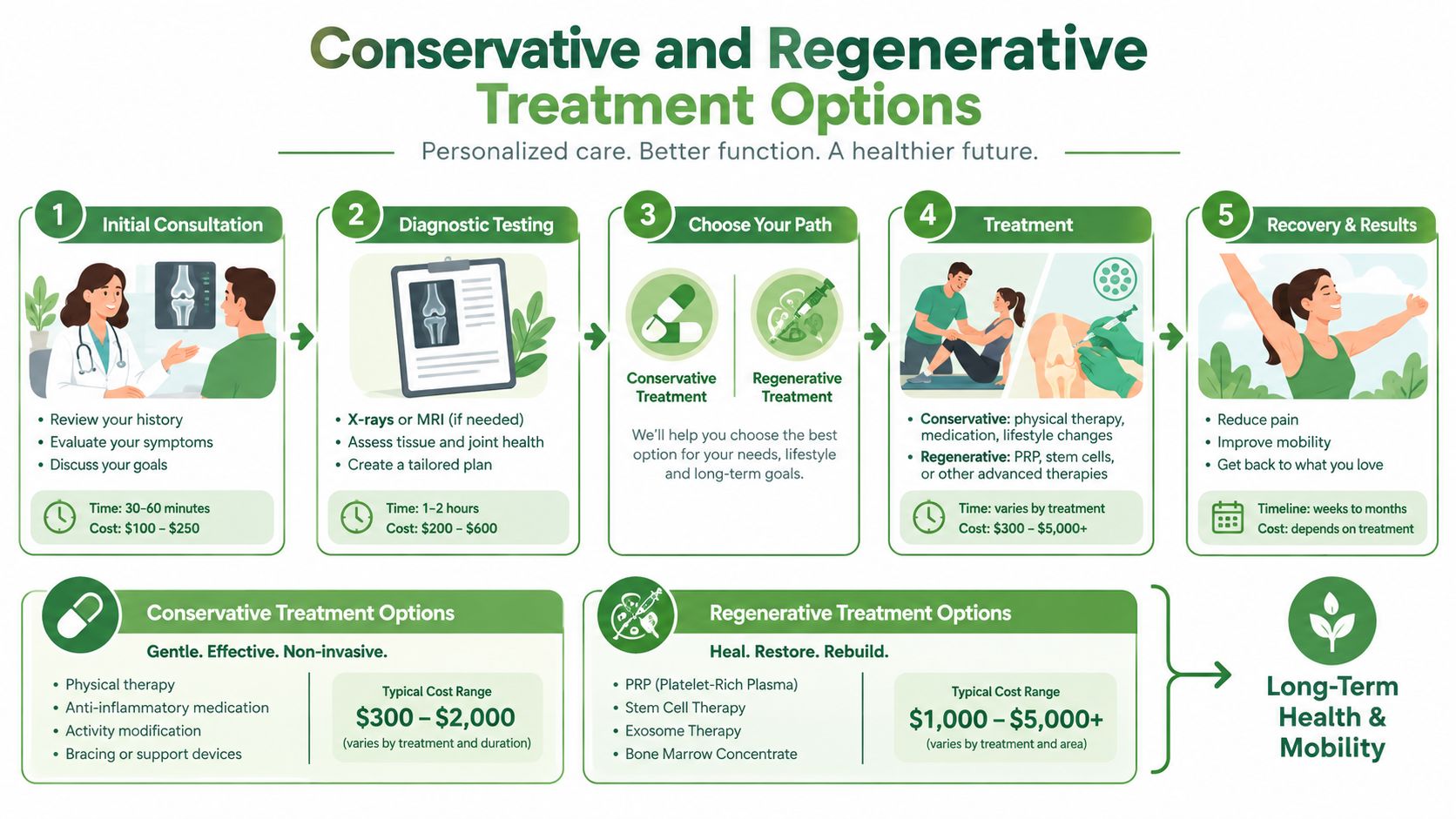
Conservative and Regenerative Treatment Options
Most TMD care begins with the least invasive option that fits the suspected problem. The aim may be to calm overloaded muscles, restore comfortable movement, reduce joint strain, improve sleep-related habits, or address an inflammatory or systemic condition. Treatment shouldn't be selected just because a scan looks unusual.
Reversible care first
The American Academy of Family Physicians lists patient education, sleep hygiene, a soft-food diet, and physical therapy among nonpharmacologic approaches to TMD. Medication may include options such as NSAIDs, cyclobenzaprine, tricyclic antidepressants, or gabapentin when clinically appropriate (AAFP review of TMD management).
A conservative plan might combine:
- Load reduction: Temporarily choosing softer foods, avoiding extreme opening, and reducing gum chewing can give irritated tissues less repetitive stress.
- Movement retraining: A therapist may use controlled opening exercises, posture work, trigger point therapy, or an exercise-based home program.
- Sleep and habit support: Coaching can address daytime clenching, nasal breathing, oral posture, and routines that reinforce muscle tension.
- Oral appliances: A stabilization-type appliance or custom oral orthotic may help selected patients, especially when nighttime loading is part of the pattern.
- Medical coordination: Persistent stiffness, swelling, bite change, fever, or pain in other joints may require evaluation outside a dental setting.
The same AAFP review notes that injections involving sodium hyaluronate, platelet-rich plasma, or dextrose prolotherapy may be considered in some cases, but evidence of benefit is weak. It also cites guidance against routinely using irreversible procedures such as braces, occlusal equilibration, or restorations as first-line TMD treatment.
Where regenerative options fit
Regenerative approaches, including Prolotherapy and Platelet-Rich Fibrin injections, are intended for selected patients after a clinician has identified the target tissue and treatment goal. Cold laser therapy, trigger point therapy, and targeted muscle treatments may also be discussed. These options aren't interchangeable, and they shouldn't be presented as guaranteed replacements for diagnosis, rehabilitation, or medical care.
A 2025 systematic review of TMD associated with rheumatic disease found only five studies suitable for synthesis from 364 screened records. The review described possible benefits from several interventions, including injections, irrigation, dextrose perineural injection, and low-level laser therapy, but heterogeneity and low study quality prevented firm conclusions (systematic review of TMD and rheumatic disease).
For patients comparing resources, Ultra Smile DentalSpa on TMJ relief discusses night guards, bruxism, and TMD as part of the broader conversation about individualized care. In Charlotte, the Pain and Sleep Therapy Center provides evaluation and non-surgical care for TMD, facial pain, jaw clicking, locked jaw, bite discomfort, and related sleep concerns, with services that include custom oral orthotics, exercise-based programs, regenerative injections, and airway-focused support.
Pain and Sleep Therapy Center offers Charlotte patients individualized evaluation for jaw pain, facial pain, headaches, sleep-related breathing concerns, and jaw dysfunction, with conservative and selected regenerative care guided by the underlying pattern. Visit Pain and Sleep Therapy Center to request an assessment and discuss a plan for more comfortable jaw movement, healthier sleep, and better daily function.