You wake with a dull ache at your temples. Your jaw feels tight, and the first few bites of breakfast make it more noticeable. It's natural to wonder whether you've been clenching your teeth, slept awkwardly, or have a headache that's unrelated to your jaw.
Jaw pain and headache can overlap, but neither symptom alone tells you what's causing the other. The jaw muscles, neck, and systems involved in sleep and pain can all contribute, sometimes at the same time. Understanding those connections can help you decide what to track, what to ask a clinician, and when a jaw-focused evaluation in Charlotte, NC, may be useful.
Why Jaw Pain and Headache Are Connected
A headache that builds after hours of chewing tells a different story from one already waiting when the alarm goes off. Timing, triggers, and where the ache travels often matter more than the label “TMJ,” because the jaw is only one part of a crowded neighborhood.
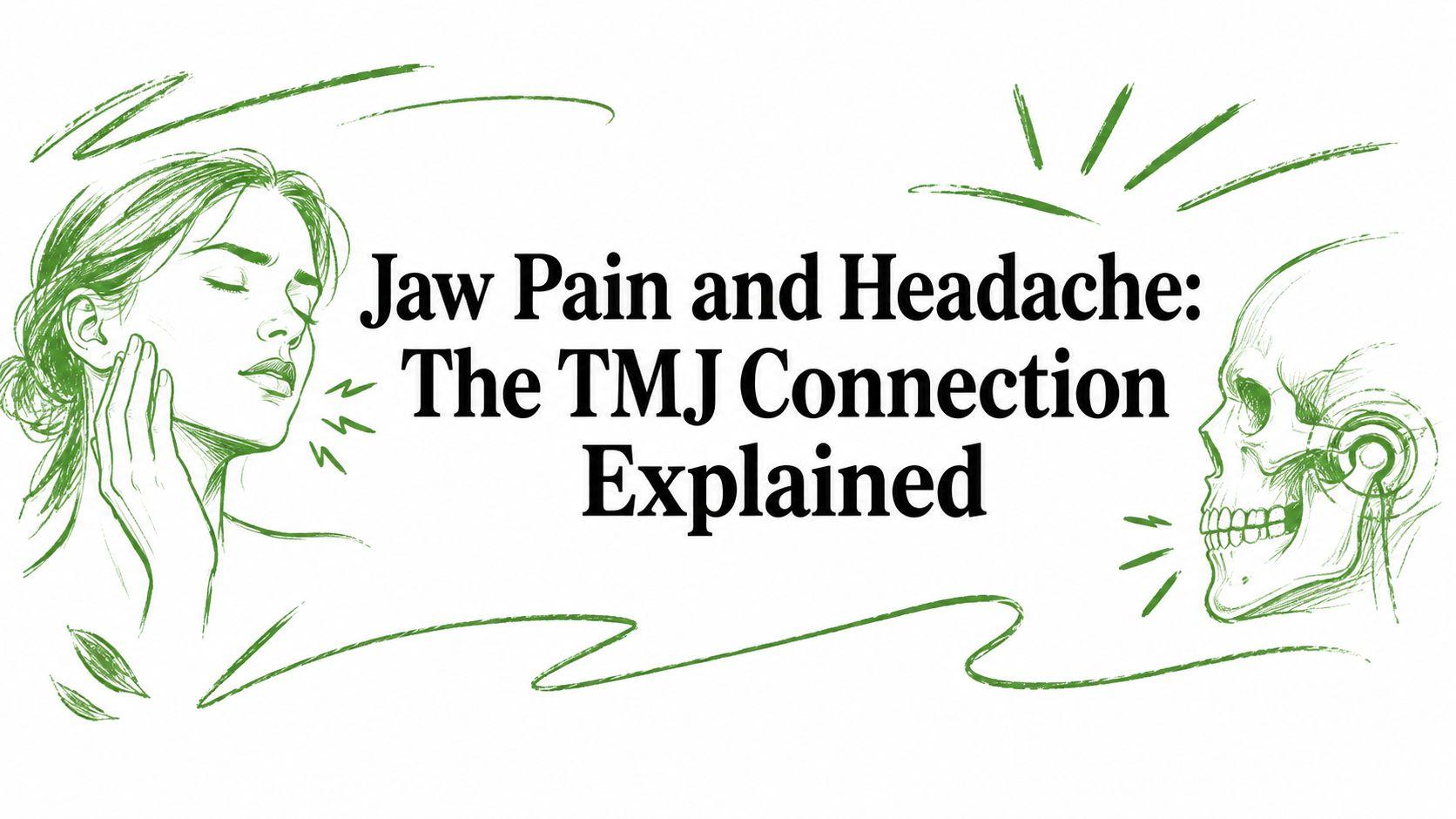
The temporomandibular joint sits just in front of each ear, where the lower jaw meets the skull. Jaw muscles reach across the cheeks and temples, while neck muscles and nearby nerves share the same workspace. When one part is irritated, neighbors can start to complain: chewing may light up the temples, a stiff neck may change how the jaw moves, and poor sleep may leave both systems more reactive by morning.
That overlap is common enough to take seriously without forcing a single cause. The National Institute of Dental and Craniofacial Research estimates temporomandibular disorders affect approximately 5% to 10% of the U.S. population, though the range shifts with the group studied and how symptoms are defined (NIDCR's overview of TMD and jaw pain). For an individual, the number is background rather than a verdict.
A practical way to sort the pattern is to ask what loads the system. Does pain rise with gum, bagels, or long conversations? Does it follow nighttime clenching, travel with neck stiffness, or ease once the jaw warms up? A clinician may also ask how wide the mouth opens comfortably and whether sounds or catching come with movement. Those clues help separate jaw-driven irritation from a primary headache disorder, cervical referral, sleep-related breathing problems, or several contributors working together.
If neck discomfort keeps showing up beside head pain, this guide to when to seek help for neck pain can help you judge when it deserves its own exam. The goal is a working map of inputs, so treatment matches the actual drivers rather than chasing the loudest symptom.
How the TMJ Triggers Headache Pain
Think of the TMJ as a hinge that opens and closes thousands of times through everyday activities. Like any hinge, it works with surrounding parts: muscles guide the movement, and nerves carry information about pressure and pain. When the joint or muscles are irritated, discomfort can spread beyond the spot in front of the ear.
That spread makes more sense when you consider the trigeminal system, a network involved in sensation from the face and head. Jaw and headache pain can reinforce each other through trigeminal pathways. A systematic review describes two plausible mechanisms: ongoing pain signals from TMD may keep stimulating the trigeminal subnucleus caudalis, while headache-related changes in pain processing may lower thresholds in the jaw, face, and neck (review of TMD and headache mechanisms).
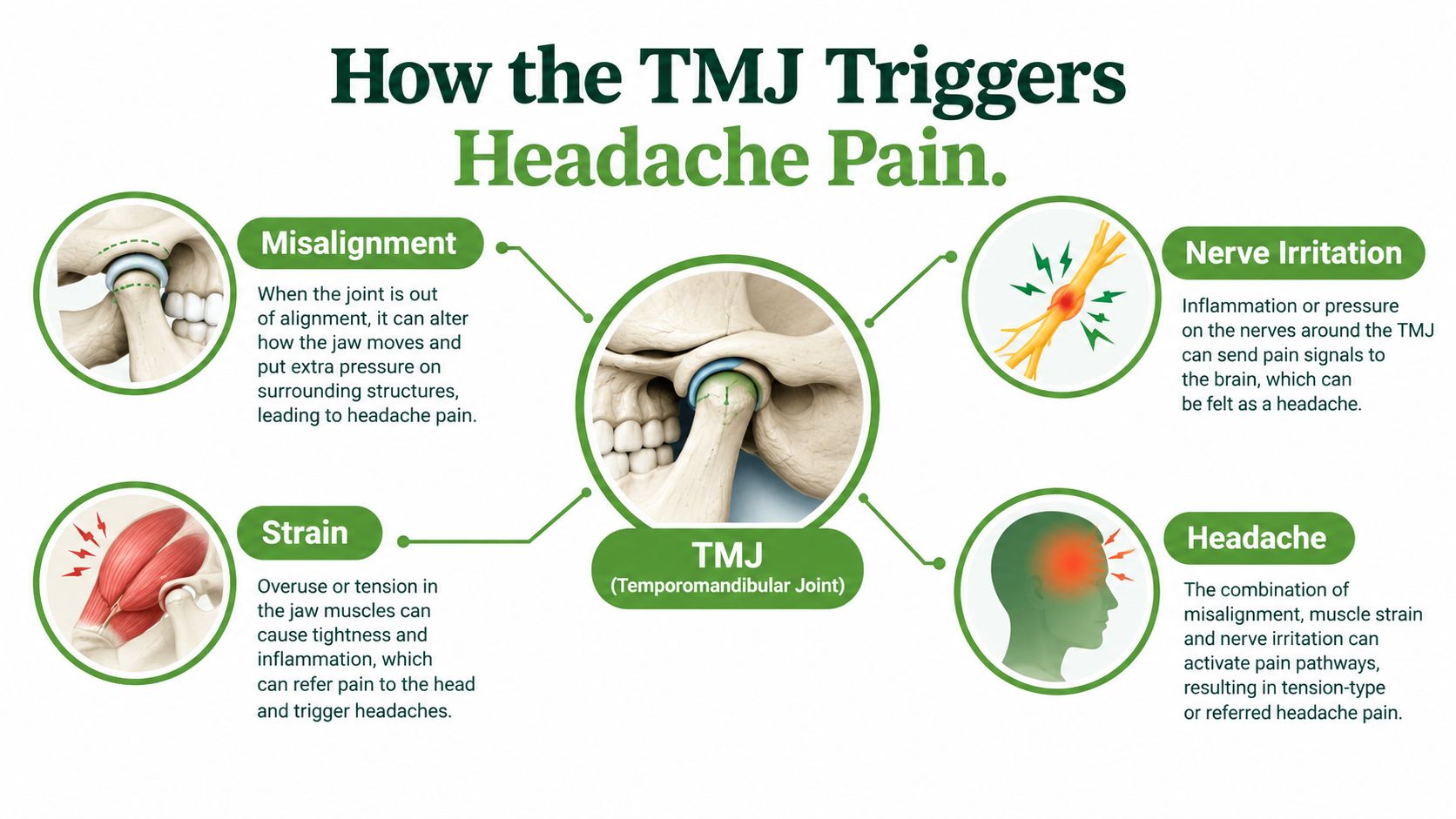
The hinge analogy helps, but pain isn't a simple mechanical chain in which one misaligned part automatically causes a headache. Instead, imagine a shared alarm system. If the jaw keeps sending pain signals, the system may become more responsive; if a headache has already made the system sensitive, pressure on the jaw can feel stronger than usual. Each problem can amplify the other, even if neither one is the sole source.
What this can feel like
A patient might notice that chewing a tough meal increases temple pain, or that a tender jaw muscle reproduces familiar head pain when gently examined. Another person may have a recurring headache first, then become sensitive around the jaw and neck. Both patterns deserve attention, but they call for an assessment rather than a quick assumption.
Features such as pain from light touch, unusually strong discomfort with pressure, or symptoms spreading beyond the jaw can suggest a more sensitive pain system. A clinician may consider headache pattern, jaw movement, tenderness, neck symptoms, and sensory responses together. That approach is more informative than treating the jaw and headache as unrelated by default.
The practical takeaway is simple: jaw pain and headache can be linked in both directions. The connection is biologically plausible, but it doesn't mean every headache comes from the TMJ. A careful evaluation helps determine whether the jaw is a contributor, one of several contributors, or not the main source.
Signs Your Headache May Be TMJ-Related
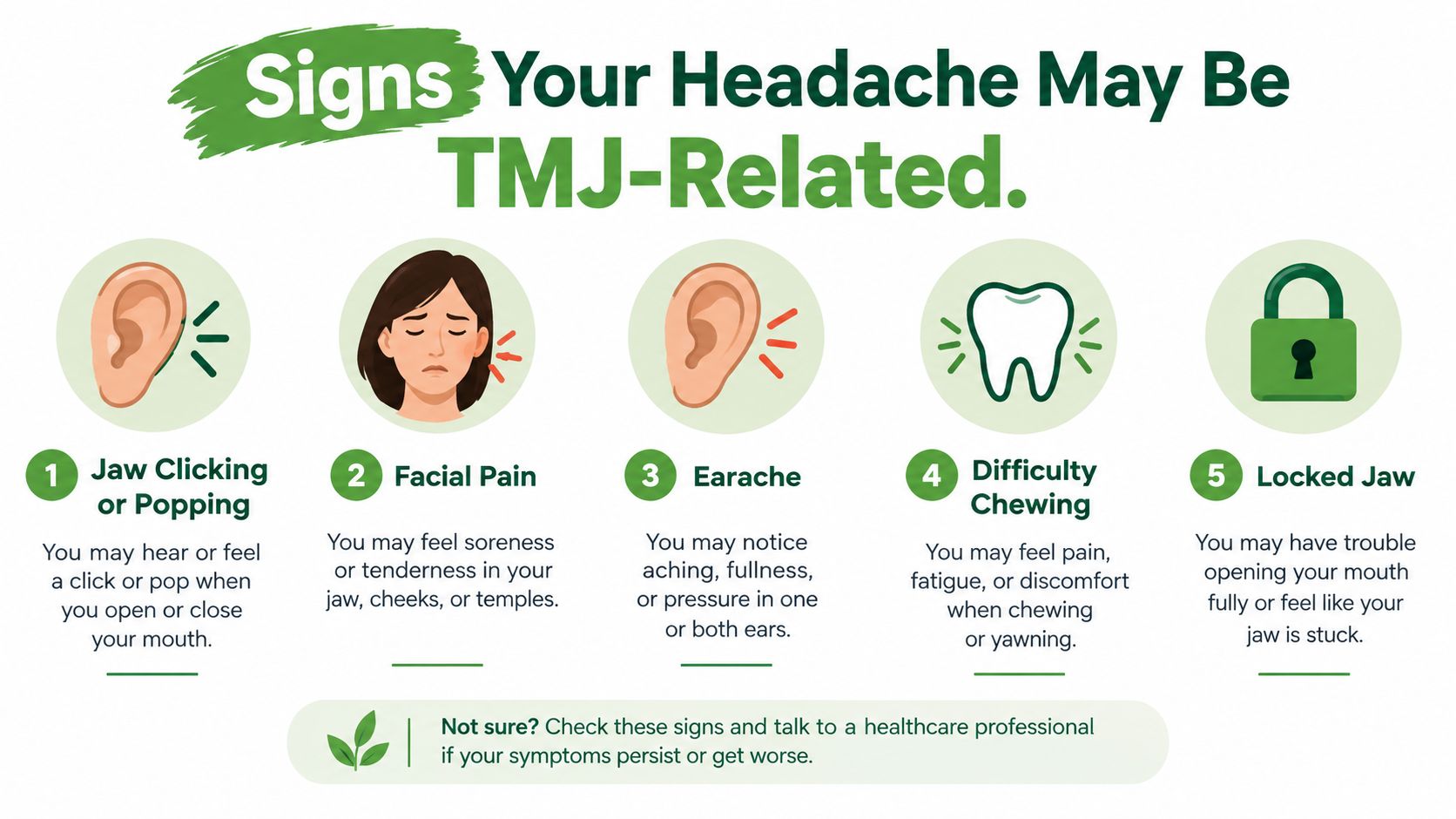
A patient points to her temple, describes months of headaches, and mentions almost as an afterthought that her jaw clicks when she eats. That small detail often turns out to be the clue that matters. A self-check works like gathering puzzle pieces: one piece rarely shows the whole picture, but several fitting together can outline a pattern worth discussing with a clinician. A single symptom such as clicking doesn't establish that the joint is causing pain. Look for clusters of symptoms, especially when they appear alongside headaches or are brought on by jaw movement.
- Jaw clicking or popping: Notice whether the sound comes with pain, stiffness, or difficulty opening. A sound alone doesn't prove there's a disorder.
- Facial or temple tenderness: Check whether the muscles around the cheeks or temples feel sore, particularly after chewing or clenching.
- Earache or pressure near the ear: The TMJ sits close to the ear, so discomfort can be felt in that area. Ear symptoms can also have other causes.
- Difficulty chewing: Pay attention if biting, chewing, or opening the mouth reliably brings on pain.
- Jaw locking or limited movement: Difficulty opening fully or a jaw that catches is worth reporting.
- Grinding or clenching: Consider whether you notice daytime clenching or wake with a tired, tight jaw. These clues don't show that grinding is the only cause.
These signs are easy to dismiss one at a time, which is part of why jaw-related pain goes unreported. In a nationally representative survey of 42,370 adults, 5.3% reported pain in the jaw joint or in front of the ear more than once in the prior six months. The rate was 6.9% among women and 3.5% among men. Jaw-joint pain is common enough that it deserves a place in any headache conversation.
How to use your observations
Instead of trying to diagnose yourself, keep a short record of what happens. Note when the headache starts, whether jaw movement changes it, whether the neck is also sore, and whether symptoms are present on waking. Include activities that seem to aggravate or ease the discomfort. This kind of log gives a clinician the same advantage a puzzle solver gets from having all the pieces on the table.
Useful distinction: A symptom pattern can guide an assessment, but it can't rule out dental, neurologic, ear, or other medical causes.
Consider arranging an evaluation if headaches repeatedly occur with jaw pain, chewing discomfort, tenderness, or restricted movement. A clinician can assess whether the symptoms fit a TMD pattern and whether another provider should also be involved.
Jaw Pain, Neck Pain, or Sleep Apnea
Morning headaches and jaw tightness can suggest clenching, but they don't settle the question. The neck and sleep can matter too. Comparing patterns can help you decide what to discuss, though it can't replace an examination or sleep assessment.
Comparing Headache Types
| Feature | TMJ-Related Headache | Cervicogenic Headache | Sleep-Related Headache |
|---|---|---|---|
| Timing | May occur with jaw discomfort or after jaw use; some people notice it on waking | May accompany neck pain or restricted neck movement | May be present on waking; timing alone doesn't identify the cause |
| Associated clues | Jaw tenderness, painful chewing, clicking with discomfort, or limited opening | Neck stiffness, reduced mobility, or symptoms affected by neck movement | Snoring, witnessed breathing pauses, gasping, dry mouth, or daytime sleepiness may warrant discussion |
| Possible triggers | Chewing, clenching, or jaw movement | Neck position or movement, depending on the person | Sleep-related breathing problems may coexist; clenching shouldn't be assumed to explain every morning headache |
| What to assess | Jaw function and muscle tenderness | Neck mobility and sensitivity | Sleep history and whether testing is indicated |
Jaw and neck symptoms can travel together. A 2025 systematic review and meta-analysis found that people with neck pain or cervicogenic headache had higher odds of TMD than controls, alongside findings such as reduced jaw mobility and increased sensitivity in chewing muscles. That association doesn't prove that a neck problem caused someone's jaw pain, or the reverse. It does support assessing both areas when both are symptomatic.
Sleep deserves a separate look. A 2025 case report described morning headaches first attributed to TMD-related pain that improved after obstructive sleep apnea treatment with a mandibular advancement device. The authors cautioned against assuming sleep bruxism is the only explanation and recommended discussing sleep disorders and arranging testing when indicated (case report on morning headache and sleep apnea). If you're concerned about snoring or breathing pauses during sleep, review sleep apnea symptoms and raise them with a healthcare provider. A morning headache alone doesn't establish sleep apnea.
Seek prompt medical evaluation for a sudden, neurologic, fever-associated, vision-related, or progressively worsening headache. New weakness, confusion, visual changes, or a severe abrupt onset shouldn't be managed as a jaw problem without medical advice. For less urgent but recurring symptoms, note the timing and related jaw, neck, and sleep signs. That gives a clinician a better starting point than trying to select one cause from symptoms alone.
From Conservative Care to Regenerative Therapy
Care usually starts with understanding what is being irritated and what makes it worse. Treatment should fit the person's symptoms, examination, and health needs, not follow a fixed ladder that everyone must climb. A plan may combine approaches rather than relying on one device or procedure.
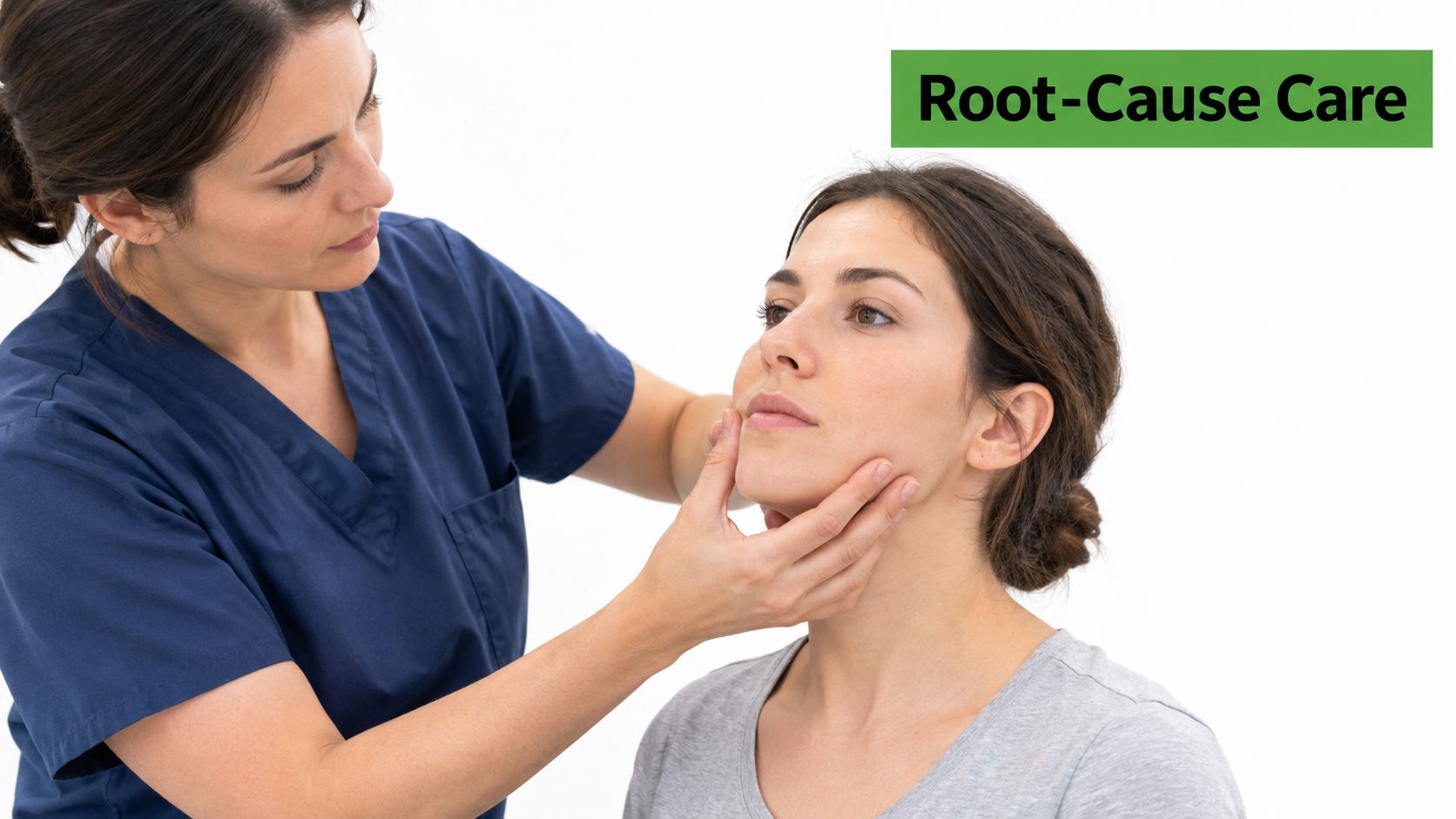
A clinician may begin by reviewing jaw movement, muscle tenderness, headache patterns, neck symptoms, and possible sleep concerns. Depending on those findings, options can include a custom oral appliance, exercises or physical therapy for jaw and neck function, and guidance on reducing repeated clenching or other aggravating habits. Appliances aren't interchangeable, and their purpose depends on the problem being treated, so they should be selected and monitored with a qualified professional.
Why gentler loading can matter
A meta-analysis of 22 observational studies found widespread mechanical pain hypersensitivity in people with TMD. Across five studies involving 1,985 participants, pressure-pain thresholds were lower in trigeminal areas, with a standardized mean difference of -1.55, and in remote body regions, with a standardized mean difference of -1.92 (meta-analysis of pressure-pain sensitivity in TMD). These findings suggest that pressure and mechanical loading can be especially sensitive for some people with TMD.
That's one reason to avoid forcing painful chewing or repeatedly testing how hard the jaw can work. Pushing through pain may aggravate symptoms when the system is already sensitive. An individualized plan may instead adjust activity, build movement gradually, and address muscle coordination or jaw mechanics. A provider may also consider myofunctional exercises when appropriate, particularly if breathing patterns, oral posture, or swallowing function are part of the clinical picture.
Some specialty practices offer additional options, including Prolotherapy, platelet-rich fibrin (PRF) injections, and cold laser therapy. These aren't automatic next steps, and whether they're appropriate depends on the assessment. Ask what the treatment is intended to address, what alternatives exist, and how progress will be monitored. Non-surgical TMJ treatment options can help you prepare questions about conservative approaches and other care choices.
For people managing multiple sources of discomfort, practical routines matter too. Guidance on managing arthritis at home may offer ideas for adapting daily activities, though it doesn't replace a jaw-specific assessment. The goal is to understand the drivers of symptoms and choose proportionate care, rather than mask pain or assume every patient needs the same treatment.
For a visual overview of jaw-related care, see the explanation below.
Finding TMJ and Headache Care in Charlotte NC
Charlotte's size makes clear local information useful when you're looking for a clinician who evaluates jaw pain and headache together. The U.S. Census Bureau estimated the city's population at 943,476 on July 1, 2024, compared with 874,579 in the 2020 Census, an increase of 7.9% from the 2020 estimate base (U.S. Census Bureau QuickFacts for Charlotte). In a large and growing community, patients may encounter many kinds of care, from general dentistry and primary care to neurology, ENT services, physical therapy, and sleep medicine.
The right starting point depends on the symptoms. A jaw-focused provider should ask about headache patterns, chewing, jaw movement, muscle tenderness, neck mobility, sleep quality, and relevant medical history. If findings point beyond the jaw, coordinated communication with a dentist, ENT, primary care clinician, or another specialist can help ensure the evaluation doesn't stop at the first plausible explanation.
Pain and Sleep Therapy Center is a Charlotte-based specialty clinic that evaluates TMJ disorders, facial pain, headaches, and sleep-related breathing concerns. Its team includes dental sleep medicine, orofacial myofunctional therapy, Buteyko breathing, neurology, and pediatric oral health expertise. The practice describes technology-driven diagnostics and individualized care that may include jaw treatment, exercise-based programs, and sleep assessment.
When comparing local options, ask who will assess jaw function and airway concerns, how findings are explained, and how the team coordinates with your existing clinicians. You can also ask whether payment plans or care-navigation support are available before beginning. Those practical details matter, especially if evaluation involves more than one provider or a longer-term plan.
A specialty clinic isn't the right answer for every headache. It can be a useful option when recurring symptoms involve the jaw, face, neck, or sleep and you need a coordinated assessment to understand how those pieces fit together.
When to Seek Professional Evaluation
Book a professional evaluation if jaw pain and headache keep returning, chewing or opening your mouth brings on pain, your jaw locks or feels restricted, or headaches occur alongside neck symptoms or concerns about sleep. A clinician can review the pattern, examine jaw and neck function, and decide whether dental, medical, or sleep-related assessment is also appropriate. For help understanding the diagnostic process, see this overview of facial pain diagnosis.
A first visit should be a conversation as well as an examination. Be ready to describe when the pain began, where you feel it, what changes it, and whether symptoms occur on waking, during chewing, or with neck movement. Bring up snoring, witnessed breathing pauses, daytime sleepiness, or any new headache features rather than assuming they're unrelated.
Get prompt medical care for a sudden, neurologic, fever-associated, vision-related, or progressively worsening headache. Don't try to treat these warning signs as a routine TMJ flare.
Jaw pain and headache can be manageable, but the best next step depends on identifying what's contributing. If symptoms are affecting meals, sleep, or daily comfort, discuss them with your current healthcare provider or arrange a coordinated evaluation in Charlotte.
Pain and Sleep Therapy Center evaluates TMJ disorders, facial pain, headaches, and sleep-related breathing concerns in Charlotte, with care customized to the factors identified during assessment. If jaw, neck, or sleep symptoms are overlapping, Pain and Sleep Therapy Center can help you explore an evaluation and discuss practical next steps.