You wake up, unclench your teeth, and the headache is already there. Coffee helps a little. Work makes it worse. By evening your jaw aches, your temples throb, and sleep feels broken even though you were in bed for hours. If you've treated each symptom separately and nothing has held, you're not missing willpower. You're likely missing a connected diagnosis, which is the starting point for effective orofacial pain management in Charlotte, NC.
When a Headache Isn't Really a Headache
A Charlotte professional sits in the exam room with a folder that tells a familiar story. Her dentist fitted a bite splint. A neurologist adjusted migraine medication. A headache specialist found no clear answer. Two years in, she still wakes with temple pain, avoids chewy foods, and snaps at her family by late afternoon because concentrating hurts.
Nothing she tried was irrational. Each clinician treated the piece in front of them. The problem is that her jaw muscles, joint, breathing, and sleep were never assessed as one system, so relief in one area kept getting undone by load from another.
What Changes With an Integrated Intake
A multidisciplinary intake in Charlotte, NC asks different questions on day one. When does pain peak, on waking or after meetings? Does chewing, yawning, or stress change it? Are you clenching during the day, mouth breathing at night, or waking unrefreshed? Those answers often explain why a splint alone or medication alone couldn't carry the whole case. Our overview of jaw pain and headache connections shows how frequently those two complaints share drivers.
Practical rule: If you've had competent care in one specialty and you're still cycling, don't automatically repeat that same path harder. Get the overlapping systems evaluated together.
Some patients also explore complementary options for severe headache patterns while they pursue dental and medical evaluation. If cluster patterns are part of your history, this resource on cluster headache acupuncture relief from The Axelrad Clinic is worth discussing with your care team rather than trying in isolation.
What follows reflects how specialty care sequences in practice. You'll see how clinicians define the pain category, work through diagnosis, choose treatments with the strongest support, keep care reversible first, handle pediatric and airway cases differently, and coordinate referrals so you aren't carrying messages between offices.
What Counts as Orofacial Pain
Orofacial pain covers pain above the neck, in front of the ears, and below the orbitomeatal line, including the jaw, face, teeth, and temples. It's not one diagnosis. At scale, orofacial pain affects more than 39 million U.S. adults, roughly 22% of those over 18, and about 4.8% of U.S. adults had temporomandibular joint region pain potentially related to TMD in 2018, according to National Academies estimates of TMD burden.
Think of the system like a hinge and cables. The temporomandibular joint is the hinge. The masseter, temporalis, neck, and tongue muscles are cables that move and stabilize it. Overload the cables with clenching and the hinge complains. Injure the hinge and the cables guard, shorten, and refer pain to the temple, ear, or teeth.
Four Categories You'll Hear Most Often
- Temporomandibular disorders: Joint, disc, or masticatory muscle pain, often with clicking, limited opening, or pain on chewing.
- Neuropathic pain: Trigeminal nerve pain or burning mouth, with electric shock, burning, or persistent toothlike pain without a dental cause.
- Musculoskeletal and headache related pain: Temporalis and masseter overload, cervical referral, and tension that reads as a headache.
- Secondary pain: Dental disease, sinus problems, or sleep and airway disorders driving facial symptoms secondarily.
Estimates vary widely because definitions vary. The National Institute of Dental and Craniofacial Research summary of TMD prevalence places TMD at approximately 5% to 12%, which is why a single number shouldn't decide your care. Location, duration, function, and triggers matter more.
Mapping Your Dominant Symptom to a Likely Category
| Dominant Symptom | Likely Category | Where to Start |
|---|---|---|
| Morning jaw tightness | TMD muscle pain | Jaw exam, sleep and clenching history |
| Electric shock facial pain | Neuropathic pain | Neurologic and orofacial screening |
| Tooth pain, no cavity found | Neuropathic or referred muscle pain | Dental recheck plus muscle palpation |
| Morning headaches, snoring | Secondary airway related pain | Sleep screening and airway assessment |
Categories overlap in real patients. A person can have myofascial pain, migraine features, and poor sleep at the same time. That's not a reason to treat everything at once. It's a reason to classify first, then sequence.
How a Specialist Actually Diagnoses the Pain
Diagnosis isn't ordering every scan available in Charlotte, NC. It's a structured sequence that narrows the category, screens for red flags, and identifies what maintains the pain.
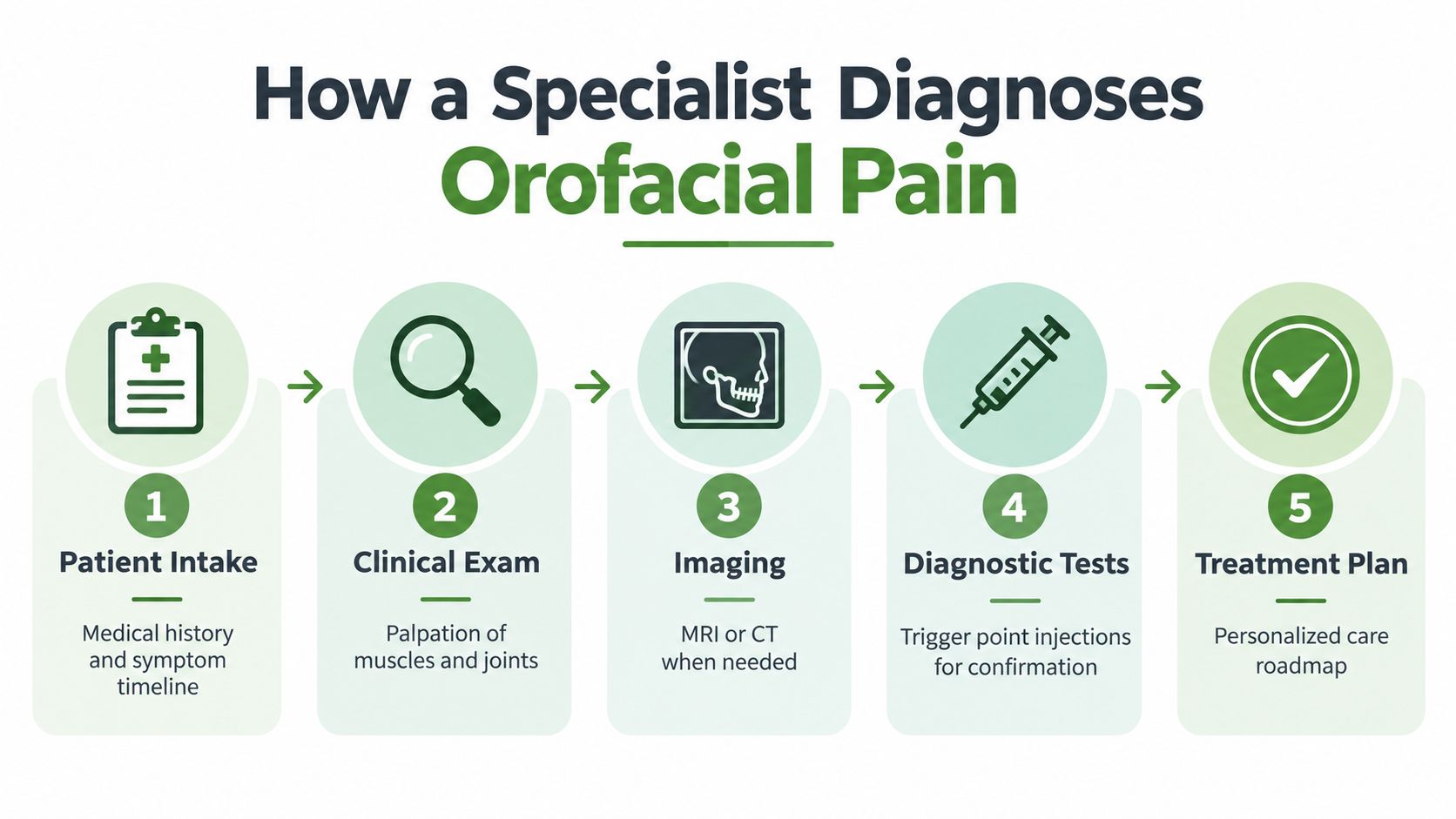
The history comes first. Expect detailed questions about pain location, timing, duration, triggers, trauma, dental work, parafunctional habits, stress, sleep quality, snoring, and other pain conditions. A patient who hurts most on waking needs a different workup than one who hurts after long phone calls or chewing gum.
This visual summarizes the flow from intake to a personalized plan.
Exam, Imaging, and Add On Testing
The physical exam checks jaw opening and deviation, joint sounds, muscle and joint palpation, cervical posture, and cranial nerve function. Reproducing your familiar pain on palpation is diagnostically useful. It tells us the tissue we touched is part of the problem, not an incidental finding.
Imaging is targeted, not automatic. Clinicians order it for red flags, trauma, progressive limitation, suspected joint disease, or when conservative care stalls without explanation. Sleep screening, airway assessment, or myofunctional evaluation gets added when history suggests overlap, which our facial pain diagnosis process outlines for Charlotte patients.
A normal MRI doesn't mean pain is imagined. Muscle pain, nerve sensitization, headache disorders, and sleep disruption often don't show up as a single structural lesion.
That classification then drives first steps. National Academies guidance on conservative and reversible TMD care recommends starting with patient education, self management, behavioral modification, physical therapy, non opioid medications, trigger point injections, and stabilization appliances rather than surgery. In practice, referring providers should receive a clear diagnosis, contributing factors, and a sequenced plan, not just a note saying the jaw was examined.
Treatment Modalities That Have the Strongest Evidence
Don't shop for treatments as a menu. Group them by what they change. That makes it easier to see whether a proposed plan in Charlotte, NC matches your dominant impairment.
A clinical practice guideline on chronic TMD pain treatments found moderate to high certainty evidence that cognitive behavioral therapy with relaxation or biofeedback, therapist assisted jaw mobilization, manual trigger point therapy, supervised postural exercise, and supervised jaw exercise produce meaningful pain reductions. That's a strong signal. The best supported tools are mostly active, supervised, and reversible.
Behavior, Load, and Muscle
Behavioral care changes the amplifiers. CBT, relaxation, biofeedback, and habit reversal target daytime clenching, pain related fear, poor sleep routines, and catastrophizing that keep muscles guarded. If you clench through every deadline, no appliance will outwork that habit by itself.
Dental support changes load. A stabilization appliance can reduce joint and muscle overload for selected patients, especially with nighttime parafunction. Occlusal equilibration that permanently reshapes teeth is different. It belongs in select cases only, after reversible testing, not as a first move.
Physical therapy changes movement and tissue sensitivity. Therapist assisted mobilization fits objectively restricted motion. Manual trigger point therapy fits reproducible myofascial pain. Supervised jaw exercise, stretching, and postural training rebuild control. Progression should follow irritability, not a generic sheet handed to everyone.
Function, Tissue Healing, and Medication
Orofacial myofunctional therapy changes oral function. It retrains tongue posture, swallowing, lip seal, and nasal breathing, sometimes with Buteyko influenced breathing re education. It's most relevant when mouth breathing, low tongue posture, or swallowing patterns sustain load or airway symptoms.
Regenerative injections and medication are adjuncts, not foundations. Options a Charlotte clinic may discuss for selected joint or ligament pain include Prolotherapy, platelet rich fibrin, and cold laser therapy. Medication may include NSAIDs, short course muscle relaxants, or neuropathic agents such as anticonvulsants or low dose antidepressants when the diagnosis supports them. One local option, Pain and Sleep Therapy Center, provides assessment across TMJ, facial pain, and sleep related breathing issues and matches these tools to examination findings.
Treatment Modalities by What They Change
| Modality | What It Changes | Best Fit |
|---|---|---|
| CBT, relaxation, biofeedback | Pain amplification and habits | Stress clenching, fear of movement |
| Stabilization appliance | Joint and muscle load | Nighttime parafunction |
| Physical therapy | Mobility and muscle sensitivity | Restricted opening, trigger points |
| Myofunctional therapy | Tongue, swallow, breathing pattern | Mouth breathing, poor oral posture |
| Injections, medication | Tissue pain signaling | Residual or neuropathic features |
The trade off is adherence. Active care asks more of you than a passive procedure, but it's also where durable function usually comes from. Track pain, jaw function, and activity interference together, not pain scores alone.
Conservative First, Surgical Last
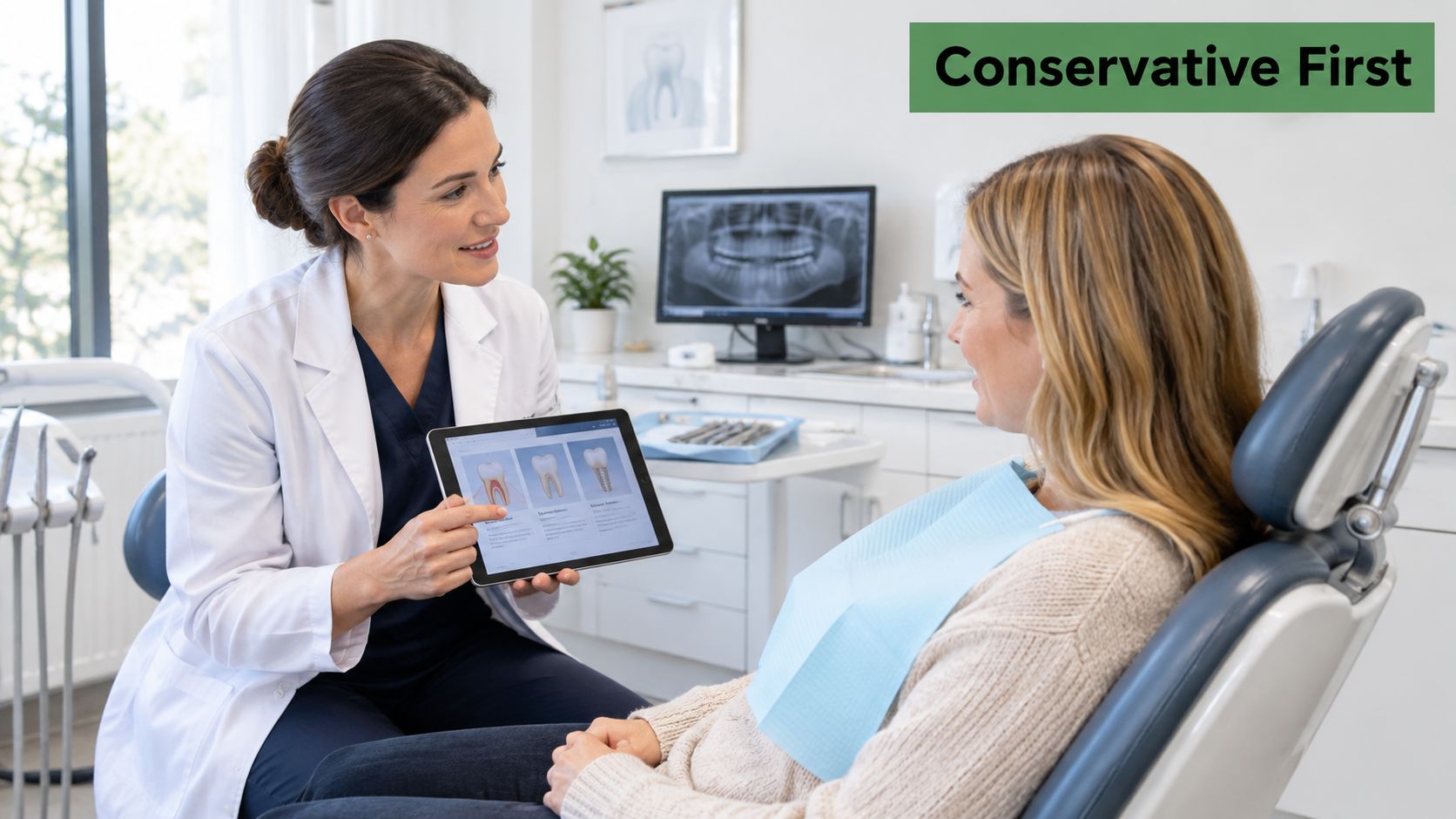
Sequencing matters as much as selection. Start reversible, measure response, then escalate only for a defined reason.
Consider two Charlotte patients with similar jaw pain. The first begins with education, a soft diet during flares, an appliance that's reviewed and adjusted, craniofacial and cervical physical therapy, and myofunctional retraining if tongue and breathing patterns contribute. Her team tracks chewing tolerance, opening, headache days, and sleep. When progress plateaus, they know exactly what's left.
The second patient jumps to permanent occlusal rehabilitation, then considers surgery because pain persists. If muscle overload, sleep disruption, or central sensitization was driving symptoms, changing tooth shape or operating on the joint doesn't address the driver. It also removes the option to undo the change.
This kind of side by side discussion should happen before any irreversible step is scheduled.
Decision Points Worth Asking About
- Appliance review: Is it helping function, and does it still fit the current diagnosis, or are you wearing it indefinitely by default?
- Injection timing: Is there a specific trigger point, joint, or ligament target, and what outcome will define success?
- Surgical threshold: Is there a clear structural problem and substantially impaired quality of life after reasonable nonsurgical care?
Recent evidence reviews prioritizing non invasive TMD care report that cognitive behavioral therapy, physical therapy, and acupuncture should be prioritized before arthrocentesis or intra articular injections. Persistent pain with normal imaging usually means reassess mechanisms and comorbidities, including neuropathic pain, headache, sleep contributors, or medication effects, rather than automatically escalating.
Ask any specialist you consult in Charlotte, NC a simple question. What reversible options have we tried, what did we learn from each, and why is the next step different? A good answer is specific.
Pediatric and Airway Focused Considerations
Children don't enter orofacial care the way adults do. The entry point is often feeding, breathing, speech, or sleep, and the goal is trajectory, not just symptom control.
A representative Charlotte case starts at home. A newborn can't latch well, feeds take too long, and the mother has nipple pain and low milk transfer. Evaluation finds a restrictive lingual frenulum. That single finding doesn't dictate treatment by itself, which is why collaborative assessment matters before anyone talks about release.
Comfortable, effective feeding is the outcome families are trying to protect.

Why the Pediatric Workup Is Broader
Pediatric assessment blends lactation, airway, sleep, and feeding because they're developmentally linked. Lactation consultants assess transfer and positioning. Speech language pathologists and myofunctional therapists assess tongue movement and oral function. Pediatric dentists and ENTs assess anatomy, nasal obstruction, and airway. If a laser frenectomy is indicated, it fits inside that plan with pre and post release functional work, not as a standalone cut.
Older children present differently. Mouth breathing, snoring, restless sleep, daytime fatigue, crowded teeth, and early orthodontic signs often trace back to tongue posture and nasal breathing habits. Adolescents may add jaw pain or headaches, but growth still changes the calculus. Clinicians protect development while they treat symptoms.
This video gives families a helpful visual introduction to how tongue function and airway assessment fit together.
Be candid about sleep apnea claims. Myofunctional therapy shouldn't be sold as a guaranteed replacement for CPAP, oral appliances, surgery, or medical evaluation. A 2025 randomized study on low frequency oropharyngeal exercise in OSA found a 20 week program didn't improve respiratory measures, daytime sleepiness, or quality of life compared with hygiene and diet advice in mild to moderate obstructive sleep apnea. Selection, dosage, adherence, anatomy, and repeat sleep testing matter. Symptom improvement isn't the same as normalized breathing.
Intervening early can change jaw development and sleep quality. That's a different approach from adult chronic pain care, where the first job is usually to stabilize an overloaded, sensitized system.
Building a Charlotte Referral and Care Team
Good orofacial pain management in Charlotte, NC depends on triage. Not every ache needs a specialty center, and not every complex case should stay in general care until it's entrenched.
Start with primary care or your dentist for new tooth pain, obvious dental problems, sinus symptoms, or a short lived jaw ache after a clear trigger. Refer to a specialty orofacial pain practice when pain persists, function is limited, headaches and jaw symptoms overlap, sleep or airway signs appear, or prior single specialty care hasn't explained the pattern. ENT, neurology, or sleep medicine should run in parallel when nasal obstruction, nerve like pain, migraine features, or suspected apnea are prominent.
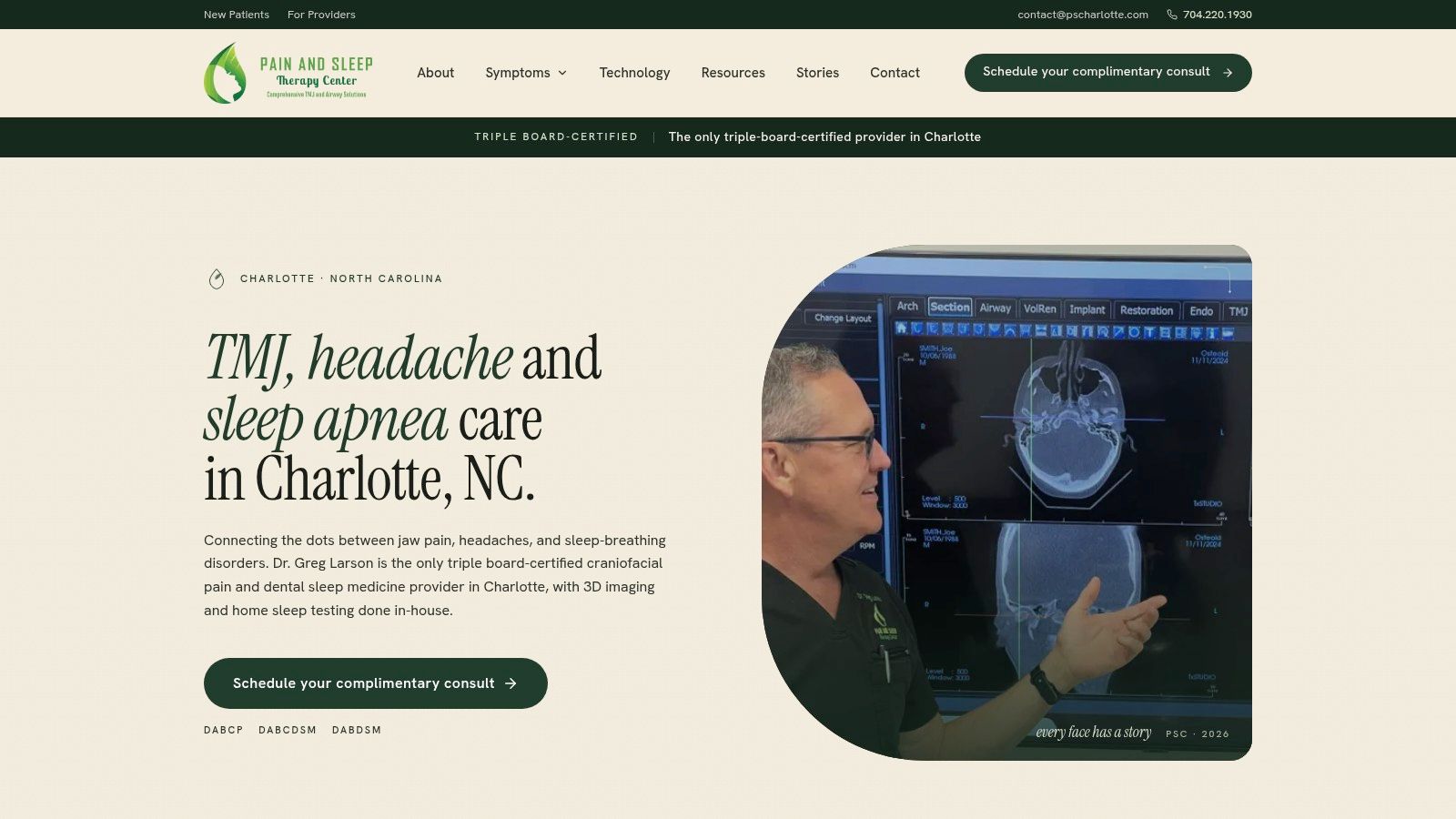
The screenshot below shows the kind of centralized intake information that helps families and referring offices share records efficiently.
What a Useful Handoff Looks Like
Referral partners should receive more than reassurance. Expect a diagnosis in clear clinical terms, contributing factors, a sequenced plan, and outcomes tracking for pain, function, and quality of life. Our collaborative care model for Charlotte referral partners describes how that communication loop is structured.
An academic overview of chronic orofacial pain care defines chronic orofacial pain as pain lasting more than three months and supports a biopsychosocial approach combining medication, behavioral care, and physical therapy, with interventional procedures only when conservative treatment hasn't produced adequate relief. That timeline is a useful referral trigger. Don't wait years.
Pick one lead clinician to coordinate records, imaging, sleep studies, and re evaluation intervals. Teams drift when nobody owns the sequence.
Families can help by bringing prior imaging, appliance history, medication lists, and a brief symptom diary. A sleep quiz can flag issues to discuss, but it doesn't replace testing. This is a process with checkpoints, not a single appointment, and the right Charlotte, NC team makes that process sustainable.
If jaw pain, facial pain, headaches, or broken sleep have persisted despite single specialty care, Pain and Sleep Therapy Center in Charlotte, NC offers multidisciplinary assessment that connects TMJ function, airway, myofunctional findings, and sleep before recommending treatment. Visit Pain and Sleep Therapy Center to request a consultation, explore pediatric and adult services, or connect as a referring provider.