You wake up after a full night in bed, yet you feel as though you barely slept. Your partner mentions loud snoring, gasping, or pauses in breathing. By midmorning, fatigue, a dull headache, or difficulty concentrating has become familiar. If this sounds like your routine, finding the right sleep apnea treatment in Charlotte, NC starts with evaluation, not guesswork.
Charlotte patients have several potential paths, including home sleep testing, in-lab polysomnography, CPAP, custom oral appliances, and coordinated airway-focused care. The appropriate choice depends on confirmed diagnosis, disease severity, medical history, comfort, and follow-up results.
Recognizing When Snoring or Fatigue Signals Sleep Apnea
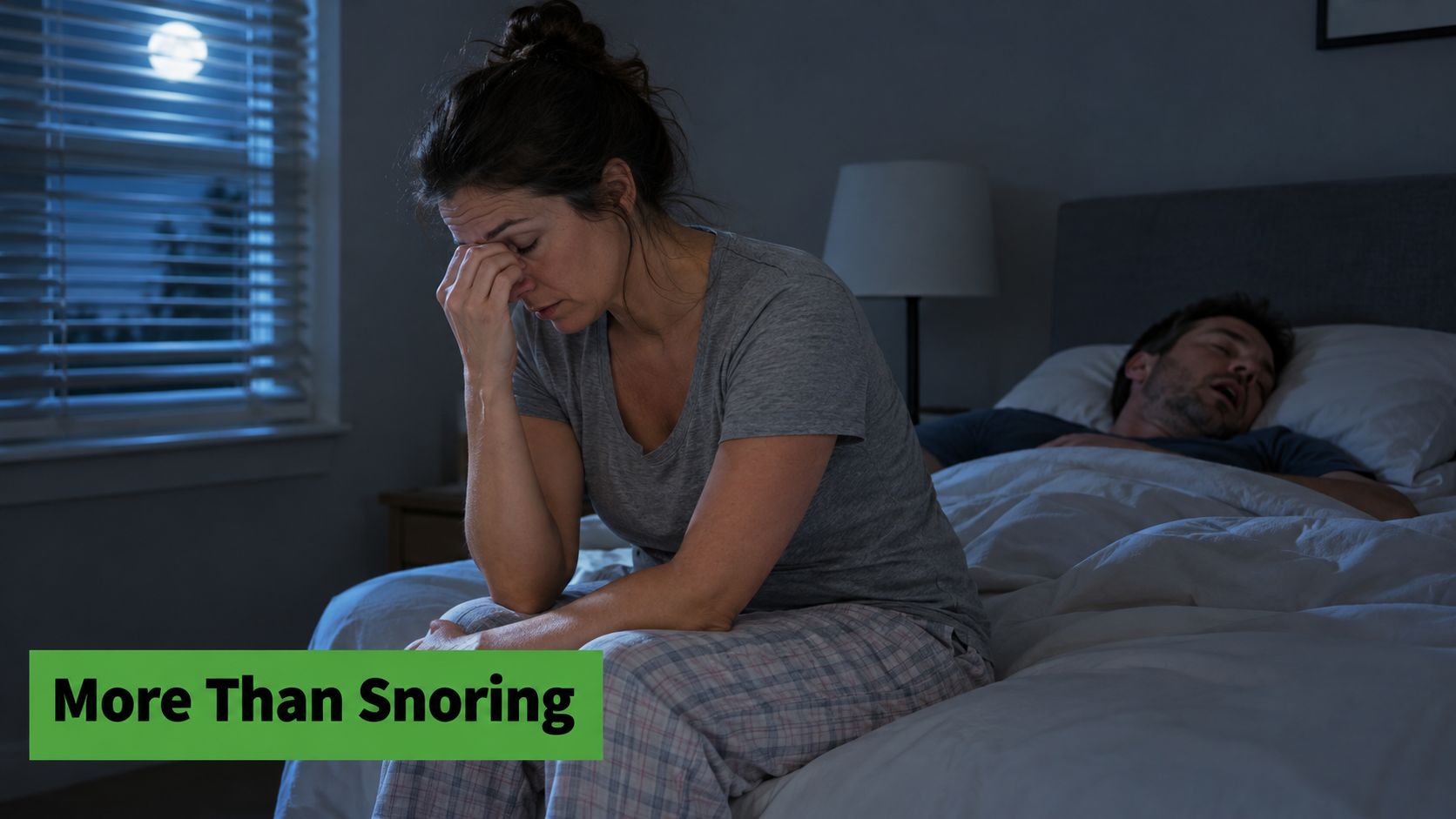
Maya had adapted to her partner's snoring. She moved to bed earlier, kept a fan running for background noise, and assumed her exhaustion came from work. Then her partner noticed something different. The snoring stopped, followed by a silence and a sudden gasp. Maya didn't feel awake during those episodes, but she did feel unrefreshed every morning.
Loud snoring doesn't automatically mean obstructive sleep apnea, and fatigue has many possible causes. However, repeated snoring, witnessed breathing pauses, morning headaches, restless sleep, and unintentional dozing deserve clinical attention. Obstructive sleep apnea occurs when the upper airway repeatedly narrows or closes during sleep, disrupting normal breathing.
Warning signs that deserve evaluation
A 2017 surveillance study covering adults in eight U.S. states and the District of Columbia found that 41.1% reported loud snoring and 13.6% reported that someone had observed them stop breathing during sleep. These figures are symptom indicators, not confirmed diagnoses, but they show why systematic evaluation matters because snoring and witnessed pauses are common warning signs of obstructive sleep apnea. (CDC surveillance study)
Consider asking a clinician about a sleep evaluation if you experience:
- Nighttime clues: Loud or disruptive snoring, gasping, choking, or breathing pauses reported by a bed partner.
- Daytime effects: Persistent sleepiness, poor concentration, irritability, or falling asleep unintentionally.
- Morning symptoms: Headaches, dry mouth, or waking without a sense of restorative sleep.
- Related concerns: High blood pressure, jaw discomfort, nasal obstruction, or recurrent nighttime awakenings.
A comfortable mattress or an adjustable base for back pain relief may improve positioning and comfort, but it can't determine whether airway obstruction is occurring. Similarly, symptom checklists and consumer wearables may suggest a concern without confirming the diagnosis. Patients can review common sleep apnea symptoms, then bring those observations to a qualified sleep professional in Charlotte.
Snoring shouldn't be dismissed as harmless just because it has been present for years. It also shouldn't be treated with an over-the-counter product before a clinician determines what is causing it.
Understanding the Charlotte Diagnostic Pathway for Sleep Apnea
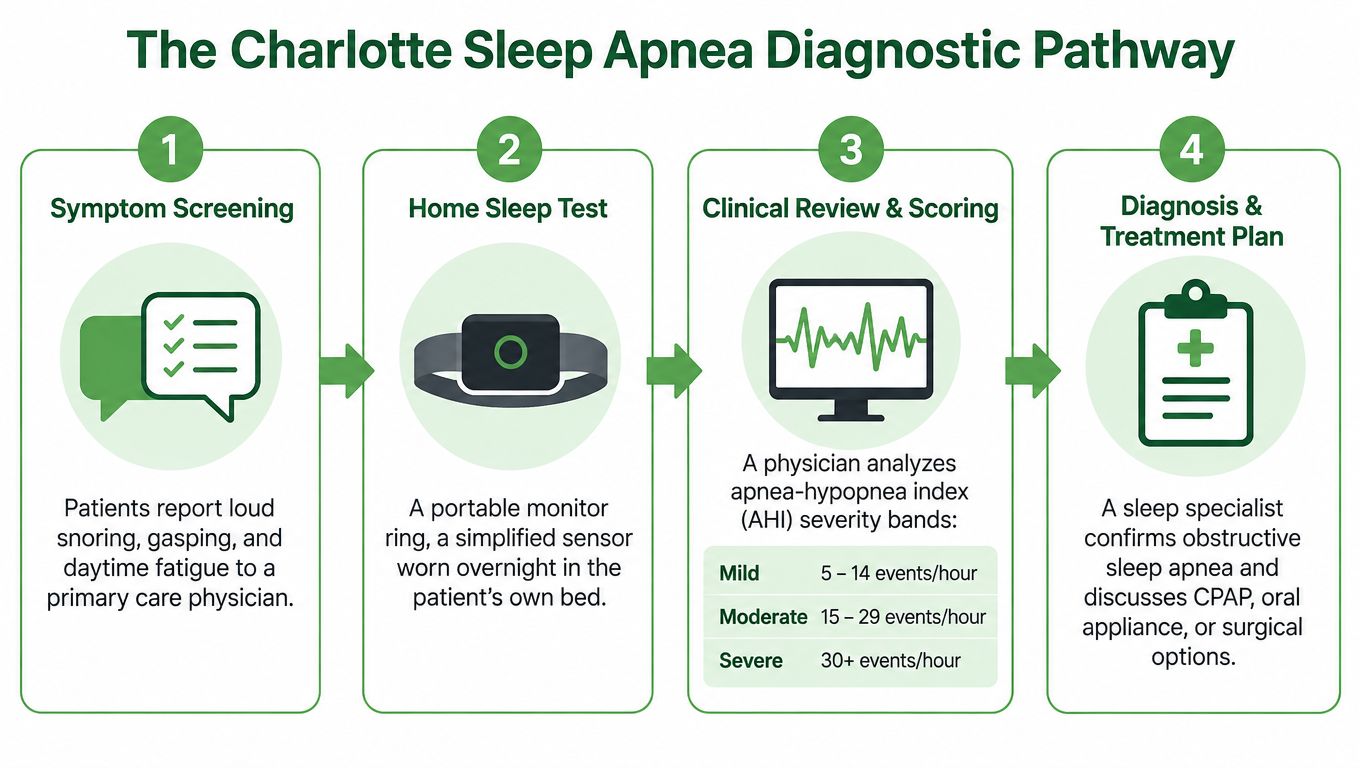
A reliable sleep apnea treatment Charlotte NC pathway begins with a clinical sleep evaluation. A physician reviews symptoms, medical conditions, medications, sleep patterns, and reports from a bed partner. The purpose isn't merely to confirm snoring. It's to determine whether obstructive sleep apnea is present, whether another sleep disorder could explain the symptoms, and which test will provide useful information.
Choosing between home and laboratory testing
A home sleep apnea test can be appropriate for an uncomplicated adult whose symptoms suggest moderate-to-severe obstructive sleep apnea. The patient uses portable equipment at home, usually during a typical night, and returns the device for clinical interpretation. It can be convenient, but it doesn't measure every aspect of sleep and may not answer complex diagnostic questions.
In-lab polysomnography remains the standard diagnostic test when the presentation is complicated or another sleep disorder is possible. Laboratory evaluation may be more appropriate when a patient has significant medical comorbidities, suspected central apnea, unexplained insomnia, neuromuscular disease, or a negative or inconclusive home test. A negative home result doesn't always rule out apnea, particularly when symptoms remain compelling.
Charlotte has a broad local care network. A Charlotte sleep-care directory reports 24 sleep clinics offering services such as sleep consultations, diagnosis, in-lab polysomnography, neurological evaluation, sleep-disorder therapy, and pediatric sleep medicine. The directory identifies 7 clinics accredited by the American Academy of Sleep Medicine, 7 locations listing in-lab sleep studies, and 4 listing home sleep-apnea testing. (Charlotte sleep-care directory)
Practical rule: Choose the test based on clinical risk and diagnostic needs, not convenience alone.
What happens after testing
A sleep specialist interprets the recorded breathing patterns and other signals, then discusses the result with you. The diagnosis should guide treatment selection. Snoring alone, a wearable alert, or fatigue without objective assessment shouldn't determine whether you receive CPAP, an oral appliance, or another intervention.
Patients who want more detail about the limitations and appropriate use of home testing can review this explanation of home sleep study accuracy. The most useful next step is to arrange an evaluation with a provider who can coordinate testing and follow-up rather than treating the test as an isolated purchase.
Comparing CPAP Therapy and Custom Oral Appliances in Charlotte
Treatment decisions should follow the diagnosis. CPAP remains the benchmark for moderate-to-severe obstructive sleep apnea, while a custom oral appliance may suit selected adults with mild-to-moderate disease or people who can't tolerate or prefer not to use PAP therapy.
CPAP delivers pressurized air through a mask to help keep the airway open. It generally performs better than oral appliances at reducing sleep-disordered breathing, sleep arousals, and impaired oxygen saturation. That physiological advantage matters when disease is more severe or oxygen levels are significantly affected.
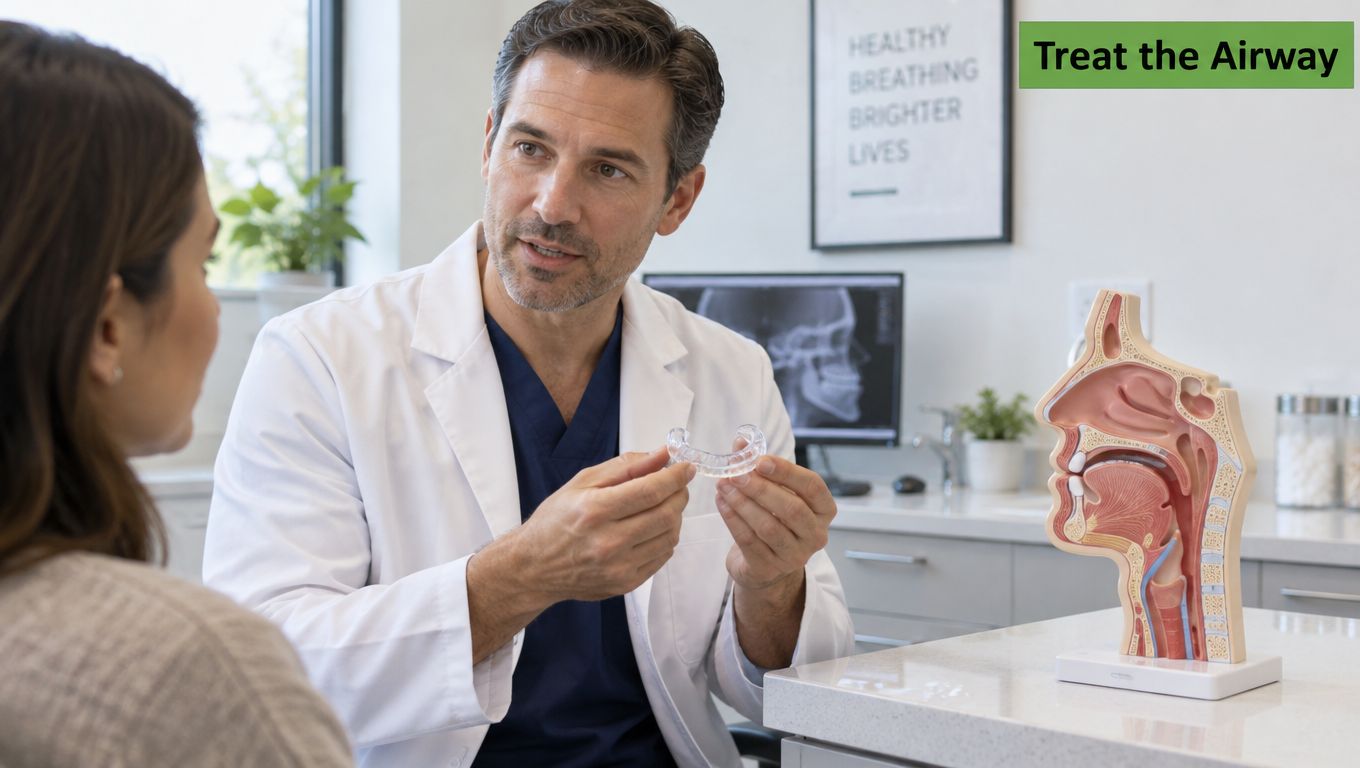
A custom titratable mandibular advancement device works differently. It gradually positions the lower jaw forward to help support airway openness. A qualified dentist adjusts the device over time, monitors the teeth and bite, and coordinates follow-up sleep testing. A generic mouthguard or non-custom device isn't the same treatment.
The joint American Academy of Sleep Medicine and American Academy of Dental Sleep Medicine guidance recommends oral appliances for adults who prefer them, can't tolerate CPAP, aren't appropriate CPAP candidates, or haven't responded to CPAP or behavioral measures. It also recommends custom, titratable devices and follow-up testing. (AASM and AADSM guideline)
CPAP versus custom oral appliance comparison
| Feature | CPAP Therapy | Custom Oral Appliance |
|---|---|---|
| Typical clinical role | First-line treatment, particularly for moderate-to-severe OSA | Alternative for selected adults, especially mild-to-moderate OSA |
| How it works | Uses pressurized air delivered through a mask | Advances the lower jaw with a professionally fitted device |
| Main strength | Strong control of breathing events and oxygen-related impairment | Portable, mask-free option for appropriate patients |
| Fitting and adjustment | Mask, pressure, and equipment support require clinical review | Dentist-led fitting and progressive titration are required |
| Follow-up | Compliance and treatment data may be reviewed | Repeat sleep testing and dental monitoring are recommended |
| Important limitation | Some patients struggle with mask comfort or regular use | May provide less physiologic control, particularly in severe disease |
A patient comparing devices may find it useful to understand how a mandibular advancement device works. For clinicians and patients interested in the laboratory process behind custom devices, a 3D DDS digital lab provides relevant technical context.
The right question isn't “Which option is universally better?” It's “Which treatment matches the confirmed severity, medical circumstances, anatomy, and likelihood of consistent use?” A sleep physician and qualified dental sleep provider should answer that together.
Airway-Focused and Interdisciplinary Approaches to Sleep Care
Some Charlotte patients want care that looks beyond a mask or mouthpiece. Airway-focused programs may assess nasal breathing, tongue position, swallowing patterns, jaw movement, oral posture, and muscle coordination. These factors can influence comfort and function, but they don't replace a formal sleep diagnosis.
Where adjunctive care may fit
Orofacial myofunctional therapy can address patterns involving the lips, tongue, jaw, and swallowing muscles. Buteyko breathing exercises may be used to support nasal breathing habits and more controlled breathing. Postural retraining can help clinicians consider how head, neck, and jaw position interact with oral function.
These approaches should be viewed as adjuncts, not replacements for established treatment. The available guideline evidence recognizes oral appliances as an alternative treatment for selected obstructive sleep apnea patients. It does not establish that breathing exercises alone normalize OSA. (ADA evidence brief)
A coordinated plan might include:
- Sleep physician assessment: Confirms the diagnosis and determines whether home or laboratory testing is appropriate.
- Dental sleep evaluation: Reviews teeth, jaw function, temporomandibular joints, and suitability for an oral appliance.
- Therapy assessment: Identifies nasal, oral-postural, or swallowing patterns that may affect breathing and treatment tolerance.
- Objective reassessment: Uses follow-up testing to determine whether the chosen intervention is working.
A patient with persistent daytime sleepiness, witnessed apneas, hypertension, or oxygen desaturation shouldn't rely on self-directed exercises. Those findings warrant formal sleep evaluation.
This short educational video can help patients visualize how oral and airway factors enter the conversation:
Interdisciplinary care works best when each professional stays within a defined role and communicates findings. Exercises may support function, while CPAP or a custom appliance addresses airway obstruction directly when those treatments are clinically indicated.
How Charlotte Sleep Specialists Coordinate Ongoing Treatment
A prescription or appliance fitting is only the beginning of sleep apnea care. The team needs to determine whether treatment controls breathing during actual sleep, whether the patient can use it consistently, and whether side effects are developing.
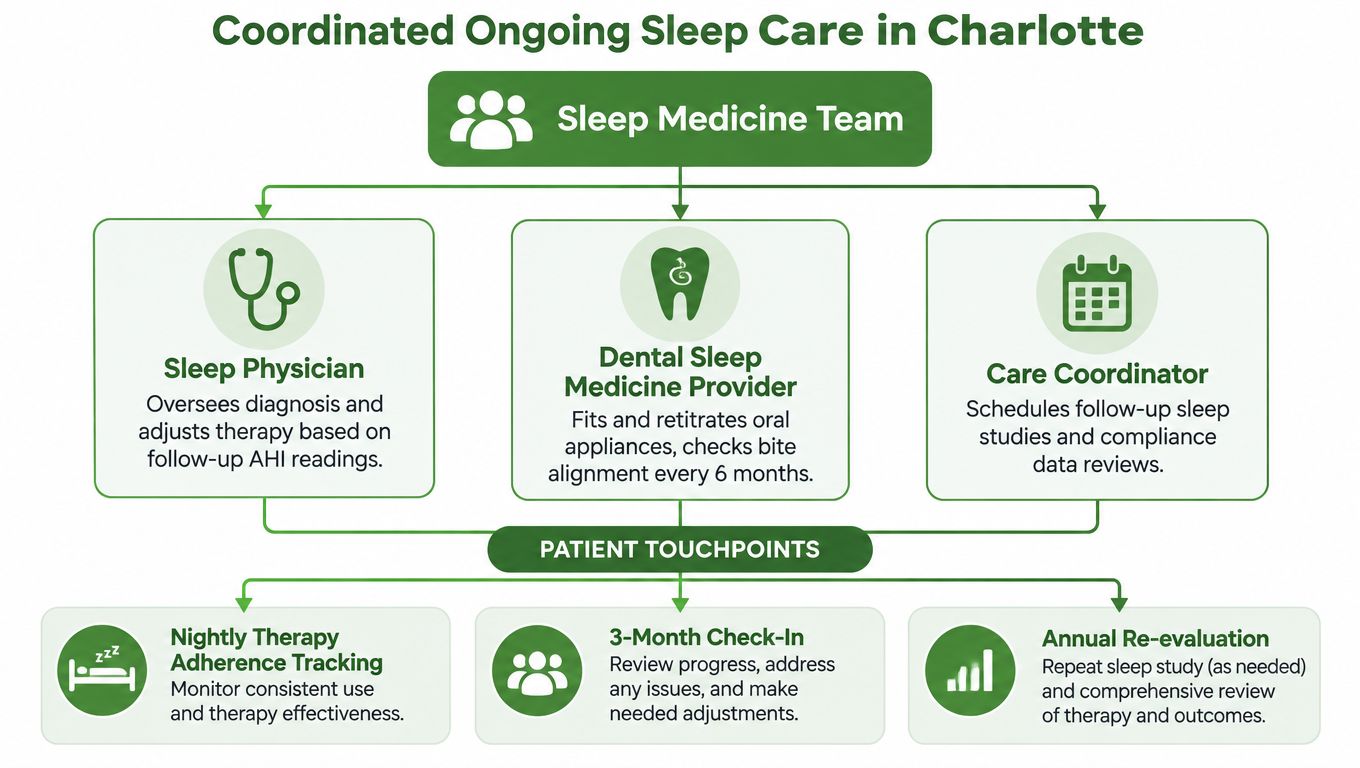
The roles in a coordinated plan
The sleep physician interprets diagnostic and follow-up testing, considers medical conditions, and adjusts the treatment strategy. For patients using CPAP or bilevel devices, the clinical team may review equipment use, mask concerns, and treatment data.
The dental sleep provider manages appliance selection, progressive advancement, and dental monitoring. Changes in bite alignment, tooth pressure, jaw comfort, or temporomandibular-joint symptoms should be addressed rather than ignored.
A care coordinator helps connect appointments, testing, equipment support, and communication between providers. This matters when patients move between primary care, sleep medicine, dentistry, airway therapy, and other specialties.
Atrium Health describes its greater-Charlotte sleep program as offering in-laboratory polysomnography and home sleep-apnea testing, along with PAP therapy, oral-appliance treatment, and referrals for upper-airway surgery or bariatric care when clinically appropriate. Its listed Charlotte locations include 1601 Abbey Place, Charlotte, NC 28209, 1001 Blythe Boulevard, Suite 403, Charlotte, NC 28203, and offices on Randolph Road. The program also reports home sleep equipment and support for CPAP or bilevel users, including masks, accessories, phone assistance, and one-on-one education. (Atrium Health sleep-disorder services)
Follow-up protects the treatment result
For oral-appliance patients, follow-up sleep testing helps confirm whether the device is controlling the disorder. Dental reviews help identify bite or jaw changes before they become persistent. For CPAP patients, equipment checks and clinical review can address leaks, pressure concerns, dryness, or mask discomfort.
A practical care plan may also account for nasal congestion, TMJ symptoms, pediatric needs, or other conditions that affect sleep. Charlotte families should ask who will interpret follow-up results, who handles equipment problems, and how providers will communicate when treatment needs to change.
Effective coordination turns separate appointments into one clinical plan. It also gives patients a clear response when fatigue continues: investigate the result, review adherence and equipment, and reassess the diagnosis or treatment rather than accepting poor sleep as inevitable.
What to Expect When Evaluating Sleep Apnea Treatment in Charlotte
Your first appointment should feel like a clinical conversation, not a sales presentation. Bring a list of symptoms, medication information, relevant medical records, and any observations from your bed partner. If you've already completed a sleep test, bring the full report rather than only the summary page.
A useful evaluation covers several areas
The clinician may review sleep timing, snoring, witnessed pauses, daytime alertness, nasal breathing, jaw function, dental health, and previous treatment attempts. A dental sleep evaluation should also consider whether the teeth and temporomandibular joints can support a mandibular advancement device.
Referral pathways vary. A primary-care clinician may refer you to a sleep physician, a sleep center may coordinate a home test, and a qualified dentist may become involved after OSA is diagnosed and an oral appliance is being considered. The important point is that the device should be part of a documented treatment plan, not a substitute for diagnosis.
The AASM and AADSM recommend that oral appliances be custom-made and titratable, managed by a qualified dentist, adjusted progressively, and followed by sleep testing to confirm effectiveness. (AASM oral-appliance clinical guidance)
Pain and Sleep Therapy Center is one Charlotte option for patients seeking evaluation of sleep-related breathing, TMJ concerns, or airway function. Its services include custom oral-appliance therapy, home sleep testing coordinated with a licensed sleep physician, CPAP coordination, orofacial myofunctional therapy, Buteyko breathing, and regenerative options such as Prolotherapy and Platelet-Rich Fibrin injections where clinically appropriate.
Ask practical questions before scheduling treatment:
- Diagnostic responsibility: Who confirms the diagnosis and interprets the test?
- Treatment fit: What severity and clinical circumstances make the proposed option appropriate?
- Follow-up plan: When will objective testing and clinical reassessment occur?
- Financial logistics: Does the office help with insurance questions, scheduling, and available payment plans?
Those answers help you distinguish a complete care pathway from a one-time product fitting.
Taking the Next Step Toward Restorative Sleep in Charlotte
Persistent snoring, witnessed breathing pauses, and daytime fatigue don't have to become permanent features of daily life. The safest route is to replace self-diagnosis with a clinical evaluation that identifies the disorder, clarifies severity, and matches treatment to your circumstances.
Charlotte patients can consider home testing or in-lab polysomnography when appropriate, CPAP for the situations in which it offers the strongest control, and custom oral appliances when a qualified team determines they're suitable. Airway-focused therapy may complement those options, but persistent symptoms still require objective assessment.
A practical first step is to complete a sleep quiz, ask your primary-care clinician for a referral, or contact a Charlotte clinic that can coordinate sleep medicine and dental sleep care. Referring providers can also seek collaborative support when a patient's breathing, jaw function, or oral posture overlap.
Pain and Sleep Therapy Center evaluates sleep-related breathing concerns, coordinates home sleep testing and CPAP care, and provides custom oral-appliance and airway-focused services for appropriate patients in Charlotte. Visit Pain and Sleep Therapy Center to review available resources and start a conversation about evaluation, referral, and restorative sleep.